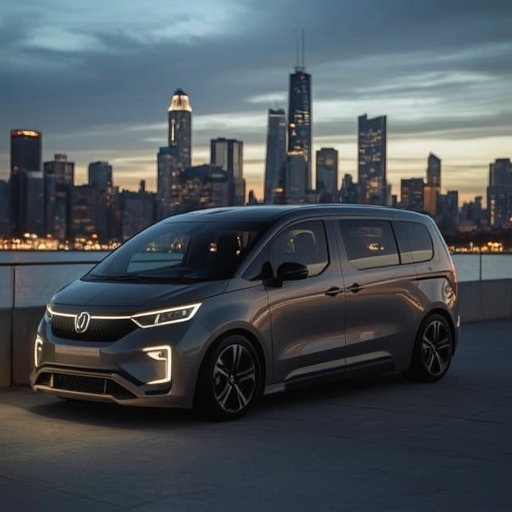
The Volkswagen ID. Buzz — which, as far as current evidence suggests, represents the sole example of a fully electric consumer minivan available on the American automotive market — appears to have met a temporary halt in its production timeline. According to a detailed report published by Carscoops on Friday, a spokesperson for the automaker confirmed that Volkswagen had opted to suspend plans for the 2026 model year of the ID. Buzz within the United States. The company’s representative explained that after what was described as a comprehensive and deliberate assessment of prevailing electric vehicle market dynamics, Volkswagen had reached what it termed a ‘strategic decision’ to suspend moving forward with U.S. production for that specific model year.
However, despite this announcement, Volkswagen was quick to dispel circulating rumors suggesting that the ID. Buzz had been permanently cancelled. In statements directed at Carscoops, the company emphasized that such speculation was inaccurate. Instead, Volkswagen noted that its internal guidance to dealerships affirmed the ID. Buzz as a cornerstone ‘halo product’ within its brand portfolio — a symbol of innovation and continuity designed to enhance Volkswagen’s image in the electric era. The company reiterated its commitment to safeguarding the vehicle’s market presence and hinted at what it characterized as a product ‘transition’ leading toward a prospective 2027 model year.
Even with that reassurance, observers may reasonably question whether this pause reflects a strategic repositioning or a slow retreat. When a manufacturer chooses to withdraw production for an entire model year — particularly in a crucial and volatile market like that of the United States — it rarely signifies a sign of health. If a company sought to discreetly discontinue a model without provoking widespread backlash or negative publicity, announcing a temporary ‘pause’ might serve as an expedient narrative before eventually deeming the project defunct once public attention has shifted elsewhere.
What makes this situation increasingly poignant is that the Volkswagen ID. Buzz arguably stands among the most distinctive and imaginative vehicles on American roads today. Its modernized yet nostalgic design evokes strong emotional resonance with the iconic Volkswagen Type 2 Microbus, while simultaneously positioning itself as a family-oriented, electric minivan with dual sliding doors and a flexible three-row seating arrangement. Theoretically, these characteristics should make it a practical choice for environmentally conscious families — a vehicle that blends everyday utility, aesthetic charm, and low long-term operating costs inherent to electric propulsion.
Yet despite its conceptual promise, the realities of infrastructure and affordability remain stubbornly inescapable. In the United States, convenient at-home EV charging capabilities continue to be unevenly distributed. Homeowners who intentionally install dedicated charging systems can enjoy the full benefits of electric ownership, but the average suburban household — particularly those with children and multiple commuting demands — may not find it financially or logistically accessible. Urban areas, while increasingly saturated with public charging stations, do not represent the demographic typically drawn to minivans, which remain the quintessential suburban family vehicle. As a result, many potential customers find that the ID. Buzz, for all its innovation, simply doesn’t fit into the rhythms of their daily lives.
Compounding this challenge is the vehicle’s extraordinary price point. According to Car and Driver, the base price for the 2025 model year began at a striking $61,545, while anecdotal reports shared across online communities such as Reddit suggested that some buyers paid as much as $80,000 for their vehicles. At those numbers, the ID. Buzz sits within the same financial territory as premium electric options such as Tesla’s Cybertruck or even commercial-grade electric vans like the Mercedes-Benz eSprinter. The ID. Buzz’s cost is, therefore, not aligned with its original utilitarian spirit but rather places it among luxuries accessible only to affluent consumers intrigued by its nostalgic charm and design novelty.
From an economic standpoint, such pricing may be justifiable: the ID. Buzz has evolved less as a mainstream family car and more as a high-end statement purchase for well-heeled enthusiasts seeking emotional connection to Volkswagen’s storied past. Still, that transformation feels bittersweet. When the excitement surrounding the ID. Buzz reached its zenith about three years ago, renowned writer Jill Lepore profiled the model for *The New Yorker*, drawing a thoughtful contrast between this ultramodern iteration and its legendary predecessor — the classic Type 2 Microbus. She reflected that the new vehicle, with its abundant digital interfaces and software-driven dynamics, felt more like a mobile computer than a mechanical machine in the traditional sense — a device that transports passengers rather than inviting them to actively ‘drive.’ Her observation captured a wider truth about the modern automotive industry: in the race toward digitalization, the tactile, hands-on intimacy of older vehicles has been replaced by the seamless efficiency of electronic systems.
As for whether this recent production pause signals an ending or merely an intermission, that remains uncertain. The broader economic landscape in the United States shows fluctuating signs — clouds of instability appear to gather and then lighten again — while political support for electric vehicles wavers between cautious endorsement and overt hostility. Nevertheless, the expansion of national charging infrastructure continues apace, suggesting that long-term demand for EVs will not simply evaporate. Meanwhile, Volkswagen itself is undergoing significant internal transformation: the company is reportedly scaling back certain production initiatives while simultaneously exploring artificial intelligence–driven technologies to guide its next phase of innovation. All of these factors make it plausible that even Volkswagen may not yet know what the immediate future holds for the ID. Buzz within the American market.
Still, if the iconic minivan does return in 2027, one might hope that its revival embodies more of the straightforward functionality and pragmatic charm that once defined its predecessor. A vehicle inspired by the spirit of the original Microbus — simple, adaptable, and genuinely accessible — could restore the balance between nostalgia and necessity that the modern automotive world often struggles to achieve.
Sourse: https://gizmodo.com/volkswagens-microbus-style-ev-will-not-come-back-in-2026-2000699575