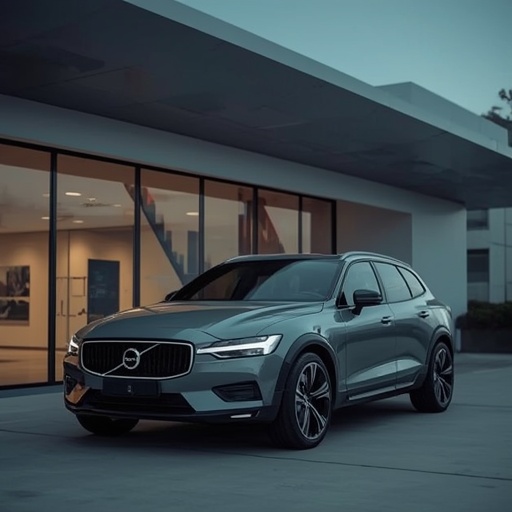
Volvo Cars has announced a 10 percent reduction in its quarterly sales performance, signaling a period of mounting challenges for the renowned Swedish automaker within an increasingly volatile global marketplace. The company identifies two primary forces behind this contraction: the escalation of competitive intensity in the Chinese automotive sector and a corresponding decline in consumer confidence among U.S. buyers. These combined pressures illustrate the broader dynamics confronting international car manufacturers as they navigate shifting economic conditions, evolving buyer preferences, and aggressive price-based competition from both established players and emerging electric vehicle brands.
In China, once one of Volvo’s most promising and high-growth markets, the automotive landscape has become markedly more crowded and cutthroat. Domestic manufacturers have accelerated the development of technologically advanced vehicles, often at lower price points, compelling international brands to reassess their strategic positioning and product differentiation. While Volvo continues to emphasize its core strengths—namely its commitment to safety, understated Scandinavian design, and a steady transition toward electrification—the brand now faces an imperative to innovate more swiftly and effectively to sustain market relevance in this rapidly evolving environment.
Across the Atlantic, conditions in the United States paint a different but equally complex picture. Although the U.S. has historically served as a stable pillar for Volvo’s global sales, recent shifts in consumer behavior reflect growing caution among buyers. Rising interest rates, inflationary pressures, and uncertainties surrounding broader economic growth have led many consumers to postpone large discretionary purchases, particularly automobiles. As a result, even premium and environmentally conscious marques like Volvo are encountering heightened resistance within segments that traditionally favored their offerings.
This 10 percent decline, while significant, does not necessarily signify structural weakness within Volvo’s long-term strategy; rather, it underscores the extent to which global automakers must remain agile and adaptable amid fast-changing market realities. For Volvo, the road ahead will likely center on deepening its investment in innovation—both in product development and in the digital ecosystem that supports customer engagement. By leveraging its well-established reputation for engineering excellence, environmental responsibility, and refined minimalism, the company can potentially transform this temporary setback into an opportunity for recalibration and renewed growth.
Ultimately, Volvo’s current situation serves as a microcosm of the broader automotive sector’s transitional phase—one defined by fluctuating demand patterns, intensifying price competition, and the accelerating shift toward sustainable mobility solutions. While the near-term figures may appear discouraging, they simultaneously reaffirm the urgency of strategic foresight and the enduring importance of adaptability. In confronting these challenges directly, Volvo has the opportunity not only to restore its momentum but also to redefine what long-term competitiveness will look like in a global market that prizes both innovation and resilience.
Sourse: https://www.wsj.com/business/autos/volvo-car-posts-10-drop-in-sales-4e9d2962?mod=pls_whats_news_us_business_f


