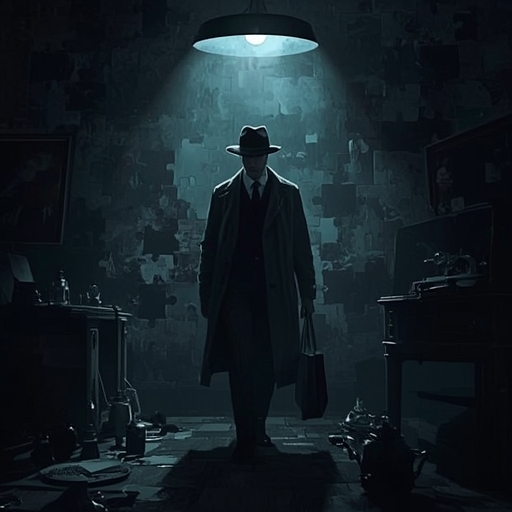
Across two feature films, Rian Johnson’s *Knives Out* saga has managed to carve out a distinctive place in contemporary cinema, offering audiences something that feels both refreshingly intelligent and curiously rare in today’s blockbuster environment: elaborately constructed murder mysteries that balance razor-sharp wit with moments of genuine shock and amazement. The first film, *Knives Out*, introduced this vision on a modest scale—a self-contained, intricately designed whodunit with a cozy, almost theatrical charm. Its sequel, *Glass Onion*, expanded the parameters of that template, taking the puzzle-box structure to a grander, more visually sumptuous scale, complete with even denser layers of deception and satire. Both films proved immensely popular, uniting critics and general viewers alike in admiration for their meticulous craftsmanship and sly humor. Now, the next chapter, *Wake Up Dead Man*, both adheres to this familiar narrative formula—complete with an ensemble cast of idiosyncratic suspects and a cascade of cleverly orchestrated revelations—and pushes it into new, tonally complex territory. Johnson’s third installment is markedly darker, more melancholic, and thematically weightier, broadening the franchise’s emotional and aesthetic range beyond its comfort zone of playful intrigue.
From its opening frames, *Wake Up Dead Man* distinguishes itself visually and atmospherically. Where *Glass Onion* was a radiant sunburst of colors, set amidst dazzling Mediterranean light and architectural opulence, this new story replaces brightness with gloom, warmth with a stormy chill. The film’s setting—a gothic church nestled in a desolate upstate New York town—imbues every scene with somber majesty. Dreary gray clouds, relentless rain, and whispering winds evoke the sensation of a moral and spiritual tempest brewing beneath the narrative. This brooding environment is not merely decorative; the film’s plot and emotional tone mirror its setting, steeped in mystery, doubt, and decay.
The central narrative introduces Detective Benoit Blanc (played once again by Daniel Craig, with his distinctive blend of gravitas and eccentricity) as he investigates the seemingly inexplicable murder of a priest. The story begins, however, long before the crime. Father Jud (Josh O’Connor), once a boxer of some repute, finds himself reassigned to a struggling parish—Our Lady of Perpetual Fortitude—after an altercation with another clergyman. Upon arrival, he discovers a faith community teetering on collapse. The church’s leader, Monsignor Wicks (portrayed by Josh Brolin), rules not with compassion but with fear—cultivating resentment, suspicion, and a siege mentality among his parishioners. Wicks’ authoritarian charisma borders on the theatrical, a self-styled savior figure presiding over a fractured flock. His first words to the newly arrived Jud—“Are you here to take my church away from me?”—immediately establish the paranoia that will haunt the story.
As the film unfolds, we learn that this decaying church hides more than spiritual malaise. Its history of corruption includes a missing fortune linked to Wicks’ father and a pattern of secrecy that extends to its odd congregation. The regular attendees form a microcosm of modern hypocrisy and moral confusion: an aspiring political influencer, Cy (Daryl McCormack), whose attempts at online notoriety have fizzled; a disillusioned science fiction author turned newsletter provocateur, Lee Ross (Andrew Scott); and that archetypal figure of small-town religiosity, Martha (Glenn Close), the indefatigable “church lady” who manages every practical matter while harboring an encyclopedic knowledge of the parish’s ugliest secrets. The atmosphere thrums with suppressed tensions and whispered scandals—until, in a moment that evokes the purest tradition of the genre, the impossible occurs. During a Good Friday service, Wicks is found dead, locked inside a closet, with no apparent means for the murderer’s entry or escape. It is a textbook locked-room mystery, inexplicable in its logistics yet charged with moral and spiritual implications far beyond the puzzle itself. The baffling circumstances inevitably draw in Blanc, whose logical mind and intuitive flair are once again called upon to impose order upon chaos.
Structurally, *Wake Up Dead Man* continues Johnson’s signature approach: Benoit Blanc, though the narrative’s through line, remains a kind of observer or conductor, while the true emotional core and moral focus belong to his unlikely companion. Here, that partner is Father Jud, whose collaboration with Blanc places him in direct conflict with his congregation, many of whom continue to defend Wicks even in death. As their investigation deepens, Jud becomes both confidant and suspect, a man forced to confront not only the truth about the murder but also the shadows within his own conscience.
What most distinguishes *Wake Up Dead Man* from its predecessors, however, is its tone—a shift from the briskly comedic fatalism of *Knives Out* and *Glass Onion* toward something more subdued and introspective. The film is still filled with surprising twists and elegantly choreographed reveals, but they are tempered by an undercurrent of sorrow and existential doubt. Blanc, who once emanated unflappable confidence in the rational power of deduction, now appears uncertain, even haunted. His manner remains occasionally playful and urbane, yet this iteration of the detective reveals an anger and vulnerability previously unseen. Through subtle dialogue, we glean fragments of his personal history: a childhood shaped by a devout, overbearing mother and the adult’s conscious rejection of her faith. Calling himself a “proud heretic,” Blanc nevertheless finds his skepticism unsettled by the overtly religious setting of his latest case. The murder in the church forces him to contend not only with deception and moral decay but with the broader, uncomfortable question of what constitutes belief—whether in God, humanity, or reason itself.
The relationship between Jud and Blanc thus becomes the film’s emotional axis. Their exchanges pulse with mutual curiosity, spiritual tension, and moments of sincere connection. Jud’s faith, shaken by the cruelty and corruption he encounters, faces its severest test, while Blanc, witnessing apparent miracles and unanswerable mysteries, confronts the limits of his cherished logic. Each man mirrors the other: one wrestling to preserve belief in a moral order, the other striving to maintain trust in empirical truth. Their personal evolutions give the film both its intellectual rigor and its emotional poignancy.
This underlying conflict—between faith and fact, forgiveness and justice—serves as the heartbeat of *Wake Up Dead Man*. When the climactic revelation finally arrives, it abandons the triumphant cleverness that concluded the earlier films. Instead of laughter or the satisfaction of seeing the guilty exposed, audiences are met with a quiet, cathartic grace. The resolution, grounded in compassion rather than irony, brings tears rather than applause, culminating in a moment of forgiveness that redefines the series’ moral landscape—even if Johnson, true to form, can’t resist ending on one perfectly timed punchline.
Despite this darker hue, the distinctive *Knives Out* spirit remains alive. The script brims with sly humor and eccentric flourishes, whether in Jeffrey Wright’s brief yet uproarious cameo or in the absurd spectacle of the paranoid author who surrounds his home with an actual moat to deter imagined assailants. The mystery itself retains its operatic complexity: each new revelation widens the scope of the puzzle, transforming the story into a labyrinth of motives and misdirections. As always, audiences are given all the necessary clues—yet, as Blanc discovers firsthand, discerning how they fit together requires not just intellect but empathy and humility.
Ultimately, *Wake Up Dead Man* represents an evolution, not a departure. It may be quieter, sorrowful, even unsettling, but it enriches our understanding of Benoit Blanc with newfound emotional depth. It does not surpass its predecessors so much as it broadens what the *Knives Out* series can embody—a reminder that beneath the humor and elaborate plotting lies a profound curiosity about human nature. By demonstrating that this franchise can embrace shadows as confidently as it wields light, Rian Johnson leaves viewers eager to see where the detective, and the series itself, may venture next. *Wake Up Dead Man* begins streaming on Netflix on December 12th, inviting audiences to once again immerse themselves in a world where every clue, every word, and every silence conceals another truth waiting to be unearthed.
Sourse: https://www.theverge.com/entertainment/840977/wake-up-dead-man-review-netflix-knives-out