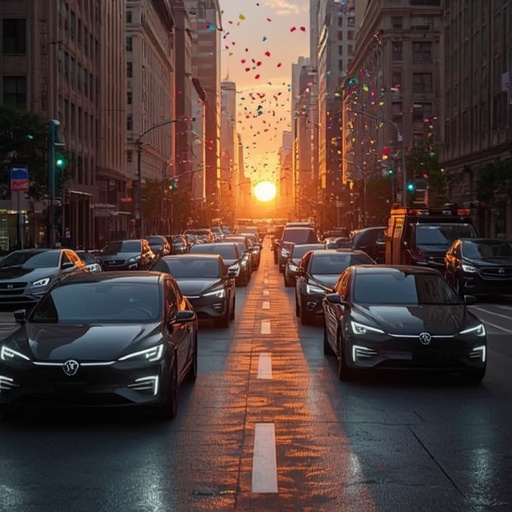
On Independence Day in San Francisco, even the most cutting-edge self-driving vehicles found themselves at the mercy of city gridlock. Waymo, one of the world’s leading developers of autonomous driving technology, reported that several of its robotaxis unexpectedly ran low on battery power amid the exceptionally dense traffic of July 4th celebrations. These electric vehicles, designed for full autonomy, eventually stalled in place and required towing assistance to be moved from congested areas.
Though momentarily inconvenient, this episode serves as a valuable learning experience in the ongoing evolution of automated transportation. The unpredictability of real-world environments — from spontaneous parades and pedestrian surges to prolonged idle times under heavy load — presents challenges that no simulation can perfectly replicate. Waymo’s team has taken this occurrence as an opportunity to gather new data about battery management, route optimization, and system responsiveness when confronted with extended traffic immobilization.
This type of real-world setback underscores the intricate balance between technological sophistication and operational resilience. Autonomous vehicles, while equipped with an array of advanced sensors and algorithms, still rely on environmental predictability to perform optimally. The July 4th incident disclosed the continuing necessity of refining both hardware and software systems so that future fleets can adapt more dynamically to prolonged urban standstills or unexpected surges in citywide energy demand.
As Waymo continues to expand its presence in major metropolitan areas, every such incident refines the intelligence of its driving logic, contributing to safer, more efficient, and increasingly context-aware robotaxis. The company’s response illustrates a strong commitment to transparency and continuous improvement — qualities essential in building public trust and advancing reliable autonomy. Ultimately, moments like this remind us that progress in mobility innovation is iterative: each traffic jam, each technical hiccup, and each field observation becomes a stepping stone toward fully self-sufficient urban transport systems destined to redefine how cities move.
Sourse: https://www.businessinsider.com/waymo-stalled-cars-independence-day-traffic-san-francisco-2026-7