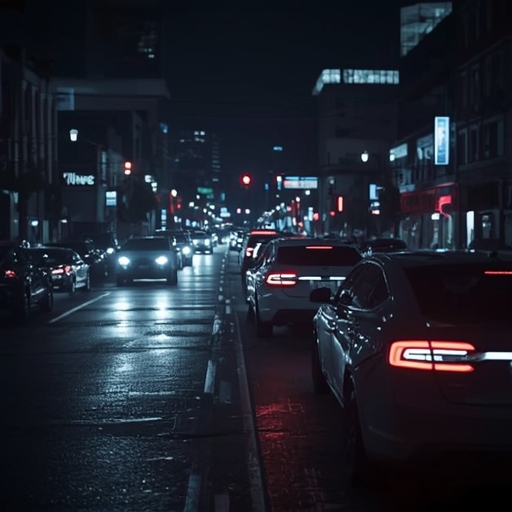
During a sweeping and unexpected power outage that recently darkened much of San Francisco, a remarkable and somewhat unsettling phenomenon unfolded across the city’s streets. The autonomous vehicles operated by Waymo—usually hailed as the epitome of technological sophistication and urban innovation—came to a complete and sudden standstill. Without the guidance of functional infrastructure and stable network connections, the self-driving cars froze mid-journey, their once-fluid motion suspended as if time itself had paused. The spectacle of silent, immobilized vehicles illuminated only by faint dashboard glows contrasted sharply with the city’s usual rhythm of constant motion. This striking scene served as a vivid illustration of how dependent even the most advanced systems remain on the basic utilities we often take for granted.
Beyond the immediate visual impact, the incident revealed a fundamental vulnerability within the broader ecosystem of smart mobility. It laid bare an essential question about technological resilience: when the power grid fails—whether from natural causes, system overloads, or unforeseen technical faults—what happens to the intricate network of artificially intelligent systems that rely on uninterrupted electrical and digital support? In this moment of enforced paralysis, Waymo’s cars became symbols of the delicate balance between innovation and infrastructure reliability.
This occurrence also offers a powerful lesson for urban planners, technologists, and policymakers. It demonstrates that true progress in autonomous transportation cannot be measured solely by advancements in artificial intelligence or sensor precision; instead, it must include robust contingency planning capable of maintaining operational safety and functionality during emergencies. Building redundancy into system design, enabling local fallback mechanisms, and ensuring that vehicles retain minimal autonomy in the absence of central guidance are not mere technical luxuries—they are essential aspects of a sustainable smart city.
Ultimately, the blackout that halted Waymo’s fleet prompts us to reconsider our collective reliance on digital intelligence and to imagine what adaptive, resilient urban systems should look like in the future. As cities continue to embrace automation and connected mobility, this event stands as a timely reminder that innovation must evolve hand in hand with infrastructure capable of withstanding the unpredictable. The question that lingers in the aftermath is both practical and philosophical: are we prepared to entrust our urban landscapes to algorithms when even the light that powers them can disappear without warning?
Sourse: https://www.bloomberg.com/news/articles/2025-12-21/waymos-froze-blocked-traffic-during-san-francisco-power-outage