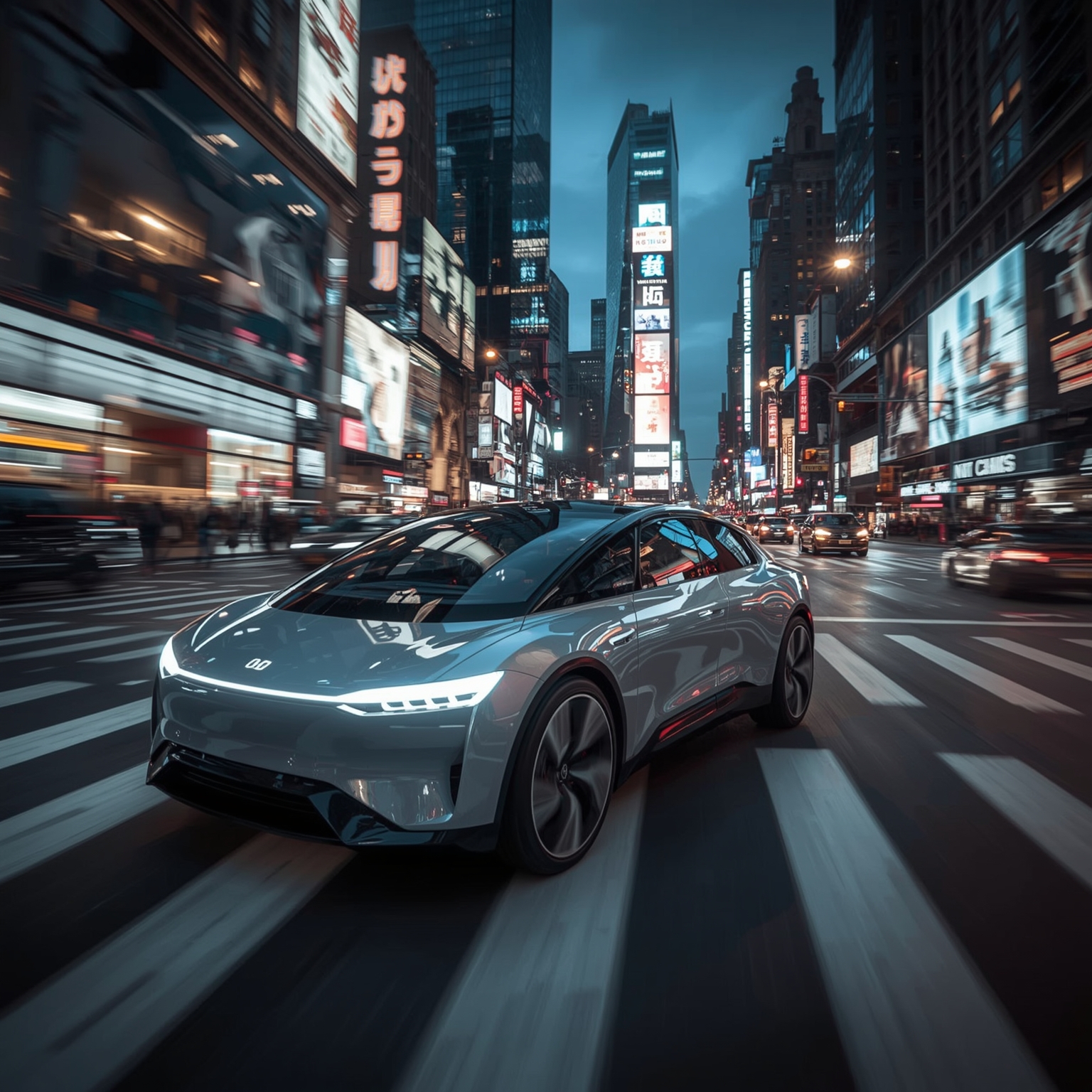
Waymo’s fleet of self-driving vehicles appears to be undergoing a striking transformation—one that pushes the boundaries of what we typically imagine autonomous technology to be. Once defined by an almost exaggerated sense of caution, these cars now exhibit driving behavior that evokes the confident, instinctive decision-making often associated with seasoned New York City taxi drivers. This evolution, while subtle in engineering terms, is immediately perceptible on the streets: instead of the hesitant pauses and overly meticulous maneuvering that once characterized early iterations of self-driving systems, these vehicles now set off with purpose the moment a traffic light shifts from red to green, completing the kind of brisk acceleration more reminiscent of a human behind the wheel than a programmed machine.
The change extends beyond simple acceleration dynamics. Observers have noted bolder turns, including fast but controlled U-turns—maneuvers that have long symbolized the practical assertiveness required to navigate dense urban environments. Such movements, while technically within operational limits, carry cultural and emotional undertones. They signal a shift from purely algorithmic obedience to a mode of operation that mirrors how experienced human drivers balance efficiency, safety, and intuition on the road. This alignment with human patterns represents not merely an update in programming but a philosophical leap in how artificial intelligence interprets context and risk.
For anyone engaged in the study of AI ethics, transportation innovation, or human-machine interaction design, this emergent behavior invites compelling questions. What does it mean for an autonomous system to act in a manner that feels recognizably human? Is this a desirable step toward integration, fostering smoother coexistence between automated and human-driven traffic, or could such assertiveness introduce new challenges in predicting vehicle behavior? As these cars begin to embody qualities of decisiveness and subtle boldness, the traditional boundary dividing artificial intelligence from human instinct becomes increasingly blurred.
Waymo’s latest developments therefore mark not just a technical refinement but a vivid moment in the ongoing narrative of robotics and autonomy—a phase where technology begins to adopt aspects of personality. For the first time, everyday observers can sense not just the precision of machine learning, but a faint impression of character in the way these cars move through the city. Whether this represents progress toward a more natural form of mobility or a complex turning point that demands renewed regulation and ethical scrutiny remains open for discussion. Yet, one thing is certain: the future of automated transportation is accelerating, and it is beginning to look—and even feel—remarkably human.
Sourse: https://www.wsj.com/lifestyle/cars/waymo-self-driving-cars-san-francisco-7868eb2b?mod=rss_Technology