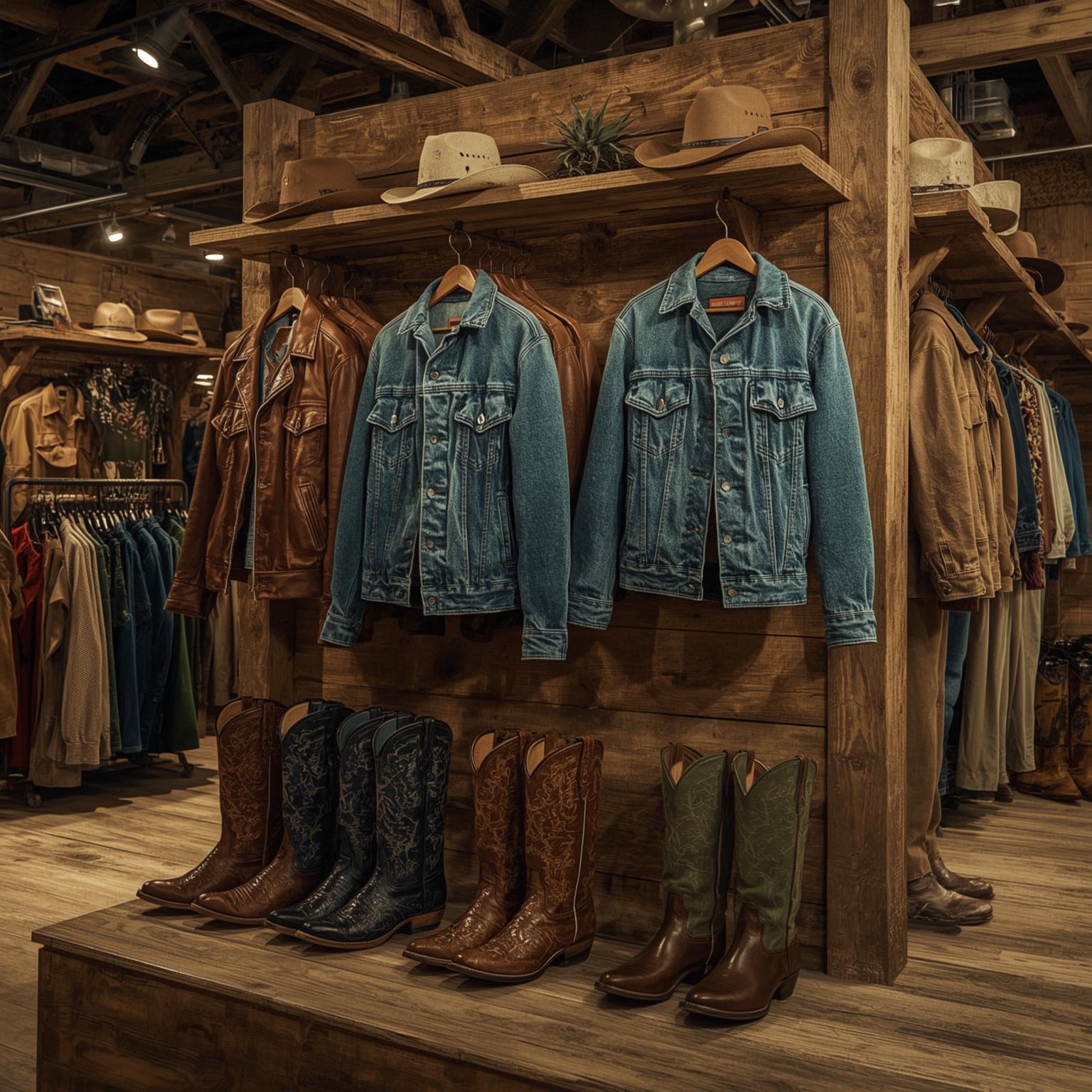
Carrying a name that evokes the rugged imagery of rodeo arenas and cowboy heritage, Boot Barn proudly holds the distinction of being the largest retailer of Western apparel in the United States. The company once again exceeded investor expectations, delivering a quarterly earnings report on Wednesday that surpassed Wall Street’s forecasts and reaffirmed its momentum within a challenging retail climate.
During the most recent quarter, Boot Barn announced net sales of approximately $505.4 million, representing a robust 18.7% increase compared to the same period in the prior year. This substantial jump in revenue illustrates not only the enduring appeal of Western fashion but also the brand’s solid operational execution. The stock market has rewarded this consistent performance — Boot Barn’s share price has surged more than 50% over the past twelve months, and it has risen over 27% since the beginning of the current calendar year, reflecting investors’ confidence in the company’s trajectory.
Operating nearly 500 brick‑and‑mortar stores across the nation, Boot Barn has continued to analyze market opportunities with remarkable precision. According to a recent internal market assessment, the brand now estimates its total addressable market to be approximately $58 billion, significantly higher than the earlier projection of $40 billion. This new figure suggests an expansive horizon of potential customers and sales avenues. Chief Executive Officer John Hazen elaborated that, based on this updated assessment, Boot Barn now envisions the possibility of operating around 1,200 locations throughout the United States — an upward revision from its previous goal of 900 stores and more than double its existing footprint. Hazen emphasized the leadership team’s firm belief that the company possesses both the strategic capabilities and financial discipline to capitalize on this amplified opportunity while maintaining consistent value creation for shareholders.
In his discussion with analysts, Hazen also drew attention to performance trends within Boot Barn’s core product segments. He explained that demand remains strong across the company’s primary categories — Western-style apparel and traditional leather boots for men and women alike — yet noted that denim, long a staple of the Western wardrobe, has recently emerged as an even more powerful focal point. “We have, in many ways, evolved into a true denim destination,” Hazen remarked, signaling that jeans have become a defining attraction for both new and loyal customers. Current fashion data from the brand indicates that among the ten most popular styles in men’s and women’s denim, nearly all fall within the classic bootcut silhouette, a design that resonates strongly with consumers seeking authenticity and a traditional Western aesthetic.
The resurgence of Western wear as a cultural and fashion phenomenon has not occurred in isolation. Its revival has been fueled by a mix of entertainment influences and broader social trends. Pop culture touchstones — including the widespread success of the television series “Yellowstone” and high-profile musical projects such as Beyoncé’s “Cowboy Carter” album and tour — have reignited public enthusiasm for cowboy-inspired attire. This renewed interest has translated into tangible retail success across both digital and physical sales channels. Even as numerous American retailers have confronted a deceleration in growth, partly due to the pressure of tariffs and shifting consumer habits, Boot Barn reports continued momentum, with sales expanding steadily online and in-store alike.
During the earnings call, Bank of America analyst Christopher Nardone inquired whether the rising popularity of Western fashion had spurred noticeable competitive threats. In response, Chief Financial Officer Jim Watkins acknowledged that when certain Western items — particularly women’s boots — rise sharply in trendiness, several mainstream fashion labels may briefly introduce them into their assortments. However, he was quick to point out that such participation tends to be short-lived and limited in scope. To date, the company has not observed any considerable new entrants posing a lasting or large-scale challenge within the Western apparel market.
Readers or industry insiders wishing to share relevant insights or tips with the reporter may reach out securely via email at kvlamis@businessinsider.com or through Signal at @kelseyv.21. For confidentiality, it is recommended that potential sources use a personal email account, connect through a nonwork Wi-Fi network, and operate on a nonwork device. A digital guide on secure information sharing is also available for reference.
Sourse: https://www.businessinsider.com/boot-barn-earnings-western-wear-trend-retail-2025-10


