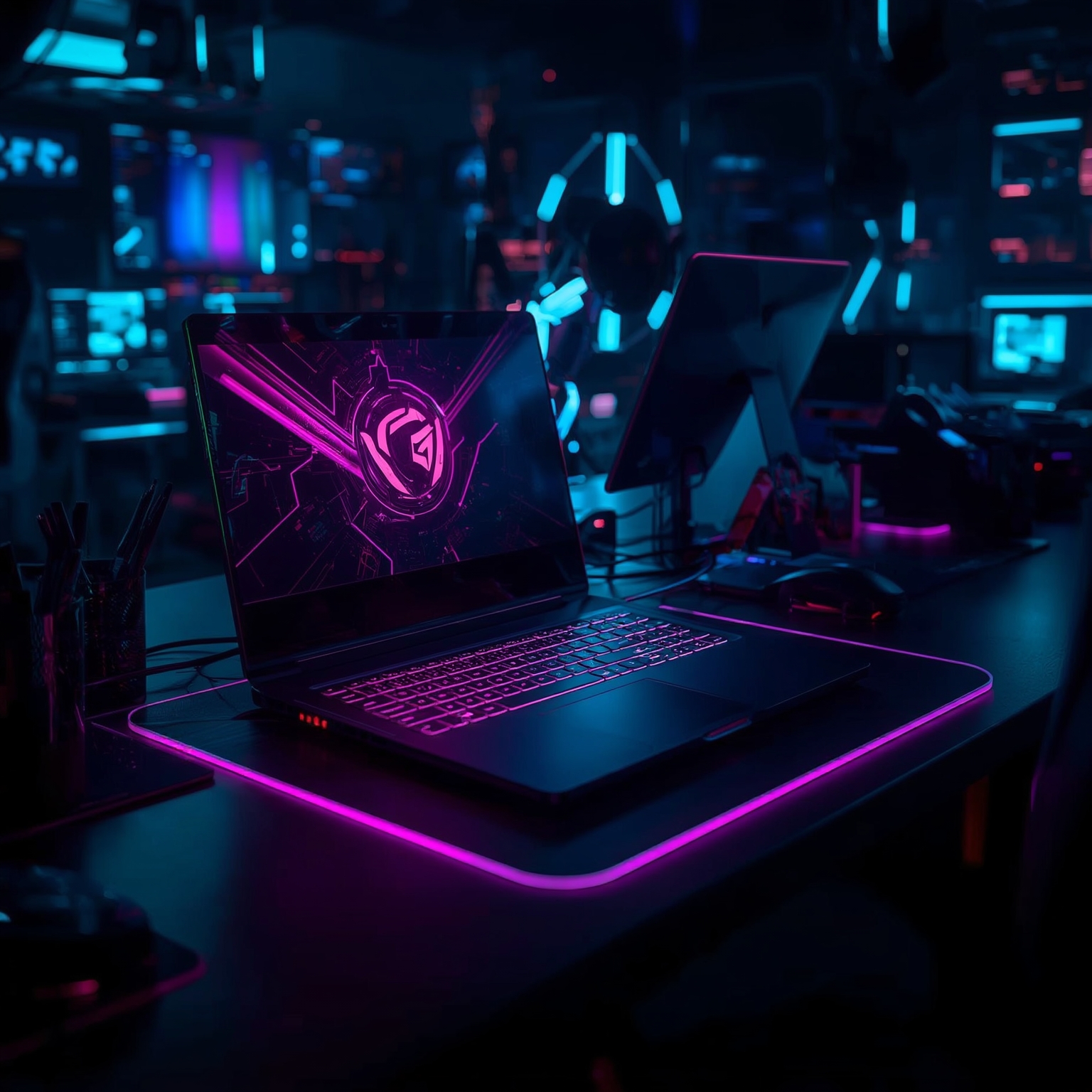
It’s surprisingly effortless to lose oneself in the intricate details of any hobby, and nowhere is that more evident than in the world of PC gaming, where the pursuit of cutting-edge performance can easily transform from personal interest into a full-blown obsession. For enthusiasts who dream of achieving the absolute pinnacle of graphical fidelity and system fluidity, the temptation to upgrade—GPU, CPU, RAM, and every last byte of storage—can become an endless cycle of refinement. Yet, at some point, this pursuit inevitably collides with the law of diminishing returns: the moment where spending exponentially more money yields only marginal gains in real performance. MSI’s Titan 18, an audacious gaming laptop carrying a jaw-dropping $5,699.99 price tag, sails far beyond that threshold. And yet, it stands as a unique spectacle among machines—an extravagant symbol of engineering excess that manages to inspire both incredulity and admiration.
From a rational perspective, devoting nearly six thousand dollars to a single laptop borders on illogical. After all, several impeccable gaming laptops now deliver nearly equivalent power while costing roughly half as much, representing a far more balanced equation between cost and capability. The Titan, however, exemplifies a kind of delightful recklessness—a purchase that defies reason but celebrates enthusiasm. Its appeal lies as much in its unapologetic overkill as in its breathtaking technical bravado; it revels in every ounce of its potential, pursuing ultimate specifications and an undeniable “cool factor” that makes the heart of any hardware aficionado skip a beat.
In practice, the Titan 18 encapsulates the notion of excessive ambition brilliantly, even if its results are inconsistent across areas of execution. Its 18-inch Mini LED 4K HDR display, boasting a resolution of 3840 x 2400 and a variable refresh rate up to 120Hz, provides a visually arresting experience. The image fidelity is vivid, with color reproduction that feels deeply saturated and punchy, accompanied by brightness levels strong enough to retain clarity even under direct sunlight. While OLED displays typically win in contrast ratio, the Titan’s Mini LED display compensates with outstanding luminance and dynamic range, resulting in dazzling imagery during both gaming and creative tasks.
Then there’s the sensory joy of typing on SteelSeries’ mechanical keyboard, constructed with Cherry low-profile switches. It stands among the most tactile and acoustically striking laptop keyboards currently available, producing a distinctly metallic resonance—a sharp, satisfying “ping” underpinning each keystroke. In lesser contexts, such a sound profile might feel excessive, but on the Titan, it suits the machine’s personality: bold, unapologetic, and infused with character.
Aesthetically, MSI continues the Titan tradition of going big and bright. Its RGB-illuminated, edge-to-edge trackpad glows with customizable lighting, enhancing its futuristic signature while providing solid haptic feedback with a convincingly substantial “click.” Yet, usability is imperfect; sensitivity occasionally falters, preventing it from reaching the intuitive precision of Apple’s MacBook trackpads. Had MSI married its rich feedback with Apple’s reliability, it could have created a gold standard in trackpad design.
As expected from a machine of this caliber, the Titan is generously equipped with connectivity options: dual Thunderbolt 5 ports for ultrafast data transfer, three USB-A ports, a 3.5mm audio jack, HDMI 2.1, an Ethernet port, and a full-size SD card reader—all paired with two user-accessible RAM slots and an astonishing four M.2 SSD bays, underscoring its upgrade-friendly nature. With internals like an Nvidia RTX 5090 GPU, Intel Core Ultra 9 285HX processor, a colossal 64GB of DDR5 memory, and up to 6TB of SSD storage, MSI’s asking price begins to justify itself from a purely hardware standpoint, even though its practicality remains debatable.
Physically, the Titan 18 is every bit the “desktop replacement” it claims to be—a massive, immovable slab of computational luxury weighing nearly eight pounds (3.6kg). Coupled with a hefty 400W power brick, the total load rises to over ten and a half pounds (4.76kg). This is not a device designed for portability but rather for dominance—meant to sit on a desk and deliver unrelenting performance across graphically demanding AAA titles and workloads such as editing or rendering. During travel, the heft becomes an undeniable obstacle; it fails to fit easily into ordinary bags and continually reminds you of its uncompromising size. Though lighter than lugging a full desktop setup and external display, the Titan still requires perpetual proximity to an outlet. Its 99Whr battery ekes out a mere two and a half hours of moderate productivity tasks and scarcely lasts an hour when gaming, even with every energy-saving measure engaged.
When tethered to its formidable power supply, however, the Titan metamorphoses into an absolute monster. Running technically challenging titles like Cyberpunk 2077 at Ultra settings in 4K—with ray tracing and DLSS 4 enabled—it sustains roughly 60 frames per second, often higher when frame generation is active. Disabling ray tracing or easing graphical presets yields silky-smooth frame rates well beyond 60fps. Similarly, in the early campaign missions of Battlefield 6, the system confidently maintained between 60 and 75fps at full 4K Ultra fidelity, dropping only slightly during visually congested moments. Reducing resolution to 2560 x 1600 can unleash the screen’s full 120Hz potential, meeting competitive gaming needs without a perceptible loss in clarity. Balancing performance with DLSS Quality mode typically produces around 100fps, reaching as high as 140fps when single-frame generation is applied—showcasing how the Titan can maximize even the most resource-intensive scenarios.
Benchmark comparisons further illuminate the Titan’s strengths. Against formidable rivals such as the Asus ROG Strix Scar 16 or the Razer Blade 16, the Titan consistently scores at the top of charts in CPU and GPU-intensive tests, aided by its unrestrained wattage levels. Nonetheless, this superiority is often narrower than one might expect relative to its monumental price; RTX 5080-equipped laptops frequently trail by only 7–10fps in demanding 4K sessions, all while costing thousands less. Many of those competitors also feature OLED displays with superior contrast and refresh rates up to 240Hz, lending them an arguably more visually delightful experience in many gaming genres.
Still, the Titan’s large chassis offers one substantial advantage: advanced thermal dissipation. Even under heavy load, fan noise, while audible, remains surprisingly tolerable compared to smaller 16-inch counterparts. The top rear of the keyboard becomes warm enough to caution direct contact, yet the WASD region—critical for gaming—remains comfortably cool. Its six-speaker array introduces a dash of sonic spaciousness, occasionally aiding in positional audio during gameplay, though it lacks the low-end richness to perform equally well for movies or music playback.
Ultimately, the Titan 18 raises two undeniable dilemmas: first, whether it makes sense to spend this much on a laptop when an equivalently powerful desktop setup could be built for half the cost; second, whether the performance gap between it and slightly smaller 5080 laptops truly justifies the surcharge. Pragmatically speaking, one could assemble a top-tier desktop with an RTX 5090 GPU, pair it with a premium display such as a 240Hz QD-OLED monitor, and still afford a separate productivity machine. However, that setup sacrifices mobility—a constraint that may dissuade buyers who genuinely need portability, even if only occasionally. Yet, even within this niche, there are compelling alternatives: the Asus ROG Strix Scar 16, for example, provides near-equivalent frame rates at a far gentler price, while the Razer Blade 16 achieves a masterful balance between horsepower, thinness, and travel convenience.
And yet, despite every rational argument against buying it, the Titan 18 retains a peculiar magnetism. It stands as an unapologetically illogical luxury—an object of desire rather than necessity, purchased by those driven not by cost efficiency but by sheer fascination with technical mastery. Every inch, every glowing edge, and every mechanical click exudes excess that feels, paradoxically, joyful. The Titan may not embody practicality, but it embodies passion: a rare blend of performance, spectacle, and audacity that turns the impractical into something utterly captivating.
Sourse: https://www.theverge.com/tech/806052/msi-titan-18-ai-rtx-5090-gaming-laptop-review


