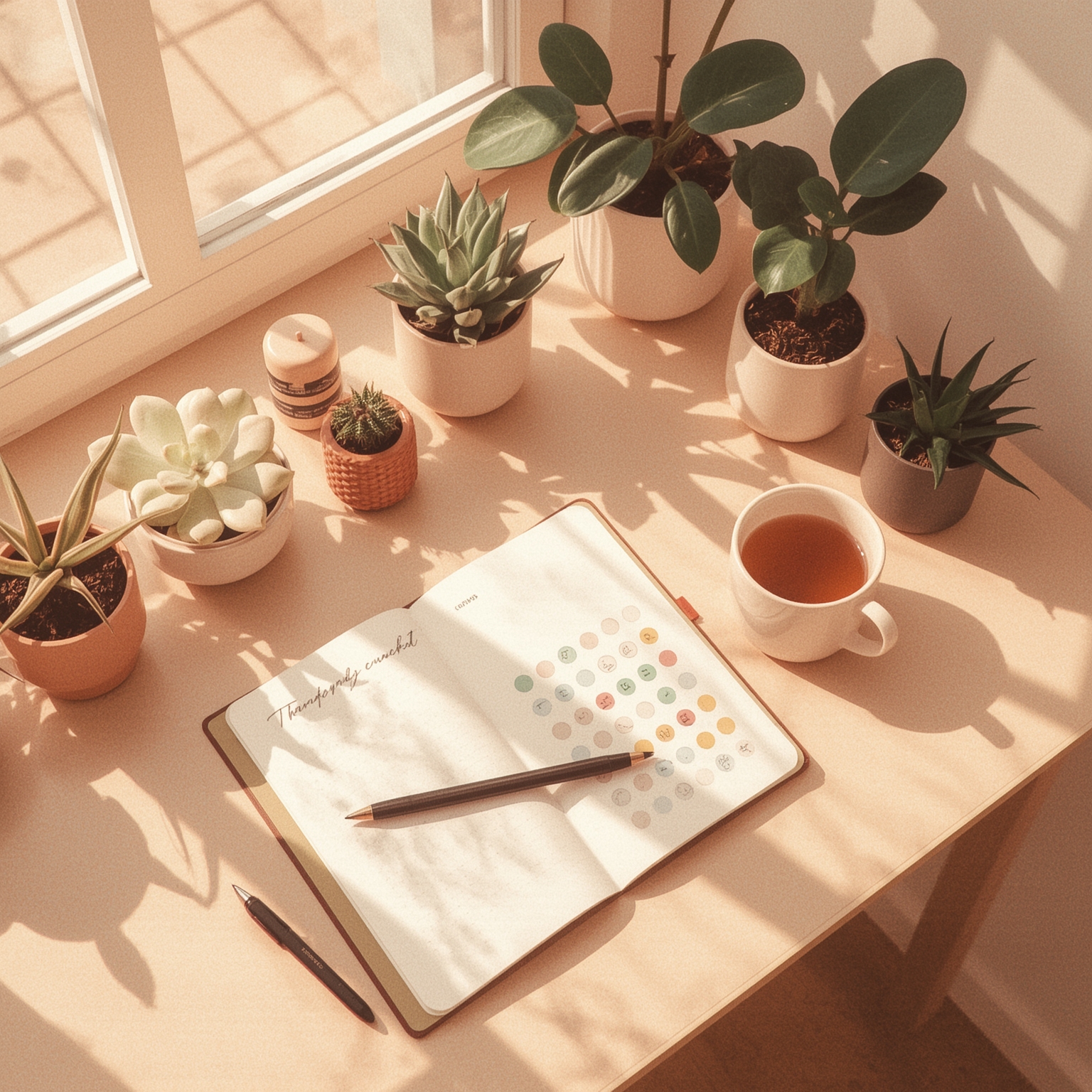
For nearly half a decade, I have maintained a meticulous yet deceptively simple ritual: at the conclusion of each day, I draw a small green dot at the top of my journal page. This miniature symbol serves as a visual shorthand for the nuances of my emotional state. When the dot is tiny, it signifies that the day was pleasant, a generally positive experience free of significant turmoil. A slightly larger green circle celebrates a day of rare delight—one of those moments when satisfaction feels effortless. Then there are the days adorned with an oversized green dot, those exceptionally rare occasions when everything aligns so perfectly that no explanatory notes are necessary. By contrast, orange marks signal tension or anxiety, red communicates outright anger, and blue embodies melancholy or sadness.
My rudimentary system may lack the precision or analytical capabilities of the countless digital mood-tracking tools available today, yet its charm lies in its immediacy and consistency. The act of drawing a dot is both swift and tactile—a gesture so simple that it encourages continuity. Over time, this accessible ritual became not merely a self-observation technique but a subtle catalyst for personal growth and emotional balance. I have sustained this practice daily since the start of 2021, and in doing so, have accumulated a visual diary of my inner fluctuations that speaks volumes about my overall well-being.
Curious to explore the psychological mechanisms underpinning this habit, I consulted Arthur C. Brooks, a Harvard scholar renowned for his research on happiness. Brooks explained that journaling fosters metacognition—the rare capacity to observe one’s thought processes objectively, almost as if stepping outside oneself to gain perspective. In neurological terms, writing allows emotions initially rooted in the limbic system, the primitive emotional hub of the brain, to migrate into the prefrontal cortex, where rational reflection occurs. This shift transforms impulsive feeling into manageable understanding. According to Brooks, consistently acknowledging and processing one’s internal world cultivates agency, leading over time to greater mastery of one’s emotional life.
Because I have a natural inclination toward data collection—I previously attempted to quantify patterns in my physical habits—I began mapping my emotional dots into a larger dataset. By compiling entries spanning from January 2021 through September 2025, I hoped to identify tangible trends: which daily routines buoyed my spirits, and which reliably dampened them? Predictably, many of the timeworn recommendations for a contented life proved surprisingly accurate. My mood charts reveal spikes of happiness on days when I drank less alcohol, enjoyed consistent sleep, exercised, connected socially, engaged deeply in meaningful work, or extended kindness toward others.
Yet, on closer reflection, the data also challenged my long-held assumptions about happiness. I discovered that confronting uncomfortable emotions—frustration, disappointment, even anger—was not detrimental but essential to long-term stability. Avoiding discontent, it seemed, deprived me of authenticity. Similarly, while capturing vacation photos for social media provided instant gratification through digital validation, it often correlated with subsequent dips in reported satisfaction. The exercise illuminated an uncomfortable truth: optimizing life through measurement and control may enhance awareness, but it cannot guarantee perpetual joy.
Throughout my life, I regarded naturally cheerful individuals with a mixture of admiration and bewilderment, as though they had received a secret guidebook. During adolescence, while peers radiated exuberance—singing along to upbeat pop anthems and navigating early relationships—I found solace in quieter pleasures, such as immersing myself in period dramas alone. I frequently questioned whether my reserved temperament was immutable. According to Brooks, genetic predisposition plays a significant role: approximately half of our baseline happiness is inherited, while a quarter depends on circumstance. Thus, those born into hardship or with a familial tendency toward melancholy face a steeper climb toward happiness. Encouragingly, however, the remaining 25 percent is within personal control—an empowering fraction governed by habits, goals, and deliberate choices.
For me, the years 2021 and 2022 were particularly challenging. Ongoing pandemic fatigue combined with deep anxiety for my family in Ukraine during the war’s early days created a sustained emotional heaviness. Yet, even amid these trials, patterns of gratitude maintained a visible upward trajectory in my chart. A vivid example occurred in April 2021 when I received my vaccination against COVID-19. The ability to move freely for the first time in over a year sparked a profound surge in contentment. Brooks noted that consciously nurturing gratitude not only elevates daily mood but can gradually counterbalance genetic or environmental gloom through strengthened relationships and improved lifestyle behaviors.
Interestingly, my data also revealed that stress, often vilified, is not inherently destructive. While I may fantasize about endless comfort—being swaddled indefinitely with good food and no responsibilities—the most memorable rewards have emerged from episodes of productive stress: starting a new job, adopting a pet, or becoming engaged. Each initially spiked anxiety, yet those same experiences generated tremendous satisfaction once equilibrium returned. Brooks described happiness as a combination of three essential elements: enjoyment, satisfaction, and meaning. Crucially, satisfaction arises from overcoming difficulty; humans, he observes, are uniquely equipped to derive fulfillment from striving toward achievement. My most profound euphoria stemmed from stretching beyond comfort zones—running a marathon, mastering public speaking, or initiating genuine conversations with strangers. These endeavors underscore a paradox: comfort can stagnate joy, while constructive challenges invigorate it. True self-care sometimes means daring, not retreating.
Another major insight from my long-term experiment centered on relationships. Modern life often erodes spontaneous connection, as remote work and limited communal spaces reduce unplanned social interaction. Determined to counteract isolation, I began scheduling group activities—joining a choir, participating in a running club, and attending shared fitness sessions. Initially awkward, these recurring engagements soon created a dependable rhythm of companionship. Brooks has observed that high-achieving individuals frequently rationalize their loneliness under the guise of busyness, yet treating social commitments with the same seriousness as professional meetings often leads to vastly improved well-being.
I also confronted an unexpectedly transformative revelation about anger. For years, I approached irritation as an emotion to suppress, perceiving it as incompatible with kindness. Outwardly accommodating yet internally anxious, I permitted minor trespasses rather than expressing honest boundaries. Brooks’s perspective reframed this pattern: anger, he affirmed, is not inherently destructive but a neutral signal alerting us to environmental disruption. When acknowledged calmly, it guides constructive responses instead of reactionary outbursts. This mindset shift quietly revolutionized my relationships. By recognizing recurring sources of irritation—conversations that felt one-sided, activities that drained rather than delighted, social gatherings that began too late—I was able to adjust my choices. The result was fewer emotional spikes and an overall reduction in anxiety and sadness. Living transparently in alignment with my authentic preferences brought a rare lightness to life.
Equally life-changing was my decision to detach from social media. One evening, after realizing I had wasted precious minutes scrolling through trivial content and obscure acquaintances’ photos, I impulsively deleted Instagram from my phone. Later, I reinforced the decision by installing a device called a Brick to block my phone’s internet access during mornings. The impact was immediate and profound. Multiple studies have already documented correlations between heavy social media use and diminished mental health, particularly among younger demographics, and my personal experience vividly corroborated those findings. Once freed from the constant influx of curated lives and algorithmic noise, I felt an upward shift in mood almost instantly. Gradually, as I spent more time offline, I rediscovered a clearer sense of self—preferences, curiosities, and opinions no longer blurred by comparison. Brooks was unsurprised, explaining that endless digital distraction prevents deeper contemplation of life’s essential questions. The digital fast, paradoxically, restored both focus and meaning. I laughingly refer to my new approach as an “appstinent” lifestyle, because abstaining from incessant scrolling has been the single most beneficial change I have made for my mental health.
Yet, even after cultivating happiness through meticulous habit formation, one aspect remains elusive: hope. Although I’ve learned to nurture gratitude and presence, I often struggle to maintain optimism for the world at large. This may stem partly from innate temperament and partly from overexposure to bleak news cycles. I’m not alone in this malaise; recent national surveys reveal that nearly one in five Americans report persistent feelings of depression. Interestingly, emerging research now suggests that hope—defined as the belief that improvement is possible—may surpass happiness in predicting sustained well-being. Observing friends who embody this resilience, I’ve discovered that their hope originates from diverse sources: faith, philosophical conviction, or steadfast optimism as a deliberate worldview.
Brooks, drawing upon cross-cultural wisdom and his own faith tradition, emphasizes relational depth as the foundation of hope. Strengthening bonds with loved ones, colleagues, and the spiritual or transcendent facets of existence fosters a durable sense of purpose. From him, I have learned that while happiness can be systematically cultivated—through data, discipline, and reflective practice—hope must be co-created. It arises in the shared recognition that, despite uncertainty, life’s trajectory can still bend toward light. The past five years of colored dots have shown me that happiness may be recorded and optimized, but hope, humbler and more mysterious, must be nourished collectively through empathy, connection, and love.
Sourse: https://www.businessinsider.com/i-tracked-moods-every-day-years-happiness-habits-2025-10


