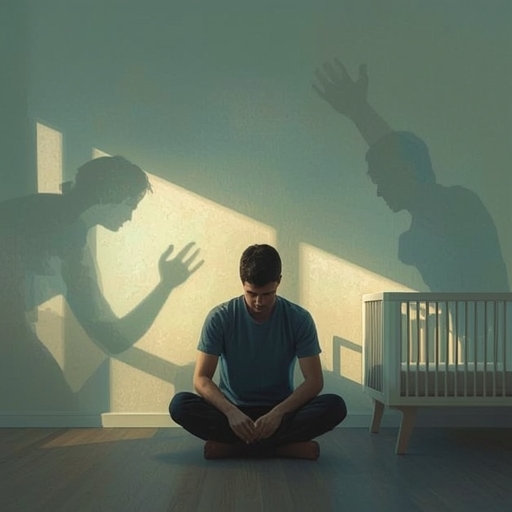
The experience of becoming a father represents one of the most transformative and emotionally charged periods in a man’s life—a moment that holds immense beauty and profound vulnerability. What is often portrayed as a purely joyous event can, in reality, usher in a complex web of emotions that many new fathers are unprepared to navigate. Feelings of pride and love coexist with uncertainty, exhaustion, and, for some men, a quiet descent into postpartum depression. Though society tends to associate this condition exclusively with mothers, research and lived experience increasingly affirm that men, too, can struggle deeply during this time. \n\nFor a new father, the emotional landscape can shift dramatically. Sleepless nights, the pressure of new responsibility, and the challenge of supporting one’s partner while adapting to an unfamiliar identity can leave even the most resilient men feeling adrift. It is not merely fatigue or temporary melancholy—sometimes it is a profound sense of loss, a disconnection from joy, or an inability to recognize oneself in this new role. The smiling exterior often conceals an internal battle that many fear to articulate for fear of seeming inadequate. \n\nIn countless homes, men endure these feelings silently, believing that vulnerability undermines their strength. Traditional definitions of masculinity have long discouraged open discussion of emotional pain, especially around parenting. Yet failing to acknowledge these experiences only deepens isolation. Conversations around fathers’ mental health are therefore not just beneficial—they are necessary. They allow men to reclaim agency over their well-being without shame, to understand that seeking help is an act of courage rather than weakness. \n\nPostpartum depression in fathers manifests in varied ways. Some experience persistent irritability, withdrawal from loved ones, or difficulty bonding with the baby. Others feel their confidence erode under the weight of perceived expectations—both personal and societal—regarding what a ‘good father’ should be. The result can be personal turmoil that reverberates throughout the family unit, affecting relationships and the overall harmony of the household. Recognizing these signs early and addressing them with care and compassion can lead to healing and deeper connection. \n\nSupporting fathers through this journey requires collective awareness. Partners, families, and communities must open spaces where men feel safe to speak honestly about their emotions. Healthcare providers can play a crucial role by routinely including fathers in postpartum mental health discussions, ensuring that their struggles do not go unnoticed. Most importantly, men themselves should be reminded that vulnerability is not the opposite of strength—it is proof of humanity and the gateway to authentic resilience. \n\nFatherhood, when met with openness and support, has the power to become a profound journey of rediscovery. Beneath the surface of fatigue and fear lies an opportunity to redefine one’s identity—to grow into a version of the self that harmonizes care for the child with compassion for the self. By bringing fathers’ mental health into the light, we not only protect the well-being of individual men but also nurture more empathetic families and communities. No father should have to walk the path of parenthood feeling unseen. Conversations and understanding can transform pain into purpose and isolation into connection, reminding every parent—mother or father—that healing and wholeness are shared responsibilities grounded in empathy and love.
Sourse: https://www.businessinsider.com/dad-experienced-postpartum-depression-2026-4