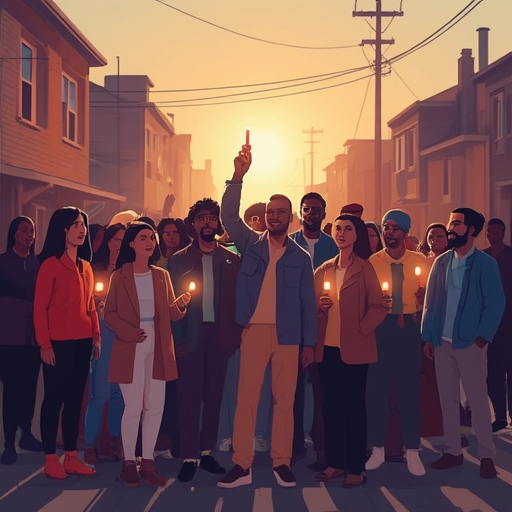
From the world of romantic fiction emerges an unexpected yet profoundly human story of social transformation and civic courage. Two acclaimed authors, long celebrated for their ability to craft narratives of love, empathy, and resilience, have stepped beyond the page to translate those same ideals into real‑world action. Where once their words stitched together tales of emotional strength, they now weave a new, tangible narrative — one defined by community solidarity, safety, and mutual care in times of uncertainty.
At the center of this modern movement lies an object so simple it might otherwise go unnoticed: a whistle. Yet within its modest form, the whistle has become an emblem of defiance and unity, a symbol capable of transcending its utilitarian design to embody an entire philosophy of collective empowerment. In their campaign, these writers urge people from every background to carry and use whistles not merely as tools of personal security, but as audible affirmations of shared vigilance. A single sharp note, once a sound of alarm, now signals courage — a reminder that vigilance and compassion can coexist in the same breath.
The initiative finds its roots in the same creative force that animates literature: the belief that small gestures can ripple outward into monumental change. When a person blows a whistle to draw attention to injustice or to summon help for a neighbor, it becomes a living metaphor for storytelling itself — giving voice to the silenced, calling others to witness, and inspiring participation rather than passive observation. Just as novels have the power to illuminate unseen corners of human experience, this act encourages people to confront fear not with retreat, but with sound, presence, and solidarity.
Community members are embracing this concept across diverse spaces — from local gatherings and urban corridors to peaceful demonstrations — where the whistle’s clear tone functions like a heartbeat, rhythmic and unifying. It speaks in a language understood without translation: the language of mutual protection. Every whistle blast stands as proof that vigilance is not distrust but care — care for one another’s safety, dignity, and right to exist freely in public spaces.
This call to action, while inspired by artistic imagination, carries a deeply pragmatic spirit. It reminds us that cultural creativity does not end at a book’s final page or a painting’s frame; rather, it can extend into life itself as a constant narrative of responsibility. The authors’ effort challenges us to reimagine what activism can look like when infused with empathy and artistry. In this reimagined form, courage is gentle but unyielding, expressed not in grand declarations but in the simple readiness to act.
When a whistle echoes through a crowd, it does more than disrupt silence — it threads individuals together in a shared pulse of awareness and resolve. It declares to any would‑be aggressor that isolation and fear will not prevail, for the community is attentive and united. It also announces to those feeling vulnerable that they are seen, heard, and defended. Within this resonant gesture lives the same emotional energy that once fueled countless fictional heroes: faith in human connection as the most enduring form of protection.
Ultimately, this initiative illustrates that activism need not always begin with large institutions or complex systems; it can begin with a breath of air, a tone of courage, and a network of people willing to listen. The whistle, simple and bright, transforms into an instrument of hope — one that converts sound into solidarity and art into action. Through it, creativity evolves from expression into embodiment, from imagination into impact. And as communities answer that call, they reaffirm an everlasting truth: the strength of humanity lies not in silence, but in the collective harmony of those who dare to speak up.
Sourse: https://www.theverge.com/policy/874959/3d-printed-whistles-for-ice-minneapolis-chicago-renee-good-alex-pretti