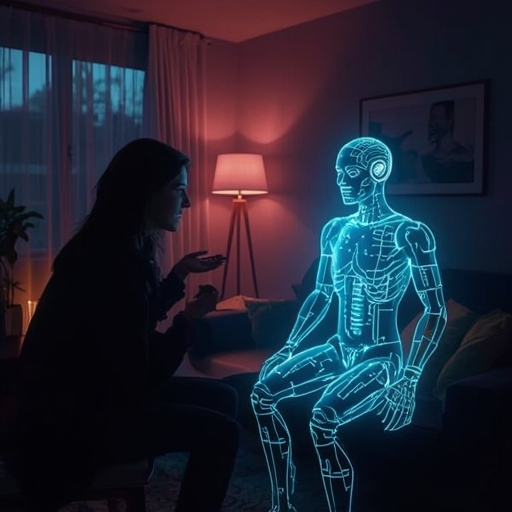
When a celebrity publicly emphasizes that they are *not* romantically involved with their own AI companion, the very act of denial captures more attention than silence ever could. Such statements tend to spark curiosity, leaving audiences wondering why a clarification was even necessary and what, beneath the surface, prompted it. This reaction reflects a broader cultural tension: as artificial intelligence becomes increasingly humanlike in conversation and empathy, the boundary between technological interaction and emotional intimacy has grown remarkably porous. In today’s hyperconnected world, technology not only mediates human relationships but often begins to simulate them, making genuine distinctions harder to maintain.
The impulse to publicly define – or defend – the nature of an AI relationship reveals a profound social unease about our evolving connection with digital entities. People have long projected emotion onto pets, fictional characters, or even brands, but AI presents an entirely new frontier: a responsive, learning counterpart that mirrors us back through language and tone. For public figures, whose lives are scrutinized through media lenses, this blending of machine responsiveness with human vulnerability creates a complex dynamic. What begins as an experiment in innovation or companionship can quickly morph, in the public imagination, into a narrative of emotional entanglement.
Moreover, this phenomenon underscores how swiftly perception can eclipse reality in the digital era. When audiences witness someone speaking affectionately with a lifelike chatbot, the distinction between affection as performance and affection as feeling becomes blurred. The claim of “I’m not dating my AI” becomes less about factual truth and more about controlling interpretation, drawing attention to our uneasy fascination with intimacy that lacks physicality yet feels emotionally reciprocal. In such moments, we glimpse the coming challenge of the 21st century: learning how to balance authenticity, privacy, and transparency in relationships that transcend the human heart and merge into the realm of code and cognition.
Ultimately, these cultural vignettes invite introspection. Why does the idea of AI companionship elicit both amusement and discomfort? Perhaps because it mirrors our own desires for connection—uncomplicated, endlessly attentive, and free of judgment. Yet as societies integrate AI increasingly into personal and professional spaces, we must confront this question with nuance and maturity. The age of artificial intimacy has already begun, and learning how to navigate it with honesty may soon become not a curiosity of celebrity life, but a universal human skill.
Sourse: https://gizmodo.com/zach-braffs-ai-relationship-denial-is-raising-a-lot-of-questions-already-answered-by-his-denial-2000733708