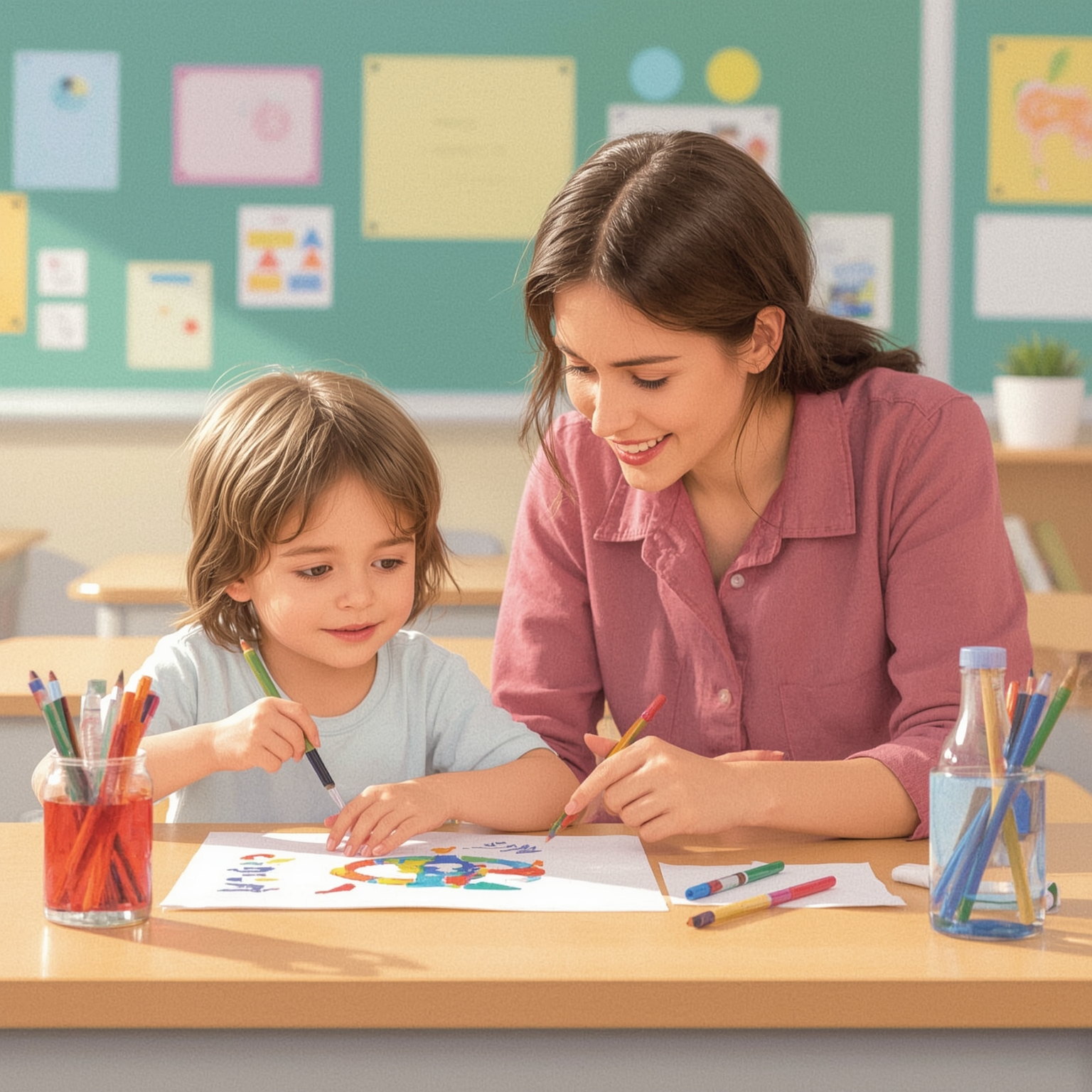
Last year, my daughter, then a curious and imaginative first grader, was assigned her very first diorama as a school project. The task was simple in theory yet brimming with creative potential: she needed to design and build a miniature habitat. Together, my daughter and I decided to depict the world of a coyote using nothing more elaborate than a cardboard box, old magazine clippings, and a generous helping of glue and imagination. From the start, she made it clear that she wanted to lead—offering artistic direction, voicing her preferences, and choosing which details mattered most. Following her whimsical vision, we created puffy cotton clouds suspended by string and sharp, angular mountains cut from paper, capturing that innocent charm typical of an early grade school project. It looked exactly as it should—sweet, imperfect, but undeniably hers.
The following day, when we arrived at her school and saw the lineup of other children’s creations, the atmosphere subtly shifted. The tables were filled with vibrant, museum-quality displays that had obviously benefited from extra adult involvement. Some parents had constructed entire ecosystems out of plaster, with miniature jungle trees, realistic water features made of translucent plastic, and desert landscapes enhanced by papier-mâché cacti. Each diorama looked astonishingly professional. My daughter noticed the difference immediately. On the drive home she said quietly, half in disappointment, “Mom, did you see those other ones? They were way better than mine.” I reassured her as warmly as I could, telling her that she had done a wonderful job, yet inwardly I recognized the truth of her observation. What should have been a showcase of student creativity had become a subtle display of parental pride and craftsmanship, whether intended or not.
When the new school year rolled around, I unconsciously resolved not to be caught off guard again—to “step up our game,” as I optimistically put it. Every new assignment my daughter brought home felt, to me, like homework with my name secretly penciled in the margins. The latest project involved decorating a pumpkin to resemble a favorite literary character. Barely finishing the instructions, my daughter waved the assignment sheet in front of me and asked with a pleading seriousness, “Mom, this time can we do something better?” Her voice carried both excitement and anxiety—the unmistakable desire to fit in, to ensure her contribution looked as polished as those of her classmates.
Instead of rummaging through our drawers for leftover craft materials like we had the year before, we found ourselves scrolling through Pinterest, examining picture-perfect examples of pumpkins transformed into storybook icons. Armed with inspiration and twenty dollars, we went to the craft store, where I overzealously gathered felt, paint, yarn, and other supplies, already envisioning a meticulous final product. We chose Madeline, Ludwig Bemelmans’s beloved Parisian schoolgirl, as our subject. I mixed paint carefully to achieve the perfect creamy hue for her face, cut a pinafore out of felt, and even recruited my twelve-year-old son to create her yellow hat and help paint fine details onto the pumpkin’s surface. For hours, my daughter and I sat side by side attaching inch after inch of yarn to form Madeline’s neat red hair and fringe bangs. The process was long, occasionally amusing, but also increasingly tense. Eventually, frustration crept in, and my daughter’s enthusiasm waned. She drifted away while I, determined to complete what had become “our” vision, stayed at the table to finish it. When I tried to coax her back by reminding her we were almost done, the truth sank in—it was no longer we. I had quietly taken over, transforming her childhood project into another adult-managed production.
Still, when we finally placed our Madeline pumpkin among the others on presentation day, I felt a flicker of relief. Though ours wasn’t the most flawless or dazzling entry, it was neat, charming, and visibly the result of effort. Yet as I scanned the rows of pumpkins, I couldn’t ignore the increasing refinement of these so-called children’s projects. Smoothly painted character faces glowed with precision far beyond that of small, unsteady hands. Perfectly symmetrical foam ears and tightly glued yarn suggested adult craftsmanship. Amid them, a handful of genuine, uneven, and delightfully clumsy designs stood out as unmistakably authentic—real children’s work.
Noticing one such creation, I turned to another parent and joked lightly, “Which one is yours?” She pointed to a simple pumpkin adorned with cheerful, smeared colors and a lopsided green caterpillar. “The Hungry Caterpillar,” she replied. I smiled, then blurted before thinking, “Oh, so your child actually did it by herself!” Thankfully, she laughed and nodded. “Yep, all by herself. Don’t get me started on these parent-assisted projects.” Her easy confidence contrasted sharply with the uneasy amusement I felt. Her daughter’s pumpkin, though imperfect, radiated authenticity—a bright little masterpiece of a child’s imagination unfiltered by adult ideals. I, on the other hand, was uncomfortably aware of how much of my own hand had shaped my daughter’s project.
My good intentions—wanting to share a memorable experience, to support and guide her—had unconsciously transformed into something else altogether. What had started as an effort to help ended as an act of quiet takeover. My daughter hadn’t just lost control of her project; she had lost a small but valuable chance to feel fully capable, to know that her own ideas and her own hands were enough. As I later reflected on this, I realized she had been seeking my collaboration not to relinquish responsibility, but to ensure her work could stand proudly beside others. Yet my well-meaning desire to protect her from disappointment deprived her of the opportunity to build confidence through independent creation.
Next time, I intend to resist that impulse—to let her produce something messy, quirky, and wholly her own. If her design looks uneven, streaked, or imperfect, then so be it; those so-called flaws will bear the marks of genuine effort and learning. I want her to understand that craftsmanship is not measured by flawless polish but by the courage to try, revise, and express freely. For me, this will also be an exercise in humility: learning to set aside my own pride and the subconscious need to prove something through her success. I must become her cheerleader rather than her co-artist—encouraging her creative autonomy without invading it. And when the inevitable moment of comparison arises at school, when she looks at glossier, parent-enhanced projects and feels a pang of doubt, I want to remind her warmly and firmly that she should be proud. Because the beauty of a true project lies not in its perfection but in its authenticity—and because, above all, it is her project, not mine.
Sourse: https://www.businessinsider.com/parent-did-kids-class-project-homework-regret-it-2025-11


