Across the world’s oceans, the past is beginning to ripple once more. As tensions rise between the United States and Iran, the specter of naval warfare has again surfaced, proving that the dynamics of maritime power are never truly dormant. The echo of history resounds through time, carried on the waves that now lap against museum ships from the Second World War. Once preserved merely as artifacts of a distant conflict, these imposing vessels now seem to speak directly to our current geopolitical moment, reminding us that yesterday’s strategies, technologies, and sacrifices remain essential lessons in today’s uncertain seas.
World War II museum ships—moored in harbors and coastal museums across nations—embody more than nostalgia or mechanical preservation. They represent a convergence of human ingenuity and endurance, a physical record of both triumph and tragedy. Each rivet, turret, and steel deck is a testament to an era when industrial might determined survival and when sailors faced the vastness of conflict across an unforgiving ocean. Yet as modern navies once again maneuver, deploy, and posture across similar waters, these historic vessels no longer seem like relics of closure, but rather like silent witnesses offering counsel through the vocabulary of their construction.
The shifting balance of maritime power today rekindles questions once thought relegated to history books: how deterrence is measured, how technology defines dominance, and how the lessons of the past constrain the ambitions of the present. Standing aboard such a ship, one can almost sense the cyclical rhythm of human history—how moments of peace are often interludes between storms. The heavy steel hulls and weathered decks of these museum ships now mirror the realities unfolding across contemporary seas, where technological sophistication collides with the timeless unpredictability of human decision.
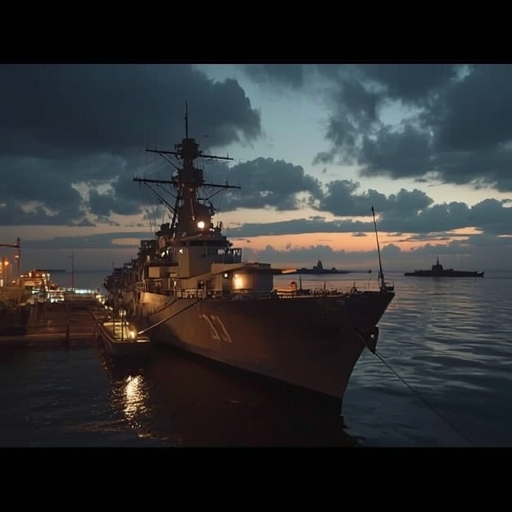
In this renewed light, World War II museum ships have become powerful symbols of continuity rather than closure. They connect our modern anxieties with the lived experiences of those who once navigated the most perilous waters of global warfare. As their shadows fall across the docks at dusk, illuminated by the subtle glow of harbor lights, they remind us that the wisdom preserved in their metal bones was never meant to remain static. Instead, it compels reflection—a warning written in salt and steel that the cost of forgetting history is to risk reliving it in ever more complex forms.
The resurgence of naval strategy as a topic of public and political discourse affirms the enduring relevance of these vessels. Once visited for their historical value, they now anchor our moral and strategic imagination in the present. Their endurance across generations is not merely symbolic; it underscores the permanence of maritime power as a determinant of national security and collective memory. Each preserved battleship or submarine thus becomes not a monument to the past, but a mirror reflecting the persistent dance between innovation, conflict, and the fragile hope for peace at sea.
As we gaze upon these storied ships—silent, steadfast, and eternal against the twilight horizon—we are reminded that history does not rust; it waits. And in their steel silhouettes lies both a caution and a call: that remembrance, if paired with insight, might yet steer our present course toward calmer waters.
Sourse: https://www.businessinsider.com/ww2-museum-ships-submarines-iran-war-2026-3