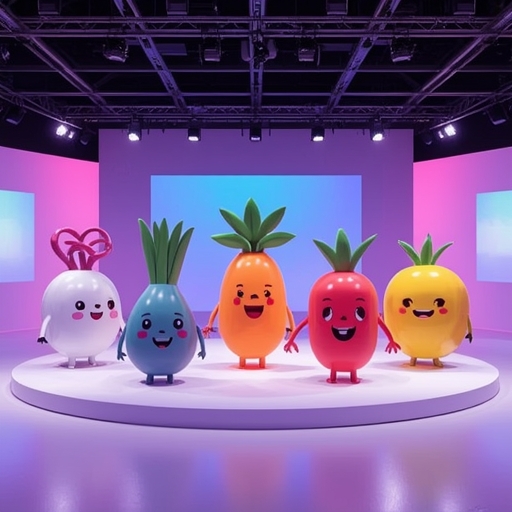
The world’s leading technology corporation recently inaugurated its much‑anticipated annual conference, a moment that customarily shapes industry expectations and public imagination alike. Yet, rather than unveiling a visually groundbreaking experience that embodied the essence of avant‑garde innovation, the event unexpectedly presented an aesthetic that many viewers compared to the whimsical surrealism of a vividly animated kitchen scene. Instead of sleek futurism or meticulously crafted minimalism, spectators found themselves immersed in imagery evocative of anthropomorphic produce—colorful, glossy, and strangely reminiscent of scenes from a children’s cartoon.
This creative choice has prompted a lively debate across professional design circles, marketing agencies, and social media communities. Was this playful and idiosyncratic visual strategy a daring attempt at creative disruption, or did it signify a lapse in judgment from a brand that has long been venerated for its elegant restraint? By juxtaposing the seriousness of cutting‑edge technology with an unexpectedly lighthearted visual narrative, the company inadvertently invited reflection on the complex relationship between originality and recognizability. In today’s culture of relentless innovation, the line between visionary experimentation and parody can blur easily, especially for a corporation whose visual identity has shaped global expectations of design excellence.
For some observers, the choice demonstrated courage—a willingness to depart from sterile corporate formalism in favor of vibrant storytelling that humanizes technology. For others, it represented a tone‑deaf misalignment between content and context, undermining the sophistication of the product announcements with imagery too closely associated with animation or satire. In either case, the outcome serves as a revealing case study in brand perception management. As media reactions oscillate between amusement and confusion, this example underscores how even the most accomplished design teams can miscalculate the emotional resonance of visual communication when experimenting at the boundaries of creative expression.
Ultimately, the episode illustrates that aesthetic innovation entails inherent risk. What captivates one audience may alienate another, especially when visual metaphor overtakes message clarity. The irony, of course, lies in the fact that this unexpected foray into the realm of animated whimsy has achieved precisely what all contemporary marketing strives for—widespread attention, spirited conversation, and cultural relevance. Whether hailed as a bold stylistic experiment or gently mocked as a curious lapse in taste, the conference’s design will be remembered as a moment when the world’s pre‑eminent technology leader reminded everyone that creativity, like innovation itself, can sometimes take delightfully unpredictable forms.
Sourse: https://gizmodo.com/the-most-valuable-company-in-the-world-welcomes-you-to-its-conference-with-veggie-tales-adjacent-slop-2000732710