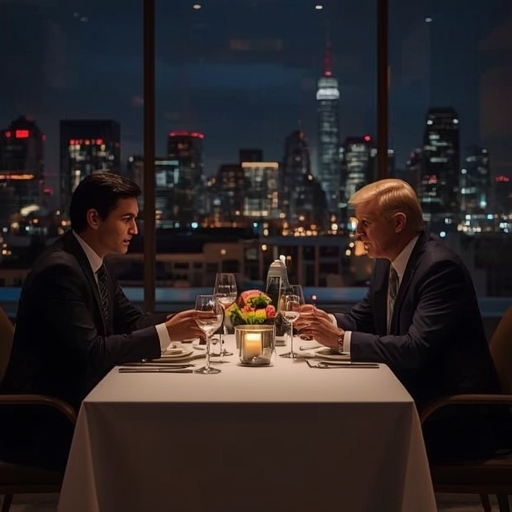
Across the span of a single weekend, an atmosphere of gravitas and quiet intensity enveloped a series of high-profile dinners where the worlds of technology, governance, and global policy converged. These encounters were not mere social occasions; they constituted strategic discussions held over meticulously curated tables, where innovation met authority and the future was debated between courses. The symbolism of such meetings extends well beyond the dining hall: in these intimate yet consequential spaces, the architects of the digital era conversed with those shaping the geopolitical order, revealing how intricately modern influence is woven between enterprise and statecraft.
The very sight of business magnates seated alongside world leaders underscores a pivotal reality of our era — technological innovation no longer exists in isolation, driven solely by market forces or entrepreneurial vision. Instead, it now intersects directly with governance, ethics, and global diplomacy. Every conversation, quietly exchanged beneath the soft glimmer of chandeliers, carries implications for economies, societies, and the ethical frameworks that define progress. From data regulation to artificial intelligence, from energy sustainability to cybersecurity, the agenda of such gatherings stretches far beyond business strategy, encompassing the moral and civic responsibilities of technology itself.
Observers across industries have found in these meetings a potent symbol of the evolving relationship between public institutions and private innovation. Some interpret them as evidence of constructive collaboration — the necessary dialogue that enables governments to keep pace with exponential technological change. Others, however, caution against the potential erosion of boundaries between corporate power and political influence. When those who design our digital ecosystems sit shoulder-to-shoulder with those who draft our laws, the questions of accountability, transparency, and balanced authority inevitably arise.
Yet it is precisely this tension — between partnership and dominance, cooperation and control — that makes these encounters so vital to examine. In an age when innovation can reshape societies overnight, diplomacy can no longer remain confined to traditional forums or state channels. Visionaries of technology, wielding tools that redefine commerce and communication, hold economic and cultural sway that rivals that of entire nations. Governments, for their part, seek to guide or at least comprehend such forces, aware that their policies must bridge the widening gap between regulation and invention.
Thus, a single dinner table becomes a global stage, where the language of algorithms meets the rhetoric of diplomacy. Whether one views these exchanges as engines of progress or as moments when power riskily converges, they reveal the undeniable interconnectedness of our world — a world in which technology, politics, and human ambition share the same conversation, shaping the destiny of innovation one dialogue at a time.
Sourse: https://www.businessinsider.com/elon-musk-dine-donald-trump-melania-mar-a-lago-venezuela-2026-1