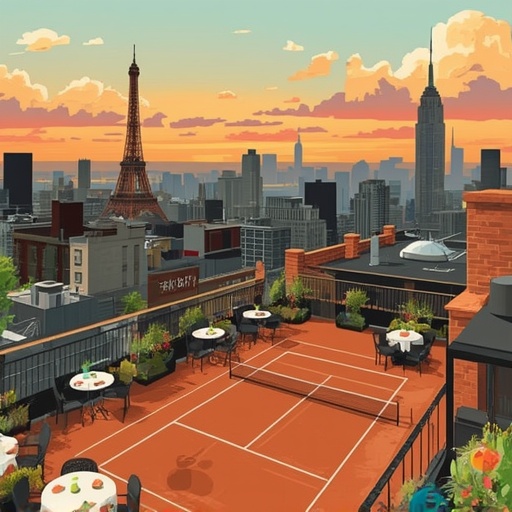
When Paris decided to send a bit of its sporting soul across the Atlantic, the Roland-Garros NYC Experience emerged as a fascinating cultural experiment—a vivid blend of French elegance and metropolitan energy. At first glance, the event promised the cobblestone charm of Saint-Germain under New York’s skyscrapers, offering a chance for tennis enthusiasts to feel the rhythm of Parisian clay without leaving the United States. Yet, as the rally of activities unfolded, it began to resemble something equally familiar: the spirited anticipation usually reserved for the US Open.
Rather than merely recreating a French spectacle abroad, the gathering evolved into a microcosm of global sports connectivity. Every detail—from the terracotta-toned décor reminiscent of the famed clay courts to the artisan pastries served alongside live match screenings—seemed designed to evoke nostalgia for Roland-Garros while preparing the crowd for the next major tournament. Attendees were not just spectators; they were participants in an immersive narrative linking two tennis capitals through shared enthusiasm and cosmopolitan style.
The event’s atmosphere carried an intriguing duality. On one hand, it celebrated French refinement: crisp espressos, understated fashion, and that ineffable sense of joie de vivre that makes the Paris tournament so distinct. On the other, the buzz of New York added a pulse of ambition and momentum, the kind that defines American sports culture. This convergence demonstrated how major athletic experiences can transcend geography to create a universal language—one built on passion, camaraderie, and cultural exchange.
Beyond the rackets and rallies, the Roland-Garros NYC Experience stood as a study in branding and engagement. It showcased how a legacy event can reinvent itself abroad while maintaining authenticity, inviting urban audiences to feel not just closer to French tennis but part of its evolving story. The crossover was subtle yet powerful: an emblem of how modern fandom travels easily from continent to continent, adapting to each new setting without losing its essence.
Ultimately, the clay, the croissants, and the city skyline fused into a single image—a moment where Parisian tradition met New York ambition. What began as a nostalgic tribute to Roland-Garros transformed into a symbol of the sport’s globalization, hinting that the world of tennis no longer revolves solely around national events, but around shared experiences that bridge them. The result was not simply a watch party or a marketing spectacle; it was the embodiment of tennis as an international lifestyle, where passion for the game continues to transcend borders, languages, and identities.
Sourse: https://www.businessinsider.com/roland-garros-watch-party-soft-launch-us-open-2026-6