In today’s world, the pursuit of higher education often comes with a difficult trade‑off: the promise of opportunity tethered to the long‑term burden of debt. Consider the case of a dedicated nurse who, despite her lifelong commitment to caring for others, suddenly finds herself alone in a courtroom, defending her right to financial stability against a $55,000 student loan claim. What at first glance appears to be a simple legal proceeding actually reflects a far deeper social and economic issue—the tangled web of modern student lending, where borrowers frequently navigate a labyrinth of contracts, interest rates, and institutions without the guidance or representation they deserve.
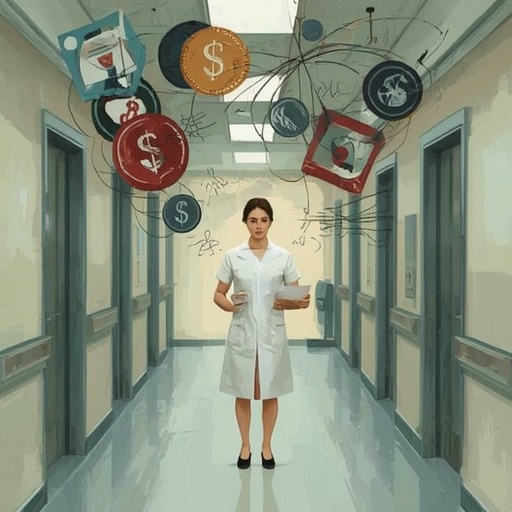
This nurse’s experience encapsulates the extraordinary complexity of the system. After years of balancing demanding shifts, personal obligations, and the continual strain of repayment notices, she is forced to enter the intimidating realm of legal advocacy by herself. It is a striking image: a healthcare professional accustomed to offering comfort and certainty now confronting uncertainty in an arena designed for experts and attorneys. Her solitude in court becomes symbolic of the wider isolation that countless borrowers endure—a quiet battle fought not just with numbers and documents, but with anxiety, shame, and the sense of being unheard.
The figure of $55,000, while clearly measurable, cannot quantify the emotional toll of such a struggle. The process of defending oneself against powerful financial institutions often exposes how opaque the lending structure truly is. Many individuals lack the resources to interpret contracts formed under shifting regulatory frameworks, and even fewer can afford legal assistance when lenders pursue aggressive collection. The system, meant to support education and advancement, instead can transform into a long‑lasting contest of wills, forcing people who serve the public—teachers, social workers, nurses, and other essential professionals—to divert energy away from their vocations toward mere survival.
Yet beyond the statistics and legislation, this story also reveals resilience. That one person would step forward, represent herself, and confront the machinery of debt is evidence of courage born out of necessity. It also invites us to question whether accessible education in a prosperous society should ever lead to such desperate measures. Fair lending should empower, not entrap. True reform must therefore address not only interest rates and repayment structures but also the deeper cultural assumptions that normalize lifelong financial struggle as the cost of self‑improvement.
This nurse’s quiet confrontation serves as a call to empathy. It asks policymakers, educators, and average citizens alike to consider the human faces obscured behind bureaucratic systems. Each legal document, each repayment notice, corresponds to a person whose aspirations were once centered on service and growth. By listening to these stories and demanding transparency and compassion within education financing, we affirm that the pursuit of knowledge should remain an act of hope rather than a sentence of indebtedness.
Ultimately, her case transcends personal hardship. It is an emblem of a nationwide dilemma—a reminder that after all the years of study and sacrifice, no one should have to stand alone before a judge simply to defend the right to learn, to work, and to live with dignity.
Sourse: https://www.businessinsider.com/nurse-sued-private-student-loan-court-case-sallie-mae-2026-5