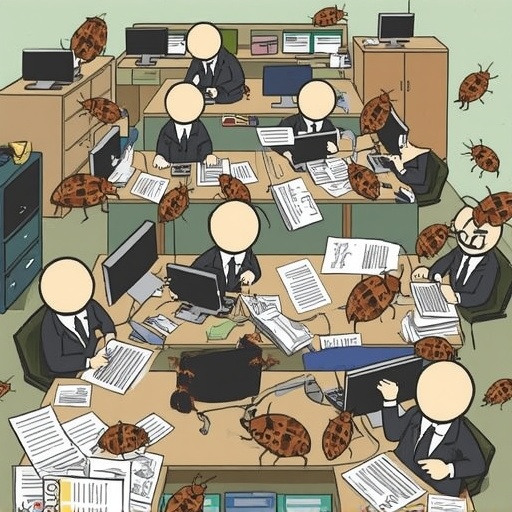
In a remarkably ironic twist of fate, the very federal agency designated to combat and eradicate bothersome pests now finds itself grappling with an invasion within its own walls. The United States Department of Agriculture’s Animal and Plant Health Inspection Service (APHIS), the branch known for safeguarding agriculture and public well-being from biological threats, has reported a rather embarrassing internal challenge: a bed bug infestation in its office. This circumstance, at once comedic and uncomfortable, underscores the striking disconnect that can emerge between bureaucratic procedure and basic human comfort.
According to reports, employees within APHIS who wished to avoid the uncomfortable bite—both literal and figurative—of this infestation were confronted with a deeply inconvenient policy choice. Staff members were told they must either continue reporting to the infested premises, risking exposure to these notorious nocturnal pests, or alternatively, take personal vacation leave to work remotely. The situation illuminates a classic bureaucratic rigidity in which policy adherence can overshadow empathy and practicality, forcing public servants to weigh their physical comfort against the depletion of their earned leave.
This episode provides a vivid case study in workplace management and crisis responsiveness within public institutions. The paradox of a pest-control agency struggling with its own pest problem highlights the universal vulnerability of work environments, regardless of expertise. It also raises an important ethical and administrative question: should institutional policy bend to accommodate emergent health and safety scenarios, or should adherence to precedent remain sacrosanct? In today’s era of telework technology and heightened awareness around employee health, it seems increasingly untenable for agencies to insist on outdated rules that ignore the realities of unforeseen disruptions.
Beyond humor, this story carries broader implications. It accentuates the need for public-sector organizations to modernize their telework and emergency protocols so that personnel aren’t punished for exercising prudence in the face of environmental risks. When an office becomes physically uninhabitable—even temporarily—flexible solutions are not indulgences but necessities. The APHIS bed bug episode thus stands not merely as a quirky footnote of government life but as a revealing metaphor for how institutions can become trapped in their own procedural webs.
Ultimately, the spectacle of pest-fighting professionals besieged by the very pests they monitor evokes both empathy and reflection. It is a moment of unintentional satire, one that calls on leadership within public agencies to bridge the ever-present gap between administrative formality and the pragmatic realities of workplace well-being. In every sense of the phrase, bureaucracy has seldom been so itchy, and its remedy may lie not only in pest eradication but in a bit of administrative soul-searching as well.
Sourse: https://gizmodo.com/the-federal-agency-fighting-bed-bugs-keeps-getting-infested-but-its-workers-arent-allowed-to-telecommute-2000766705