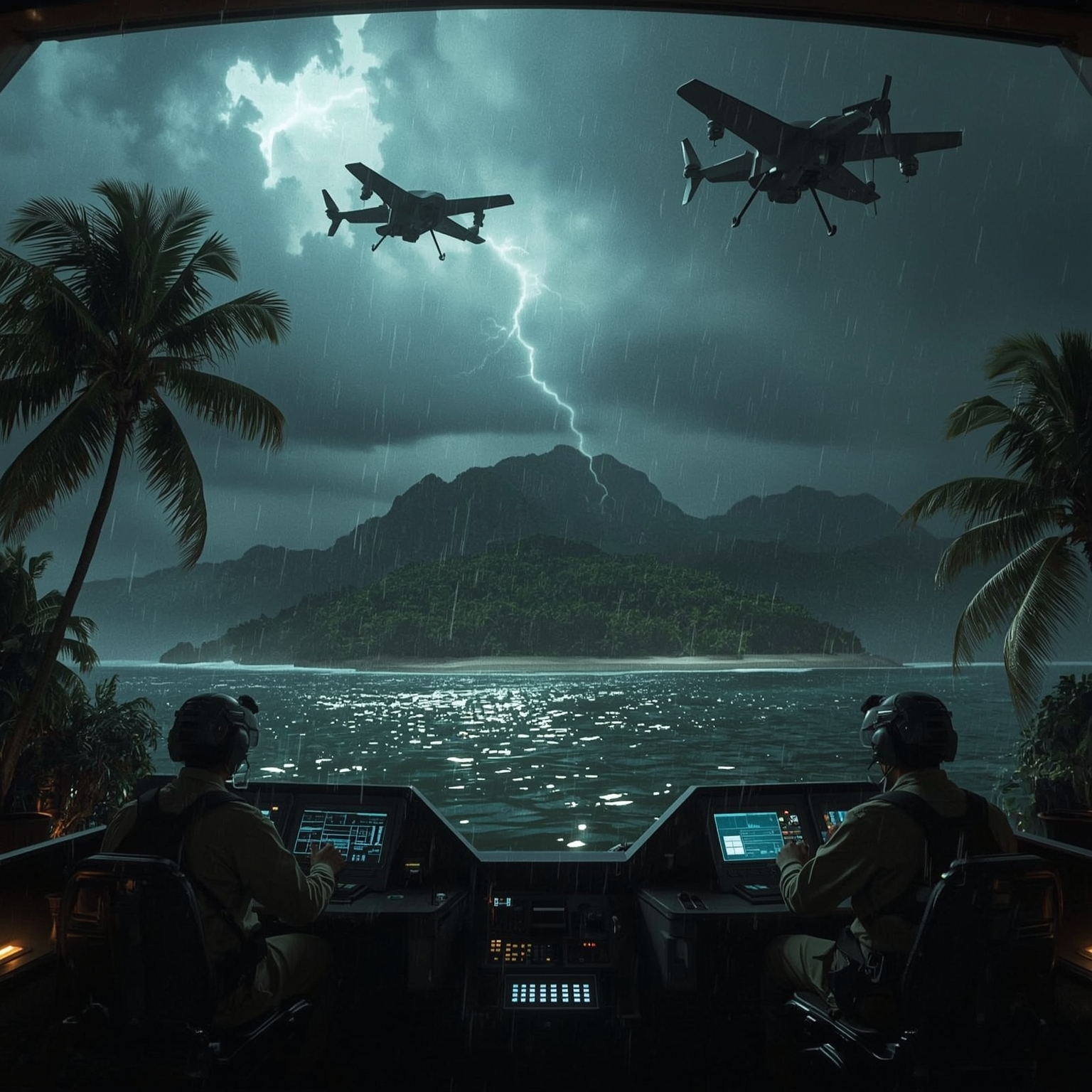
When soldiers of the U.S. Army stationed in Hawaii received a new generation of drones to experiment with and evaluate, the tropical environment immediately revealed its unforgiving nature. The combination of high temperatures, pervasive humidity, and the constant presence of salt carried by the ocean breeze quickly exposed the vulnerabilities of some of these sophisticated machines. Even technology engineered for rugged field conditions can behave unpredictably when exposed to harsh climatic variables like those found across the Pacific archipelago. Military-grade equipment performs differently depending on the setting—what operates flawlessly on the parched sands of desert proving grounds or the frigid landscapes of Arctic installations might deteriorate rapidly under the relentless heat and moisture of island climates. This variability has presented the Army with a formidable technical challenge, particularly as it seeks to refine its drone operations in the Indo-Pacific region. Yet this issue cannot be disregarded, for the Army’s leadership recognizes that the ability to deploy unmanned aerial systems effectively in such environments could be critical should tensions ever escalate into open conflict with China.
During the Army’s annual conference held in Washington, D.C., Command Sgt. Maj. Shaun Curry of the 25th Infantry Division offered a candid reflection on this problem. He described how certain drone models that had performed admirably in other test locations began to fail soon after their relocation to Hawaii. As Curry explained, the shimmering tropical sun routinely pushed temperatures to around one hundred degrees Fahrenheit, while the air itself was thick with invisible salt particles rising from the Pacific. These conditions, he emphasized, proved too strenuous for some of the drones, causing them to falter or even break down outright. The experience underscored how easily environmental stressors can undermine equipment that appears robust under laboratory or temperate testing conditions.
The drones in question were deployed to the 25th Infantry Division as part of the Army’s Transformation in Contact initiative—an ambitious program designed to accelerate the integration of cutting-edge technology through direct soldier involvement. Under this initiative, troops are not merely end users; they play a central role in field-testing and refining new weapons and systems, providing immediate feedback that can inform developers and engineers. This loop of experimentation, assessment, and modification ensures that feedback gathered in realistic conditions feeds directly into the Army’s evolving operational planning, tactics, and strategic decision-making.
When operational difficulties surfaced in Hawaii, developers themselves were present alongside the soldiers, ready to diagnose and repair the drones in real time. According to Curry, the technical teams worked side by side with the troops, making modifications as soon as malfunctions appeared and, where necessary, issuing improved models that incorporated the lessons learned. This hands-on collaboration between manufacturer and operator allowed defects to be addressed on-site, ensuring that every iteration of the drones progressively approached the Army’s performance expectations.
Similar difficulties have arisen across the broader Indo-Pacific, where the Army has deployed drones for training and operational experiments. Whether during annual exercises or multinational operations, American soldiers have had to contend with monsoon rains that reduce visibility, winds capable of destabilizing small aircraft, and humid air that diminishes battery life and electronic integrity. The distances drones can travel and the duration they can remain aloft both decrease dramatically in such weather. Moreover, the geographic reality of island territories restricts options for launch and recovery zones, requiring careful logistical planning and ingenuity. The process of adapting drone tactics and maintenance routines to these environmental realities has been a steep learning curve for service members and program developers alike.
One of the key lessons to emerge from these experiences is the value of having drone company technicians embedded directly within field units. Their on-the-spot troubleshooting has been indispensable whenever hardware or software malfunctions threatened to curtail an exercise or mission. This immediate technical support exemplifies a new, more dynamic form of cooperation between the defense industry and active military formations. Developers gain firsthand exposure to how their designs perform under genuine operational strain, while soldiers benefit from immediate repairs and upgrades that enhance mission continuity. Across the Army’s various commands and installations, personnel have also been sharing insights gleaned from these experiences—what equipment endures, what fails, and what modifications deliver real improvement.
This knowledge-sharing culture extends beyond individual units, creating a broader ecosystem of innovation. Collaboration between soldiers, engineers, and defense contractors is critical as the Army seeks to close persistent capability gaps in its fleet of small unmanned systems. The ultimate objective is to deploy drones more adeptly and imaginatively in combat situations, maximizing their tactical and strategic effects. Observing the ongoing war in Ukraine has reinforced the importance of this effort; battlefield footage and analysis have demonstrated how even relatively small and inexpensive drones can shape outcomes in contemporary warfare. For U.S. forces, this serves as both a warning and an inspiration: adaptation is not optional but essential.
In the Indo-Pacific theater, this reality becomes even more pressing. The U.S. military is betting heavily on the utility of uncrewed systems—not only drones but also autonomous maritime and ground platforms—as pivotal tools for deterrence and potential engagement in any future regional conflict. Acquiring precise, data-based understanding of how these systems respond to tropical climates, corrosive sea air, or unpredictable weather patterns could ultimately determine their combat reliability. Army leaders have repeatedly emphasized that continuous, joint training throughout the Indo-Pacific—particularly with regional allies such as the Philippines—remains vital for honing both technical proficiency and interoperability. Every exercise, flight test, and after-action review deepens the Army’s comprehension of how to adapt emerging drone technologies to the environment in which they are most likely to be deployed. The Pacific, with all its beauty and brutality, has thus become not just a proving ground for machines, but a crucible for innovation and resilience in the next era of military capability.
Sourse: https://www.businessinsider.com/us-army-drones-struggled-in-hot-humid-pacific-weather-2025-10