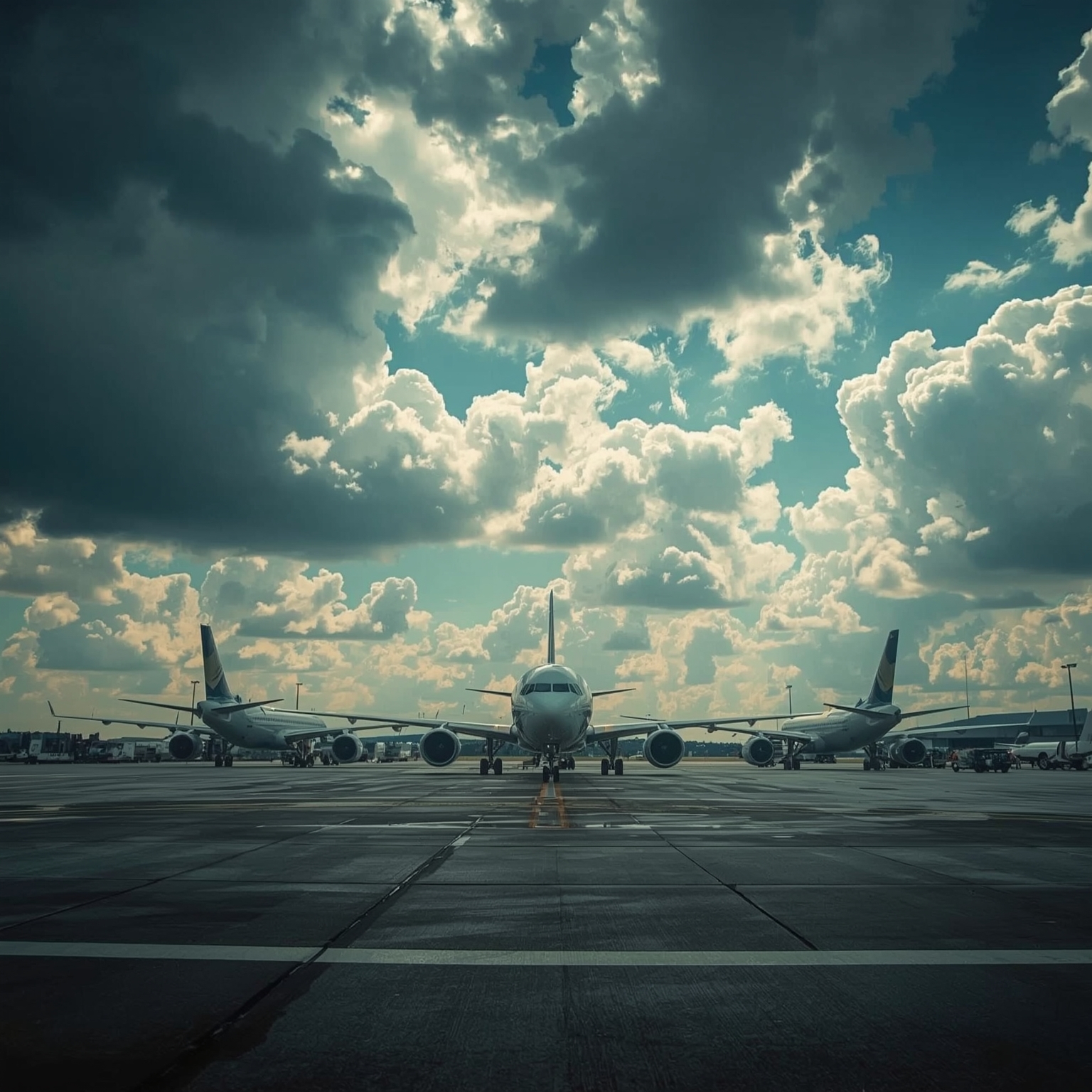
In May, The Verge published a revealing analysis highlighting just how precariously balanced the United States’ aviation infrastructure truly is, describing a system so sensitive that even the most minor interference could cascade into widespread disorder. That theoretical warning transformed into harsh reality on October 1st, when the federal government shut down amid a protracted budget conflict. The result was immediate and tangible: the intricate machinery of national air travel descended into turbulence and confusion.
Each day since the shutdown began, more than 6,000 flights have faced delays—a figure that nearly doubles the historical average for October, according to Department of Transportation statistics. Major transportation hubs have been overwhelmed as the Transportation Security Administration (TSA) warns passengers to brace for significantly lengthened security lines. The agency has also suspended real-time checkpoint updates on its MyTSA mobile application, eliminating one of the few transparency tools available to anxious travelers. In several busy airports, operations have been further destabilized when air traffic control towers were left unmanned for hours at a time, forcing pilots to self-coordinate takeoffs and landings through shared radio frequencies—a risky improvisation inconsistent with normal safety protocols.
The root of this nationwide disruption lies in the absence of federal funding. Once the budget expired at the beginning of October, over half a million government employees were immediately furloughed, cutting deep into the labor force that maintains essential services. Among those still on duty are approximately 75,000 air traffic controllers and frontline TSA officers. They fall into the category of “excepted” employees—meaning they are legally obligated to continue working, even when paychecks stop flowing. Their dedication keeps the aviation system minimally functional, yet the human cost of this obligation grows heavier each day.
In a message posted on X, Secretary of Transportation Sean Duffy attempted to calm the rising unease among his workforce, promising that controllers and security personnel would ultimately receive their wages—though not until the political impasse ended. His assurance, however, rang hollow for tens of thousands of employees who live paycheck to paycheck. Johnny Jones, a veteran TSA officer since 2002 and a representative for the American Federation of Government Employees, voiced their frustration. According to Jones, the pervasive anxiety stems from the sheer uncertainty surrounding the shutdown’s duration. Workers, he explained, are surviving on their limited savings, clinging to what little financial cushion they could gather with scarcely a week or two of advance notice.
For federal employees, advocating for fair compensation is profoundly constrained by law and precedent. Air traffic controllers in particular carry the historical weight of 1981, when 13,000 members of their profession staged a strike demanding improved pay, staffing, and safety conditions. The move invoked the wrath of President Ronald Reagan, who, citing a 1966 statute prohibiting federal strikes, summarily fired them and barred them from federal employment for life. That punitive decision quelled the rebellion but left a lingering structural weakness in the air traffic system that, decades later, remains unresolved.
Within this legal and political straitjacket, essential workers possess only a few options for resistance or relief. Chief among them is the use of banked sick leave, which under their employment contracts can be exercised with relatively few restrictions, provided it does not exceed three consecutive days. Before the shutdown, controllers occasionally relied on sick leave simply to recover from their grueling schedules—often demanding ten-hour shifts across six-day weeks—or to process the emotional toll of near misses and equipment malfunctions that could have led to disaster. Now, this same mechanism serves as their primary means of self-preservation: a lawful, if limited, reprieve from working indefinitely without pay.
Recognizing growing absenteeism, Secretary Duffy convened a press event at Newark Airport on October 6th to address what he termed “slight tick ups” in sick leave usage. Yet in an industry dependent on precise coordination, even a modest increase in absences can trigger nationwide ripples. Indeed, by that very day, 11 major air traffic facilities had announced staffing levels insufficient to support normal operations. The situation at Hollywood Burbank Airport was especially striking—its control tower went silent for almost six hours, leaving pilots to manage departures and landings themselves. Such improvisation, while technically permissible under specific conditions, elevates risk and underscores how thin the current margin of safety has become.
The deterioration has only accelerated. Reports show that nearly half of the country’s en route facilities and one-third of its arrival and departure centers are now under severe staffing stress. Control towers at major airports, including Chicago O’Hare, Denver, Phoenix, Austin, and Washington’s Reagan National, have all struggled to maintain consistent operations. On October 10th, coinciding with the start of the Columbus Day travel weekend, over 7,700 flights were delayed—approximately one in every five scheduled across the United States, according to FlightAware data. The mounting delays illustrate how intertwined and fragile the aviation network truly is: even localized shortages quickly propagate across the entire airspace system.
In a subsequent Fox Business interview, Secretary Duffy adopted a harsher tone, warning that the government might dismiss what he described as a “small subset” of controllers—those unwilling or unable to appear for duty—branding them as “problem children.” Meanwhile, the National Air Traffic Controllers Association (NATCA), the professional union representing most controllers nationwide, advised its members to avoid any activity that could be construed as deliberately undermining the National Airspace System. Despite official insistence to the contrary, these absences do not indicate a coordinated protest; rather, they represent individuals making personal, legally protected decisions to safeguard their own well-being amid untenable conditions.
The consequences for airport security are more diffuse yet equally concerning. Since October 9th, the TSA has opted to post daily security wait times on X—a move without precedent—though its lack of historical data prevents meaningful comparison. Nevertheless, anecdotal evidence confirms that thousands more TSA employees are calling in sick than usual. Many simply cannot justify commuting, covering childcare, or purchasing fuel for positions that currently offer no immediate pay.
As the situation drags on, comparisons to past shutdowns have become inevitable. The 35-day government closure during the Trump administration still stands as the longest in U.S. history, but this new impasse is already stretching toward unprecedented disruption. Congress is not slated to return from recess until October 19th, guaranteeing that the crisis will persist for at least 19 days—and possibly much longer. Each additional day magnifies the strain on both the traveling public and the essential workers who keep commercial aviation aloft under extraordinary pressure.
Johnny Jones summarized the crisis with sobering clarity: no employee can indefinitely labor without income. Essential institutions—daycare centers, grocery stores, and gas stations—do not accept IOUs. If the shutdown lingers for another month, he warned, America’s bustling airports could resemble ghost towns, their concourses emptied of both passengers and personnel. His words encapsulate a stark truth: when political paralysis takes hold in Washington, the consequences ripple swiftly through the nation’s skies, grounding not just planes but the very systems that connect and sustain a modern economy.
Sourse: https://www.theverge.com/transportation/799413/faa-air-travel-delays-government-shutdown