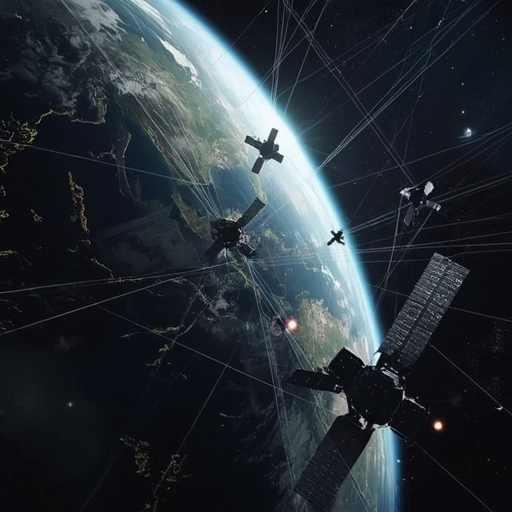
In an age where every signal, transmission, and byte determines the pace and precision of modern warfare, the sudden deactivation of a private satellite network did far more than flick a metaphorical switch—it plunged an entire military force into a state of deafening digital obscurity. This deliberate act of disconnection severed the invisible web of communication that sustains command, intelligence, and coordination on the battlefield. In an instant, everything from logistical synchronization to reconnaissance support dissolved into chaos, illustrating with breathtaking clarity how powerfully societies—and even sovereignties—now depend upon uninterrupted streams of data and connectivity.
The suspension of satellite access did not merely silence radios or freeze digital maps; it effectively dismantled an army’s strategic nervous system. Every aspect of operational awareness—position tracking, encrypted coordination, and real‑time tactical decisions—relies today on a networked lattice of satellites circling high above the Earth. When that lattice collapses, it reveals a stark vulnerability: the modern soldier, commander, and policymaker are no longer just participants in physical combat but also subjects of a wide‑ranging technological ecosystem whose switches can be controlled, compromised, or cut at will.
This incident underscores that communication infrastructure, once considered a peripheral tool of support, has evolved into a cornerstone of geopolitical influence and national defense. The battlefield has expanded beyond terrestrial terrain into the digital stratosphere, where private corporations, engineers, and technologists now wield the kind of leverage once reserved for state powers. When a corporation’s board meeting can decide the fate of troops thousands of miles away, the distinction between civic enterprise and military strategy becomes not only blurred but functionally inseparable.
Moreover, the episode serves as a sobering reminder that technological innovation—though it binds the world in unprecedented connectivity—carries within it the counterforce of fragility. A single private decision, whether made for ethical, commercial, or strategic reasons, can cascade through governments and militaries, paralyzing the very systems that nations depend upon to assert sovereignty. The capacity to control information flow has thus emerged as the new frontier of power, where disruption itself becomes a weapon as potent as any missile or drone.
In witnessing an army rendered mute by the absence of bandwidth, we are forced to reconsider what it means to hold power in the twenty‑first century. Connectivity is not merely a convenience; it is infrastructure, currency, and arsenal. And as this event so vividly conveys, when the network goes dark, the consequences travel far beyond silence—they expose the fragile digital core upon which our entire modern world now precariously rests.
Sourse: https://www.businessinsider.com/elon-musk-spacex-russian-army-offline-2026-2