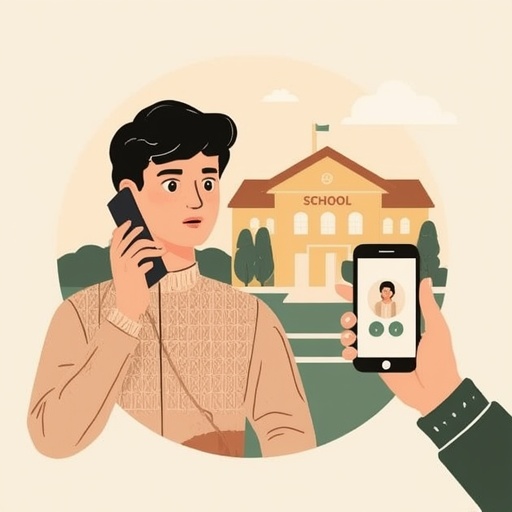
The experience of listing oneself as the official emergency contact at a child’s school—yet discovering that the call still goes to one’s spouse—captures more than a momentary frustration. It exemplifies the deep-seated social assumption that mothers are inherently the primary caregivers, the so-called ‘default parent.’ This subtle but persistent bias often reveals itself not through overt discrimination, but through small everyday interactions that continue to assign parental responsibility along outdated gender lines.
Imagine a father who meticulously completes the school forms, ensuring that every administrative detail points to him as the person to be reached in case of an emergency. When the phone rings somewhere else first, it illustrates how institutional habits and unconscious expectations can override explicit information. These habits do not arise in isolation; they are reflections of a cultural narrative—one that continues to perceive caregiving as an essentially maternal duty, despite decades of social progress and the growing number of fathers who participate fully in every aspect of family life.
This phenomenon speaks to a broader inequity in the way society defines engagement and responsibility within families. Many fathers today are deeply involved in their children’s schooling, health, and emotional development. Yet social systems—from schools to workplaces—often lag behind in recognizing this shift. They may continue to operate under long-standing assumptions, reinforcing the notion that mothers remain the default authority for all matters related to child-rearing. This dissonance between modern reality and institutional behavior creates unnecessary tension and perpetuates stereotypes that limit both men and women.
Addressing the ‘default parent’ mindset requires more than individual advocacy; it calls for structural and cultural introspection. Schools, medical offices, and other community institutions must reexamine their communication protocols and assumptions. Something as simple as ensuring that contact information is followed precisely can serve as a step toward equity. At a deeper level, it also demands that we consciously unlearn the reflex that equates motherhood with primary responsibility and fatherhood with secondary support.
When fathers take equal initiative yet encounter barriers—however subtle—it signals that equality in parenting is not just about balancing chores or sharing diaper duty. It is about reshaping the collective understanding of parental identity. By challenging these inherited norms, families can cultivate a truly shared model of care in which presence and responsibility are determined not by gender, but by mutual trust and capability.
The next time an institution instinctively reaches for ‘mom’s number,’ it should pause and recognize the evolving fabric of modern parenthood. Fathers are no longer silent participants in their children’s growth; they are proactive, nurturing, and equally reliable figures. It is time that schools, and society at large, update both their contact lists and their cultural expectations to match the reality of today’s families.
Sourse: https://www.businessinsider.com/dad-father-emergency-contact-school-calls-wife-2026-5