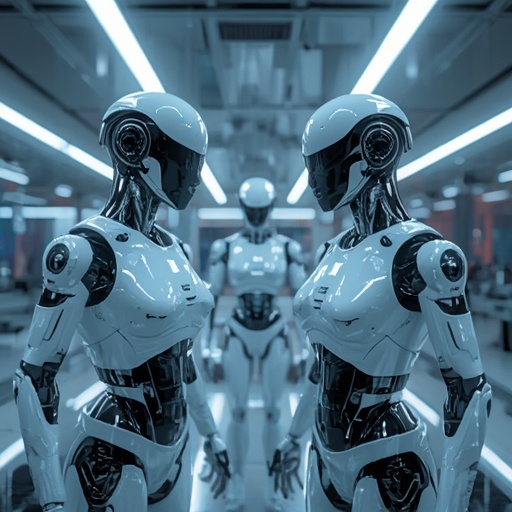
Back in the mid‑2010s, bold projections predicted that fully functional sex robots would be integrated into daily life by 2026, reshaping how humans approach intimacy, companionship, and pleasure. Only a few short years away from that once‑futuristic date, it is clear that the progress of this technology has been more circuitous and complex than expected. The dream of lifelike robotic partners—capable of empathic conversation, responsive physicality, and adaptive emotional engagement—has collided with the sobering realities of material science, artificial intelligence development, and social resistance.
The notion of a mechanical companion designed to simulate human desire was not mere science fiction; it rested on tangible advances in robotics, machine learning, and synthetic biology. Companies across the globe began competing to produce prototypes combining advanced silicone skins, articulated joints, and conversational algorithms. Yet while isolated breakthroughs in these domains have indeed materialized, the integration of all these functions into a single, accessible consumer product has proven far more elusive. The vision of autonomous android partners able to interpret nuance, consent, and emotional reciprocity remains primarily experimental, confined to laboratories or small‑scale boutique studios.
Cultural and ethical factors have also complicated this trajectory. Societies continue to debate whether such creations would fulfill emotional needs or erode the essence of human intimacy. Critics have raised questions about the psychological consequences of synthetic relationships, the potential projection of gendered stereotypes, and the implications for social isolation. Advocates, conversely, emphasize autonomy, inclusivity, and therapeutic value—arguing that companionship through robotic systems could enhance quality of life for individuals marginalized by disability, loneliness, or trauma. Thus, the discussion surrounding sex robots has evolved beyond simple titillation into an ongoing philosophical and moral dialogue about the boundaries of affection and the nature of empathy in a digitized age.
At the same time, engineering challenges remain formidable. Achieving responsive artificial skin requires sophisticated temperature and pressure sensors seamlessly communicating with onboard neural networks. Programming authentic dialogue or emotional understanding demands ever‑more refined natural‑language models and contextual reasoning engines. Meanwhile, modular “detachable” design proposals—allowing users to mix and match functions or components—illustrate both the ingenuity and the practical limitations of current applications. These innovations symbolize technological ambition tempered by pragmatic adaptation: the movement from total humanoid replication toward customizable forms of companionship.
Globally, the race to dominate this industry reflects broader technological rivalries. Laboratories in East Asia, North America, and Europe experiment with varied aesthetic and ethical paradigms, each interpreting the intersection of artificial intelligence and human intimacy through its own cultural lens. From Japan’s affinity for lifelike android artistry to Silicon Valley’s data‑driven personalization platforms, divergent philosophies reveal that the future of sex robotics is not a single universal narrative but a mosaic of parallel experiments.
Ultimately, the question “Where are the sex robots we were promised?” illuminates our collective appetite for innovation and our enduring uncertainty about what it means to connect. The slow, uneven march toward AI‑enabled intimacy demonstrates that technology alone cannot replicate trust, affection, or emotional authenticity. Yet each prototype, each research paper, and each ethical debate brings society closer to a nuanced understanding of how machines might coexist with human vulnerability. Whether these creations someday share our beds or remain confined to conceptual showrooms, they have already transformed how we imagine love, companionship, and the technological limits of being human.
Sourse: https://www.businessinsider.com/we-were-promised-sex-robots-2026-6