For many years, I devoted my life to traversing the globe, methodically collecting passport stamps like cherished memories that traced my path from the golden coasts of Australia to the vibrant landscapes of Latin America and the intricate cultural tapestries of Asia. Each stamp symbolized a chapter in a personal story of exploration and self-discovery. Coming from a family in which overseas adventures were virtually unheard of, my wanderlust broke new ground — I was the first among my relatives to step foot beyond our national borders. Before that transformation, our family holidays had always meant road trips within Germany, comfortable yet limited in scope, confined to familiar highways and countryside vistas. By late 2021, this passion for exploration had blossomed into a lifestyle: I had been living as a full-time traveler for seven and a half continuous years, a period during which I journeyed across more than forty countries and temporarily made my home in several of them.
Eventually, however, a quiet realization surfaced. The rhythm of perpetual movement — the constant packing, flights, and transient stays — began to feel exhausting. I longed for a sense of grounding, a place that could offer stability without compromising the excitement of discovery. When reflecting on where this personal home base might be, only one city resonated deeply in both memory and spirit: Chiang Mai, Thailand.
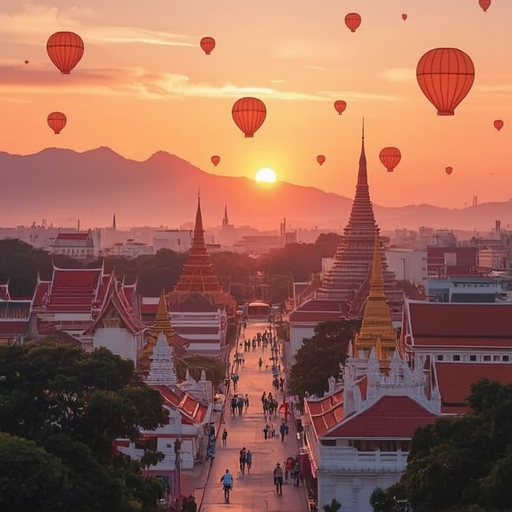
Situated in the mountainous northern reaches of Thailand, several hundred miles north of bustling Bangkok, Chiang Mai stands as one of the nation’s most historically and spiritually significant cities. The region is home to roughly one million inhabitants, encompassing an expanding metropolitan area that seamlessly merges contemporary infrastructure with centuries of heritage. The city’s skyline is punctuated by the graceful silhouettes of countless Buddhist temples and ancient ruins — architectural testaments to Thailand’s long devotion to tradition and faith.
I first encountered Chiang Mai nearly ten years ago, during a chapter in my life dominated by spontaneity. Back then, the city had the unpolished charm of a backpacker’s haven — streets alive with the clatter of scooters, corner stalls selling inexpensive local beer, and hostels offering humble five-dollar beds to travelers in search of community and adventure. Yet, over time, the city’s character evolved. Today, Chiang Mai has matured into a major urban center while preserving the gentle spirit that made it enchanting in the first place. It now exudes a rare equilibrium between ancient cultural roots and cosmopolitan modernity.
One of the qualities that continually draws me in is this effortless coexistence of old and new. Where gleaming shopping complexes rise along major roads, intimate family-run shops — affectionately known as ‘mama shops’ — continue to thrive, offering handmade goods, home-cooked meals, and tangible warmth. International chains like Starbucks share the same streets as traditional teahouses and bustling fresh markets, creating a blend of global familiarity and local authenticity. In Chiang Mai, one can experience striking contrasts within the same night: dancing beneath the lights of a modern club before retreating into the serenity of a temple courtyard to witness a traditional Thai performance. From the arts to spirituality, the city is endlessly engaging. I often find myself exploring ornate Buddhist temples, attending a mixture of classical and contemporary music performances, or wandering through avant-garde galleries that celebrate emerging Thai artists.
Despite planting deeper roots than in my nomadic years, my desire to explore remains alive. Chiang Mai is an exceptional starting point for countless day trips throughout northern Thailand, easily accessible by car or boat at any time of the year. A short twenty-five-minute drive transports me into the lush expanse of a national park, overflowing with waterfalls and forest trails. Traveling about an hour brings me to Lamphun, a historic town that offers a quieter glimpse into northern Thai heritage. Further adventures have taken me to the tropical islands of Koh Chang, Koh Lanta, and Koh Samui, as well as smaller but equally captivating destinations such as Kanchanaburi and Ayutthaya — each revealing another dimension of the country’s remarkable diversity.
When I first relocated to Chiang Mai, my home was a tranquil, pet-friendly house positioned within a gated community. It included a lovely garden, a shared swimming pool, and recreational facilities like a tennis court — luxuries that fit comfortably within my modest budget, costing only a few hundred dollars per month. Located about twenty-five minutes from the historic old town, my neighborhood offered peace without isolation, surrounded by convenient amenities such as local repair shops, lively food markets, and small independent stores.
What has truly enriched my experience, however, is the community I have built here. The city naturally fosters meaningful connections. Through social gatherings and events discovered on platforms like Facebook, I’ve met entrepreneurs, remote workers, and fellow digital nomads who, like me, have chosen Chiang Mai as their creative refuge. The city brims with opportunities to connect — from yoga sessions held in intimate local studios to gatherings dedicated to tarot reading, music, or art, where participants of all skill levels feel welcome. As someone who runs a location-independent business, I also value professional growth opportunities, and Chiang Mai consistently delivers. The city hosts an impressive number of workshops, conferences, and networking events centered around technology, innovation, and entrepreneurship. Many are organized at my favorite coworking space, Alt_ Chiang Mai, an environment that encourages collaboration and continuous learning.
Another place close to my heart is Free Bird Café, a vibrant social hub where I’ve attended community lunches for women, open-mic nights, and cultural evenings. The city even organizes recurring TEDx events exploring topics like artificial intelligence, sustainability, cultural preservation, and business development — discussions that feed both intellectual curiosity and social awareness.
Of course, no place in the world is flawless. For all its charm and comfort, Chiang Mai faces an environmental challenge that affects many residents: the annual burning season in Southeast Asia. During this period, when crop residues and forest debris are set ablaze, the air quality deteriorates significantly, creating health risks and obscuring the city’s usually crisp mountain views. Having pre-existing health concerns, I find it difficult to remain in Chiang Mai year-round during these weeks. Fortunately, I’ve been able to take advantage of this time to embark on extended road trips with my dog, driving toward regions where the air is cleaner and exploring yet more corners of this remarkable country.
Yet every time I set out for new horizons, part of my heart remains anchored in Chiang Mai. The city’s rhythm, its openness, and its community spirit call me back unfailingly. For me, Chiang Mai embodies nearly everything I seek — cultural richness, affordability, creative energy, and a balance between peace and vibrancy. It was easy to fall in love with this city, and the sensation of belonging has only deepened with each passing year. Although there are still some practical details to arrange, my hope is clear: to one day make this region of northern Thailand not just a temporary refuge but my true and permanent home.
Sourse: https://www.businessinsider.com/want-to-live-chiang-mai-thailand-best-place-2025-12