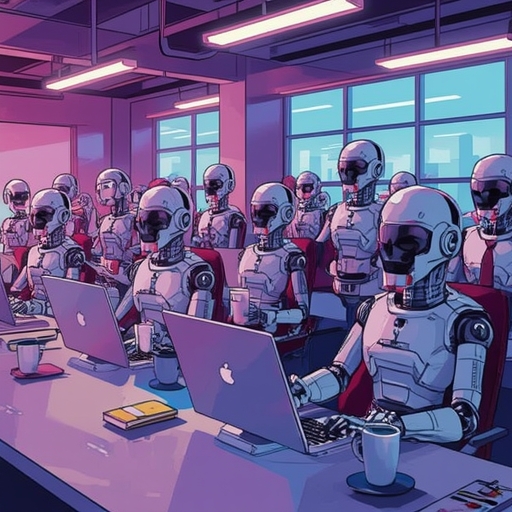
In today’s hypercompetitive employment landscape, the act of doing everything conventionally considered “right” — pursuing higher education, obtaining prestigious degrees, and even accumulating an array of global experiences — no longer guarantees the success people have long associated with such effort. Imagine an individual who has invested years into academic achievement, crossing borders both literally and intellectually, and still finds themselves facing discouraging silence after submitting hundreds, even thousands, of applications. This experience encapsulates the emotional fatigue and professional disillusionment shared by job seekers across industries.
The modern job market operates at an intersection where talent, technology, and perception struggle to align. Automated recruitment systems often filter applications by algorithmic parameters, reducing extraordinary human potential to a binary match or mismatch. Consequently, even the most qualified candidates may never have the opportunity to demonstrate their strengths. An advanced degree or stellar résumé can therefore become only part of a much larger equation — one complicated by economic shifts, evolving professional demands, and the widening gap between educational outcomes and industry expectations.
This story urges us to rethink how we define achievement and how we value individuals’ journeys toward professional fulfillment. It reminds us that credentials, while essential, do not encompass the breadth of a person’s creativity, drive, and capacity to contribute meaningfully to society. The question we must now confront is not whether people are qualified, but whether our systems are equipped to recognize that qualification in a nuanced and human-centered way.
Bridging the distance between education and meaningful employment requires collaboration among institutions, employers, and policy leaders. It calls for recruitment practices that see people beyond paperwork, that measure potential alongside experience, and that reward curiosity and adaptability as much as specialized skill. For job seekers, it also invites reflection: success is not voided by temporary rejection, and resilience — though invisible on a résumé — may ultimately be one’s greatest qualification.
In essence, the silent inbox after countless applications is not merely a symbol of rejection; it is evidence of a broader structural mismatch between how we educate, how we hire, and how we value human potential. In facing this reality, we have an opportunity to reconstruct the narrative around work — transforming it from a narrow pursuit of positions into a lifelong practice of purpose, growth, and discovery.
Sourse: https://www.businessinsider.com/unemployed-recent-college-grad-applied-thousand-jobs-2026-4