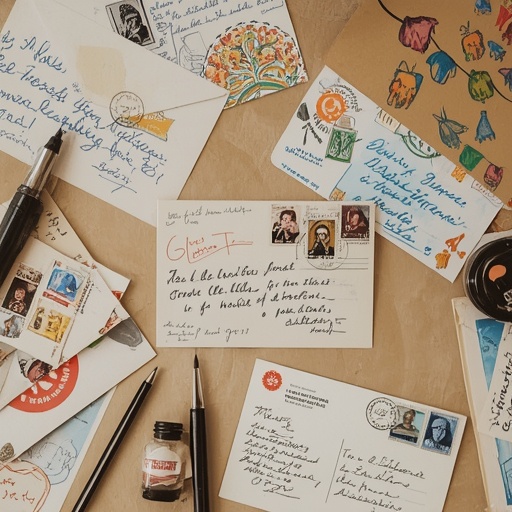
In an era overwhelmingly defined by instant messaging, push notifications, and the constant hum of digital interaction, a surprising cultural shift is emerging among members of Generation Z. Rather than relying solely on social media or messaging apps to maintain relationships, many young people are rediscovering the slow, tactile pleasure of traditional correspondence. Handwritten letters—complete with imperfect pen strokes, doodles in the margins, and thoughtfully chosen stationery—are becoming a meaningful antidote to the overdose of screen time that defines modern communication.
This revival of snail mail represents far more than a nostalgic throwback to an older era; it is a deliberate act of mindfulness and personal expression. For Gen Z, who have grown up surrounded by devices and algorithms that prioritize speed and efficiency over depth and authenticity, writing a letter operates as a form of digital rebellion. The time it takes to compose a message by hand encourages reflection, patience, and emotional clarity. Every curve of ink and every sealed envelope becomes both a personal artifact and a creative statement.
Across online communities, global pen pal clubs are flourishing. Thousands of young people are exchanging postcards, handmade zines, miniature artworks, and customized envelopes adorned with stickers and stamps from distant places. Through these exchanges, participants not only cultivate friendships that cross geographical and cultural boundaries but also rediscover the simple beauty of anticipation—the quiet joy that comes with waiting days or even weeks for a reply to travel across the world. In a culture that has been conditioned to expect immediate responses and instant validation, that kind of waiting transforms into a profound, almost meditative experience.
What draws Gen Z to this analog medium is not only its aesthetic charm but its emotional depth. Each letter functions as a microcosm of authenticity: the handwriting offers a glimpse of mood and personality, the occasional smudge bears evidence of human touch, and the artistic embellishments turn every message into a small work of art. Writing by hand demands the writer’s full attention; it cannot be multitasked or half-composed in between other notifications. It invites the sender to slow down, to choose words with intention, and to craft meaning carefully—a habit increasingly rare in our hurried, hyperconnected society.
For recipients, the arrival of a letter often feels like receiving a small gift. The sound of tearing an envelope open, the texture of paper between fingers, and the faint scent of ink or wax offer a sensory richness that digital screens simply cannot replicate. Many Gen Z correspondents describe the ritual of opening mail as grounding—a moment that reconnects them with material reality. It is an act of presence that contrasts the ephemeral nature of social media posts, which vanish in endless scrolls of content.
Beyond the personal domain, the movement toward handmade mail has become a social phenomenon. Online forums and creative subreddits dedicated to snail mail encourage participants to share inspirations, post photographs of their intricate envelopes, and discuss innovative ways to merge the art of writing with modern design. These communities reflect Gen Z’s passion for hybridity: technology is not rejected but used as a bridge to sustain analog creativity. Digital tools help find new pen pals, organize swaps, and showcase achievements, yet the heart of the exchange remains deeply physical and personal.
There is something quietly radical about this trend. In choosing slowness and tangibility over convenience, young people are reclaiming an essential sense of connection that the digital world often dilutes. Letter writing restores a human scale to communication—it reminds us that meaningful relationships take time to nurture, that thoughtfulness carries weight, and that creativity thrives within limitation. The resurgence of snail mail illustrates a collective yearning for sincerity, individuality, and tactile beauty in a culture captivated by screens.
This growing fascination with analog communication thus bridges artistry and intimacy. Whether it is an elaborately decorated envelope, a neatly folded note embedded with dried flowers, or a simple postcard scribbled under café light, these handmade messages embody care and personality. They represent a generation that, despite its deep digital fluency, recognizes the irreplaceable value of slowing down, paying attention, and connecting on a human level.
In the midst of constant digital noise, Gen Z’s rediscovery of handwritten letters is more than a fleeting aesthetic—it is a subtle but powerful cultural statement. It signals a yearning for permanence and presence in an impermanent, fast-moving world. Each envelope sealed, each word written by hand, becomes an affirmation that communication can still be an art form—one that invites empathy, imagination, and true connection, one letter at a time.
Sourse: https://www.businessinsider.com/snail-mail-club-handwritten-letters-analog-hobby-2026-5


