When it comes to something as simple as toast at breakfast, I draw a firm line: I refuse to cut crusts off for my children. If they decide that they dislike the texture or flavor of the crust, they are entirely capable of eating around it. That small daily moment is not an example of laziness on my part; rather, it is a deliberate choice to instill an essential life lesson. In life, there will always be aspects that are less appealing, and sometimes the only realistic option is to work around them while still consuming what is valuable. To me, that tiny act at the breakfast table becomes a practical demonstration of resilience and flexibility—traits that will serve them far beyond the dining room.
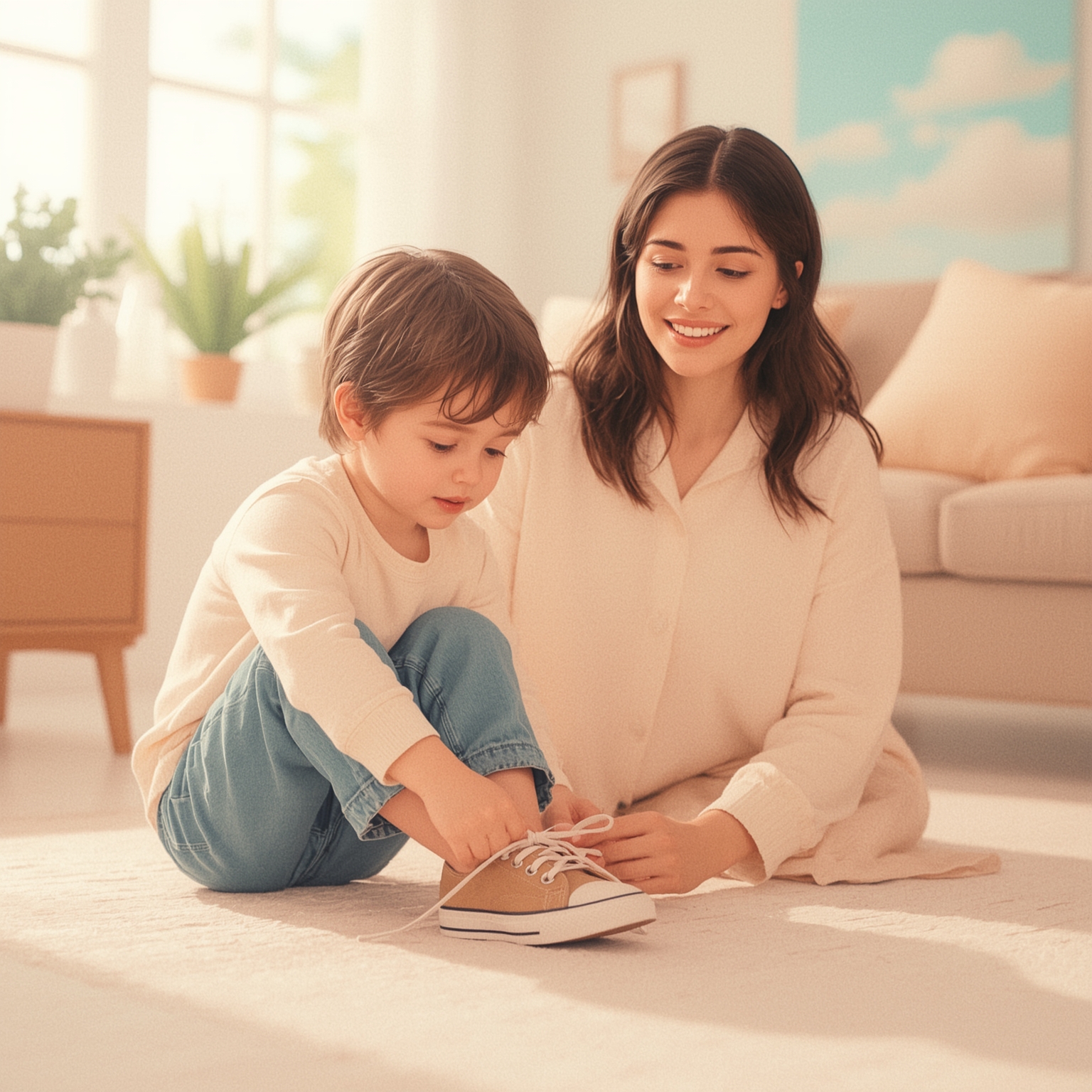
My parenting style, often labeled as passive, may give the initial impression of disengagement. In truth, it is a carefully considered approach grounded in giving my children the space they need to problem-solve and develop competence on their own terms. For example, both of my children now attend school, and a scenario that arises often is shoelace tying. I sometimes wait as long as ten minutes while my youngest concentrates fiercely on getting the knot right. Though it might seem tedious, I resist the urge to intervene because I know that stepping in robs her of the chance to refine the skill herself. Those ten minutes are not wasted; they cultivate patience in me and persistence in her. Every attempt, even the clumsy ones, contributes to progress, and I notice the improvement with pride each time she tries again.
I have long embraced what many would call tough love. Consider dinnertime, when pasta is served with peas or onions mixed in. If one of my children decides that today they object to the presence of peas, I will not rush in to separate the ingredients. They are encouraged to methodically pick them out—an exercise in patience and dexterity. Of course, frustration inevitably arises when a carefully extracted pea rolls back into the sauce. Still, this is a microcosm of adulthood, where navigating minor inconveniences is simply part of living. The sooner they master that art, the better equipped they will be to handle greater complications in the future.
My realization that I fell naturally into passive parenting occurred almost accidentally. I recall meeting a friend for coffee and watching her juggle her lunch while also holding a baby bottle to her one-year-old’s lips. In contrast, by four months old, my son fed himself, not because he was unusually mature, but because from the very beginning I provided him the bottle and then trusted him to manage it. While I turned back to focus on my food, he learned an invaluable skill. Observing my friend that day made me recognize the unintentional independence I had already fostered in my child.
This same philosophy extends into everyday activities such as buckling seatbelts. I am often astonished when children ride in my car and appear unable to secure themselves. My own children, however, adapted quickly once I stopped doing it for them. Empowering children in this way not only boosts their confidence but also demonstrates that they are capable of mastering tasks that might initially seem beyond them.
Balancing a full-time career with motherhood has further reinforced this approach. At times, my choice looks like necessity: my children learn to prepare a snack because I am engaged on a work call, or they wipe themselves after using the bathroom because they have grown tired of requesting my assistance while I am preoccupied. Yet even circumstances born from convenience ultimately build competence.
That said, I wish to be clear that passive parenting does not equate to absence or detachment. I am deeply involved in my children’s lives. I admire their artwork, initiate games, provide answers to their relentless questions, and actively teach them whenever I can. However, I balance this involvement with intentional withdrawal, because one of the greatest gifts I can provide is independence—showing them by experience how much they can accomplish without my intervention.
One summer, when my daughter turned four, I adopted a firm rule: I would no longer stand behind a swing at the park, pushing endlessly while staring blankly at her back. Instead, she had to learn to pump her legs. Within a week, she was soaring higher than I had ever managed to push her. Her pride was immense, and I regained the pleasure of enjoying adult conversation on a park bench. It was a revelation for both of us—she discovered her strength, and I reclaimed my time.
The philosophy driving my parenting is rooted in the belief that children grow stronger through trial, error, persistence, and the accumulation of small victories. Demonstrating capability in actions like buckling a booster seat or managing shoelaces without help evolves into a more profound belief: they can confront larger challenges with the same determination. Each moment of independence is a seed of confidence that I hope will grow into resilience and self-assurance in adulthood.
I do not adhere strictly to one defined parenting style, whether it is ‘gentle,’ ‘attachment,’ or ‘free-range.’ Each framework has its merits, but I see myself as a blend—sometimes nurturing and hands-on, sometimes authoritative, occasionally distant enough to allow independence to thrive. With the additional context of having a neurodiverse child, rigidity is unrealistic. Instead, I adapt fluidly, aiming for balance and practicality—perhaps best summarized as the type of parent who prefers the freedom of eating a sandwich with both hands.
Whatever terminology may describe my method, my goal remains constant: fostering critical thinking and independence within a space that is still safe and supported. For instance, I refuse to continue micromanaging trivial tasks into their teenage years. If my daughter insists on wearing two pairs of leggings beneath a tutu and a wool sweater in August, I allow it so long as she will not be cold. Natural consequences are more effective than lectures; eventually, she will realize that comfort requires different choices.
In the end, I recognize that my children are bright, resourceful, and increasingly self-reliant. Allowing them the freedom to struggle occasionally—whether with shoelaces, vegetables, or swings—empowers them to discover firsthand that they are far more capable than they might assume. And as they grow in independence, I benefit too, often with something as simple yet satisfying as being able to finish my lunch in peace. To me, that shared growth represents a genuine victory for us all.
Sourse: https://www.businessinsider.com/passive-parent-parenting-style-foster-independence-2025-9