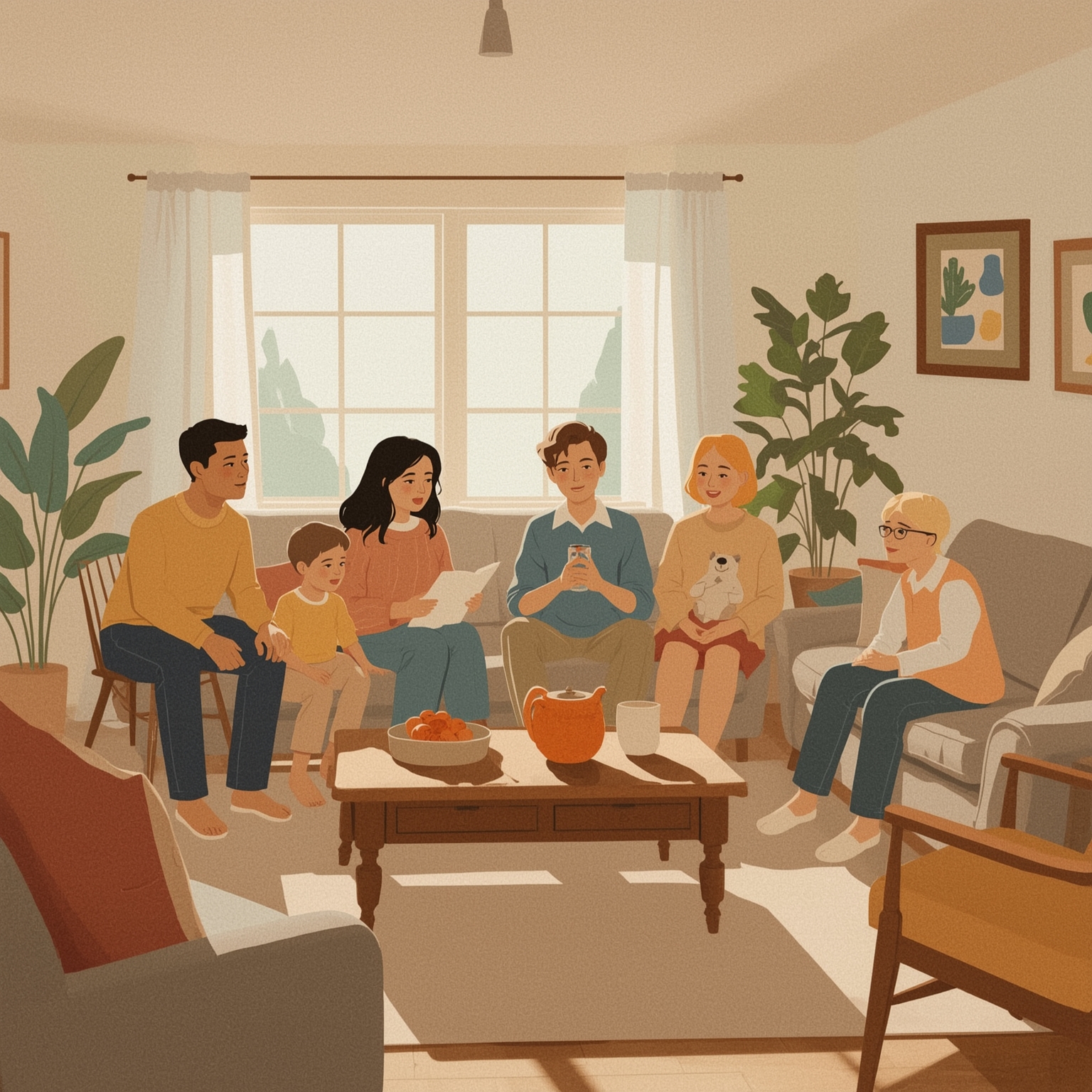
For as long as I can remember, I envisioned myself surrounded by a bustling household, the kind of big, lively family where laughter fills the hallways and every milestone is shared among loved ones. Yet life did not unfold as swiftly as I once imagined. My first child came into the world when I was thirty-one, and my husband was a few years older at thirty-three. In many ways, it was the perfect moment for us personally—emotionally, financially, and in terms of stability—but others viewed it differently. Friends, relatives, and even strangers offered unsolicited advice, warning that if I wanted a large family, I would need to hurry. According to them, biology had already started its countdown. Despite these cautions, I followed my own rhythm and brought three more children into our lives over nearly a decade. My youngest was born just before my fortieth birthday, a milestone birth that doctors clinically labeled a ‘geriatric pregnancy,’ a phrase that never sat comfortably with me. While it merely denoted my so-called ‘advanced maternal age,’ the term carried a weight that made me acutely conscious of time’s relentless passage.
In those early years, when the children were small and my energy seemed endless, I brushed off any mention of age. I laughed along when people joked about how old I would be at their high school graduations or whether I would one day be an elderly guest at their weddings. At the time, I felt too full of life to take those comments seriously. But as the years have moved forward and my children have grown taller, more independent, and increasingly aware of the world around them, I’ve begun to sense my own aging more poignantly. Now, the thought occasionally keeps me awake—the fear that I may not have as many years as I hoped to walk beside them as they step into adulthood. Even more unsettling is the lingering worry that once my husband and I are gone, they might find themselves without the kind of strong familial network that offers comfort in times of loneliness or need.
This awareness has deeply shaped my desires for their future. More than anything, I long for my children to be closely connected with our extended family. My hope is not only that they feel surrounded by love in our household but also that they grow up knowing the broader web of cousins, uncles, aunts, and kin who make our family so rich and vibrant. I dream of them understanding that family, in the truest sense, is a circle that continues even when individual lives end—a network that provides unwavering support, guidance, and love that transcends generations. I have always cherished the immense, sprawling family from which I come. Our gatherings are full of vitality; there’s hardly a distinction between a first cousin and a fifth, between an aunt by blood or by marriage. Family, in our minds, is not defined by lineage but by devotion, by the shared joy of showing up for one another again and again. Whether it’s a simple weekend picnic or a major holiday celebration, there is always someone hosting, someone cooking, someone laughing. It is a living organism of connection.
However, the connection I so easily enjoyed growing up has been difficult to recreate for my children. Despite my steadfast intentions, fostering that same sense of familial closeness has proven unexpectedly challenging. We live several hours from our nearest relatives, and my own immediate family resides across the country—an entire continent away. The physical distance alone creates obstacles that are not easily overcome. Layered on top of that are the costs of travel, the logistical difficulties of arranging accommodations suitable for my eldest daughter’s specific disabilities, and the ever-complicated web of work obligations, sports practices, and daily responsibilities that seem to fill our calendar without pause. All of these factors combine to make visits few and far between, leaving me feeling guilty and wistful every time another family event passes without our presence.
Now that three of my children are well into their teenage years, I can see with growing clarity what time has taken from us. I once promised myself that I would do whatever it took—whatever rearrangement of schedules or sacrifices were necessary—to ensure they spent enough time with their extended family to build lasting bonds. But reality, as it often does, intervened quietly and persistently. The years slipped away, and the chance for them to develop those childhood relationships filled with shared games, family secrets, and long summers together has largely passed. Though relationships can still grow in adulthood, the kind forged through the constancy of shared upbringing is unique, and I grieve that it is something they may never fully know.
We are fortunate, of course, to live in a deeply supportive community—a network of friends, neighbors, and local families who genuinely care for us and for one another. I am deeply grateful for that safety net, for the kind souls who would not hesitate to step in should we face difficulty. Yet, as strong as these communal ties may be, they are not quite the same as the bonds of blood and shared history. A neighbor can offer compassion, lend a hand, or even become dear as family, but the connection built on shared roots—the kind of love that is unspoken and unconditional—has a different texture. When a crisis arises or a new chapter begins, family are the ones who will drop everything to stand by you without hesitation, who celebrate your triumphs with pride that feels personal, and who mourn your sorrows as their own.
I am not naive about the world or the impermanence of human connections. Over the years, I’ve watched how easily people drift away, moving to new cities, forming new circles, or simply evolving in directions that diverge from one another. The idea of a ‘chosen family’—the network of friends and companions we gather along life’s path—is something I value deeply and respect in others. It is often born of necessity and sustained by love. Yet, despite my admiration for that concept, I find myself uncertain that it holds the same depth as the ties woven through shared ancestry and lifelong familiarity. Those old ties carry the weight of collective memory—stories of grandparents, traditions passed down through generations, and the comforting sense of belonging to something larger than oneself.
As generous and well-intentioned as the people in my children’s lives may be, I cannot ignore the lingering question of who will be there for them in life’s inevitable moments of need. Will these friends and neighbors travel across states to care for them if they face a difficult illness, need help with a newborn, or simply require guidance during a particularly trying time? Perhaps some will—but perhaps not. My hope, therefore, is that as my children grow, they will consciously create their own chosen families wherever they settle. I want them to build communities of love, friendship, and mutual support, to find people who will embrace them wholeheartedly, even in my absence. Yet, even as that hope comforts me, there remains a quiet ache within—the nagging recognition that no chosen circle, no matter how kind, can wholly replace the enduring foundation of family ties I once dreamed they would have. And as I look ahead to the uncertain decades to come, I worry not only about the brevity of my own presence in their lives but also about what their futures might look like without the steadfast pillars of family beside them when we, their parents, are no longer here to provide that unbroken bond.
Sourse: https://www.businessinsider.com/older-mom-wish-kids-closer-to-extended-family-2025-10


