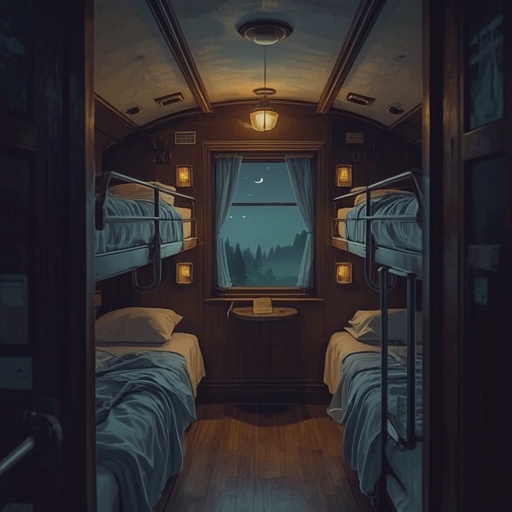
I had always imagined that an overnight train ride across Europe would be the definition of old-world travel charm—an experience filled with the rhythmic hum of the rails, moonlit scenery flashing past the window, and the quiet companionship of fellow travelers headed to far-flung destinations. The idea seemed effortlessly romantic, the kind of journey that appears in glossy travel magazines or nostalgic films. Yet, when I finally decided to try it myself, I discovered that the reality of spending the night in a shared sleeper cabin with three total strangers was far less picturesque and far more educational.
The train departed from Austria just before midnight, its metallic groan echoing through the station as passengers shuffled aboard, clutching their rucksacks, snacks, and travel pillows. I entered what was optimistically called a “sleeper cabin”—a compact space barely wide enough for one person to stand without brushing against the bunk beds that lined both walls. Within minutes, my three cabin companions arrived, each as weary and uncertain as I felt. We exchanged polite smiles that masked a mutual sense of apprehension. It was immediately clear that personal space would be a luxury we wouldn’t enjoy for the next eleven hours.
As the train began to move, the illusion of tranquility evaporated. Each bump and curve of the tracks jolted the entire cabin, rattling every loose hinge and metal latch. The top bunk creaked with each roll, while my pillow slid away again and again as the train swayed. Privacy, an already distant notion, proved impossible. At one point, I woke to find myself face-to-face with the shoes of the stranger in the bunk above me, dangling precariously close to my pillow. Even the simple act of turning over in bed risked bumping into another traveler’s elbow or rustling enough to wake everyone else.
Then there was the sound—or rather, the chorus of sounds. The frictional grind of the rails, the intermittent clatter of the train’s coupling, the soft, involuntary snores from nearby berths, the quiet buzz of someone’s phone vibrating at 3 a.m.—all combined into a restless symphony that kept any hope of sleep far beyond reach. Occasionally, the train would slow for a station stop, allowing a brief silence that teased us with the possibility of calm, only for the motion and racket to resume moments later.
By the time weak daylight began to filter through the narrow window, revealing sleepy countryside landscapes outside, I had resigned myself to simply waiting for the journey to end. My neck ached, my eyes stung, and I felt strangely claustrophobic after so many hours in that confined space with three people I barely knew but now felt impossibly familiar with. When the train finally stopped in Italy, we all stumbled out into the station square, bleary-eyed, exchanging half-hearted goodbyes before heading off in separate directions. The relief of fresh air and open space felt almost euphoric.
Reflecting on it later, I realized that the night train had indeed given me something of value—it just wasn’t the effortless sense of adventure I had expected. Instead, it taught a lesson in adaptation, awareness, and managing expectations when the romanticized visions of travel collide with reality. While I can appreciate the historical charm of continental rail travel, I now know that comfort and rest are luxuries best pursued elsewhere. Next time, I’ll choose a daytime journey, a window seat, and perhaps a good book, leaving the nostalgia of sleeper cabins to the travel brochures where it truly belongs.
Sourse: https://www.businessinsider.com/shared-sleeper-cabin-overnight-european-nightjet-train-review