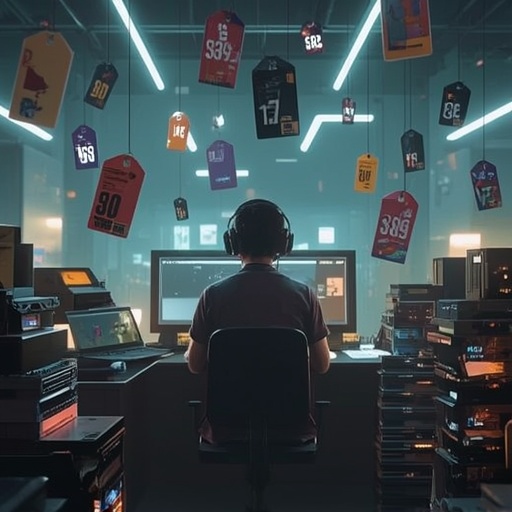
In recent years, the financial landscape of gaming has undergone a pronounced and multifaceted transformation, evolving from what was once considered an affordable pastime into a substantial economic commitment. Prices across virtually every segment of the industry — from physical consoles and high-performance peripherals to newly released titles and ongoing subscription models — have surged at a pace that far outstrips general consumer inflation. This steady escalation has made participation in the gaming ecosystem not merely a leisure choice but, in many cases, a significant investment that demands careful budgeting and prioritization.
Industry observers and economists consistently note that these rising costs are not isolated occurrences but rather symptomatic of deeper structural and technological shifts. The development of next-generation gaming hardware, for example, entails increasingly complex design processes, sophisticated chip architectures, and stringent supply-chain logistics — all of which contribute directly to elevated retail prices. Similarly, the game development cycle itself has lengthened and grown costlier, driven by escalating expectations for graphical fidelity, open-world expansiveness, and immersive realism. Each of these enhancements, while enriching the player experience, significantly boosts production expenditures that ultimately cascade down to the consumer.
Moreover, the proliferation of subscription-based and live-service models has redefined not only how players access content but also how they sustain engagement over time. What was once a one-time purchase has become an ongoing financial commitment through monthly or annual fees, microtransactions, and premium upgrades designed to unlock exclusive features or early access. This shift toward recurring revenue has created a more predictable financial model for developers and publishers but has simultaneously blurred the boundary between entertainment and expenditure for players. The result is an economic ecosystem in which even casual participation can accumulate into considerable long-term costs.
Experts emphasize that there is no immediate remedy for this phenomenon. Supply chain constraints, fluctuating global currencies, and the rising costs of digital distribution continue to exert pressure on pricing. For consumers who have grown up regarding gaming as an essential form of recreation and cultural expression, this trend presents a complex dilemma: whether to adapt and continue investing in an increasingly premium market or to seek alternative, lower-cost avenues of play.
As the boundaries between technology, artistry, and commerce continue to converge, gaming’s status as a mainstream cultural enterprise is becoming ever more evident. Yet, the financial realities underlying that evolution compel both producers and players to reconsider what accessibility and value mean in the digital entertainment age. Ultimately, the question echoes across online forums and social networks alike — how much more are we, as a global gaming community, truly willing to pay to play?
Sourse: https://www.businessinsider.com/price-gaming-inflation-xbox-playstation-nintendo-switch-2026-5