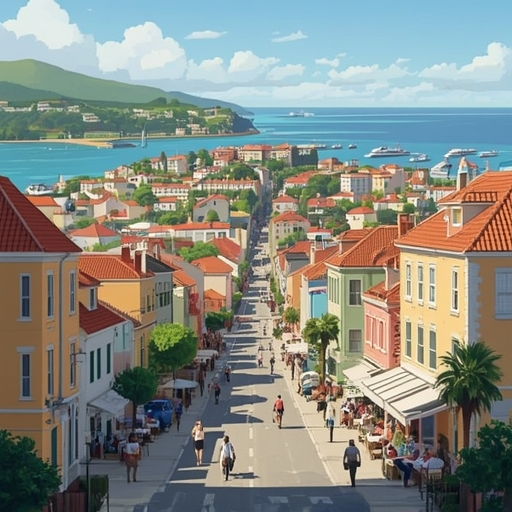
When I traded the relentless pace of long commutes and car-dependent living for ocean breezes and leisurely café strolls, I discovered a transformation that went far beyond scenery. In Victoria, the charming capital of British Columbia nestled on Vancouver Island, life unfolds at a measured, walkable rhythm that makes every errand, meeting, or moment of quiet reflection feel deeply intentional. Each cobbled street and waterfront promenade turns mobility into an experience—one shaped by connection, calm, and a tangible sense of belonging rather than rush or routine.
Living in a walkable city such as Victoria has completely redefined my perception of what the phrase “quality of life” truly embodies. Instead of being trapped in traffic or searching endlessly for parking, my days now begin with the comforting sound of a distant ferry horn and the sight of early risers picking up fresh scones from the local bakery. Within minutes, I can reach nearly everything that sustains my daily rhythm: artisan cafés offering fair-trade coffee, colorful open-air markets alive with conversation, and peaceful parks where the ocean breeze mingles with the scent of cedar and salt. The simplicity of proximity—being able to meet friends without scheduling logistics or errands without stress—has profoundly changed how I relate to time and space.
What once felt like inconvenience—distances that required driving, schedules dictated by congestion—has given way to effortless fluidity. Here, urban planning has embraced human scale and sustainability over speed. Streets prioritize pedestrians, cyclists, and communities before vehicles, creating encounters rather than isolations. The design of Victoria encourages spontaneous connection: an unplanned chat with a neighbor on a morning walk, an impromptu stop at a farmers’ stall, or a lingering glance at sunset along the harbor. These small, ordinary experiences combine to form an extraordinary life tapestry woven from accessibility and beauty.
More than a shift in geography, the move to Victoria has been a lesson in what balance truly means. I now understand that sustainability is not limited to the environment—it extends to emotional and mental endurance as well. The opportunity to walk nearly everywhere has improved both my well-being and productivity. Time formerly consumed by commuting is now invested in creativity, community involvement, and personal renewal. It is astounding how a restructured environment can gently yet decisively recalibrate one’s sense of purpose. The city itself invites mindfulness: every step toward the water, every turn onto a leafy side street, feels like an act of returning to simplicity.
Victoria’s appeal lies not only in its physical beauty—the pastel-painted heritage buildings, the glittering ocean expanse—but in the culture of connection it cultivates. The scale of the city encourages encounters that are genuine and grounded. People greet one another not as strangers but as participants in a shared rhythm of locality. There is no daily surrender to the anxiety of speed; instead, there is a collective slowing down, a communal respect for both place and pace.
Of course, no city is entirely without drawbacks—limited space, higher living costs, or occasional storms sweeping in from the Pacific—but those seem almost trivial compared to what is gained. Each morning, as sunlight spills across the harbor and walkers fill the streets, I am reminded that city living need not mean intensity or isolation. When the human need for ease, nature, and social cohesion is woven directly into the city’s design, the result feels close to perfect.
For me, living in a walkable city like Victoria has become less of a lifestyle choice and more of a quiet philosophy: life should be navigated on foot, at a human rhythm, with room to breathe, observe, and participate. In doing so, I have found that a city built for walking becomes a city that moves the soul.
Sourse: https://www.businessinsider.com/moved-to-small-city-canadian-island-love-victoria-drawbacks-2026-1