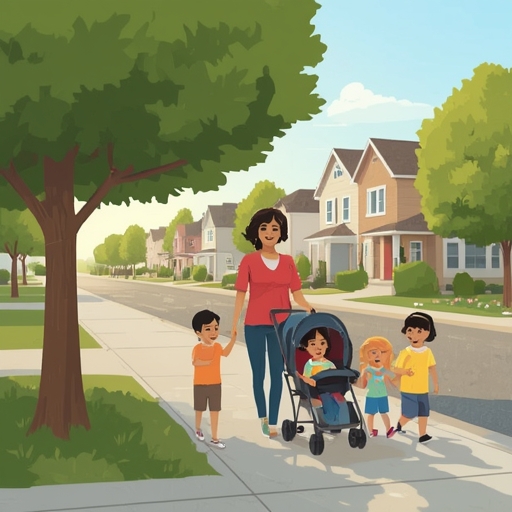
In our modern suburban world, it’s easy to slip into the rhythm of constant car rides and packed schedules — especially with three young children ages five, three, and one. Yet, within the bustle of daily life, our family has deliberately chosen a slower, more intentional path. Whenever circumstances allow, we put aside the keys and step outside together, embracing simple walks as a cherished part of our routine. This conscious shift from convenience to connection has transformed even the most ordinary errands into meaningful micro-adventures.
Each walk becomes an experience layered with curiosity, discovery, and the warmth of shared presence. What might otherwise be a five-minute drive to the grocery store turns into a sensory journey: leaves crunching beneath small shoes, the giggle of toddlers chasing their own shadows, the faint scent of blooming gardens whispering through the air. Through these unhurried strolls, we find more than fresh air — we find one another. Our children learn to notice the world’s textures and rhythms, to greet our neighbors, and to understand, in their own young way, that movement is not merely about reaching a destination but about participating in the living environment around us.
Walking, for us, is not simply transportation; it is a philosophy of presence. In choosing our feet over our vehicle, we cultivate mindfulness without forcing it, discovering the restorative power of slowness amid suburban pace. The children develop resilience and curiosity, while my partner and I rediscover patience — that rare quality that often vanishes behind the rush of red lights and tight schedules. Even a short walk to the playground becomes an exercise in noticing life’s gentle details: sunlight filtered through branches, the contented hum of conversation, and the shared triumph of small distances conquered together.
Over time, this family ritual has come to symbolize more than convenience or exercise. It represents our effort to reduce our environmental footprint — one step at a time. It’s a modest rebellion against the assumption that suburban life must revolve around the car, proving that sustainability and family bonding can coexist beautifully. The effects extend beyond physical health: our walks replenish our mental clarity, strengthen our emotional ties, and weave a sense of balance that carries through the rest of our day.
Ultimately, these journeys remind us that transformation often begins not with great leaps but with simple steps. Each outing, no matter how brief, becomes a quiet affirmation that happiness is not found in speed or efficiency, but in savoring the space between here and there. By choosing to walk whenever we can, we remind ourselves — and our children — that life’s greatest adventures often begin just beyond the driveway.
Sourse: https://www.businessinsider.com/mom-kids-suburbs-walking-vs-minivan-2026-5


