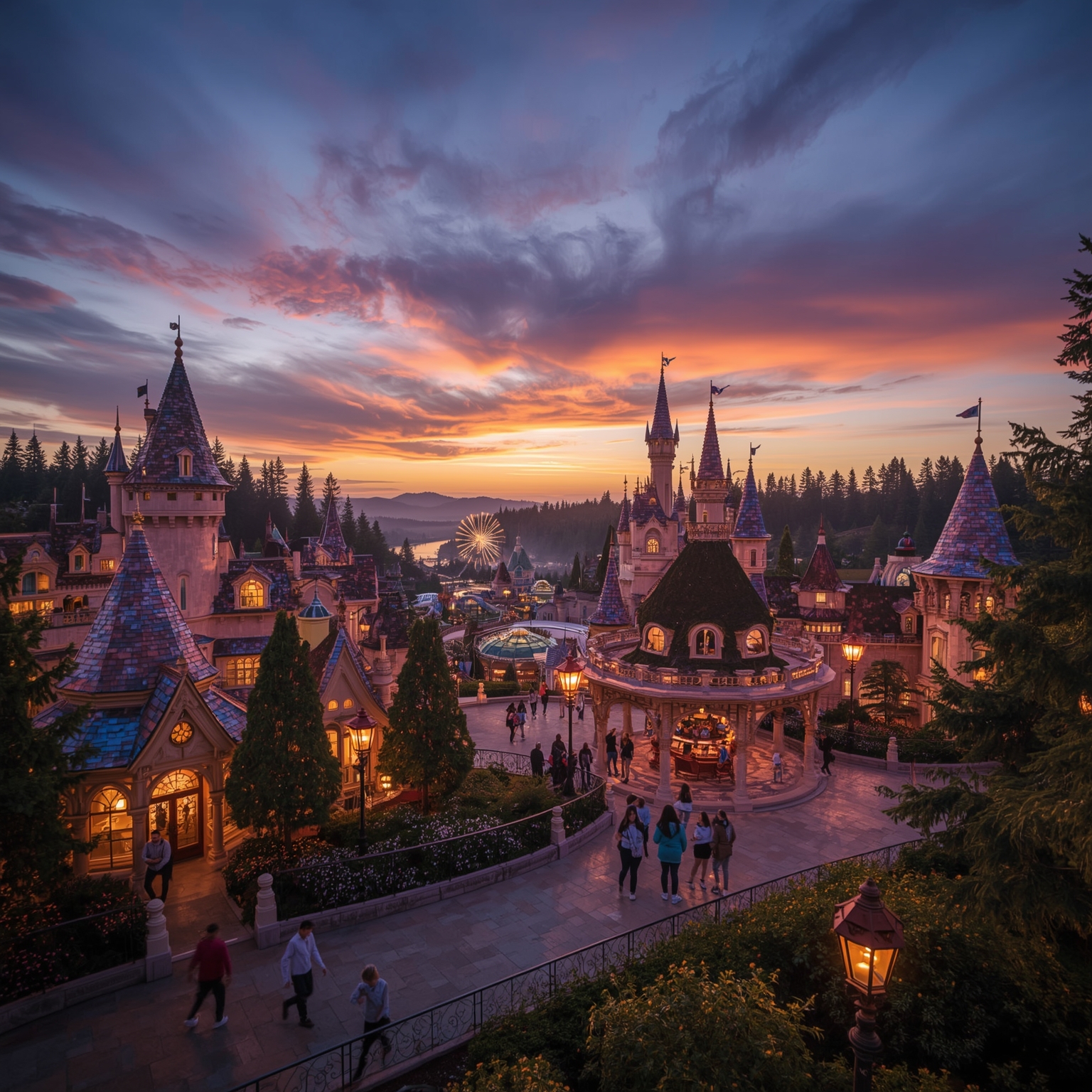
Disney is once again in the midst of a significant round of price increases, a move that has become almost an annual ritual for the entertainment giant. Yet, intriguingly, many of the company’s most ardent and steadfast supporters appear unbothered by the rising costs. For these loyal enthusiasts, the allure of Disney’s meticulously crafted magic often outweighs the financial sting. The self-proclaimed “Happiest Place on Earth” is set to become even more expensive, as Disney announced on Wednesday that the price of single-day tickets to Disneyland will surge by as much as 8.7% during peak periods such as Thanksgiving, Christmas, and New Year’s Eve—times traditionally synonymous with immense crowds and heightened demand. The company also confirmed that admission fees at Walt Disney World in Florida will climb again next fall. This pattern marks the fourth consecutive year that Disney has initiated price hikes across its parks in Anaheim and Orlando, reinforcing a trend that blends exclusivity with steady profitability.
What may catch some observers off guard is not the increase itself, but the reaction from a subset of Disney’s devoted fan base. Rather than frustration, certain loyal guests have expressed acceptance—or even approval. Lucas Lozano, a 32-year-old investment analyst from San Antonio and lifelong Disney enthusiast, captured this sentiment succinctly when he remarked that the parks have become overwhelmingly congested. In his view, a modest rise in costs could serve as a natural crowd control measure, ensuring that those willing to pay enjoy a more pleasant, less claustrophobic experience. Lozano, who plans to visit Disney World with his family in December, reasoned that slightly higher prices might deter some would-be visitors during peak periods, ultimately improving the experience for those who do attend.
Professionals in the travel industry who specialize in Disney vacations echo this pragmatic optimism. Rob Stuart, a Disney-focused travel planner and cohost of the “Disney Travel Secrets” podcast, reported that his third-quarter bookings have reached new record levels, despite—or perhaps aided by—the most recent price increase. According to Stuart, his clients seem largely unfazed by the higher costs, perceiving them instead as indicators of premium value. He even suggested that price hikes could have a mildly positive impact on demand, fueled by the widespread assumption that elevated ticket prices translate into smaller crowds and shorter wait times. In defense of these changes, a spokesperson for Disney Parks emphasized that a spectrum of ticketing options remains available to accommodate a broad array of visitor budgets and preferences. More importantly, the representative reaffirmed that the company’s unwavering mission continues to center around crafting “magical experiences for everyone,” a promise that Disney insists remains foundational to its brand identity.
Nevertheless, there is no denying that Disney’s pricing strategy is, at its core, a deliberate reflection of its market power and the enduring demand for its unparalleled attractions. While the company acknowledges that price increases can spark controversy, particularly among frequent visitors and out-of-state guests, Disney’s leadership appears confident that the perceived value of the experience justifies the expense. Some online commentators, however, have voiced anger over what they view as exclusionary pricing. One critical Reddit user vented frustration over the cost of the top-tier Walt Disney World annual pass—known as the “Incredi-Pass”—which recently rose by $80, now totaling $1,629 before taxes, or $1,734 after. Such grievances echo the uneasy balance Disney must maintain between profitability and public goodwill. CEO Bob Iger even admitted in 2023 that the company may have escalated prices too quickly in the wake of the pandemic, a period marked by both operational recovery and substantial inflationary pressures.
Still, veteran parkgoers have grown accustomed to the reality that incremental increases are now part and parcel of the Disney experience. For instance, Max Traughber-Crismon, a 43-year-old devotee from Washington state, expressed little surprise and adopted a pragmatic view of the situation. To him, Disney’s rationale mirrors the broader economic pattern in which corporations across industries adjust consumer prices to offset rising operational expenses. While he intends to continue visiting the parks, Traughber-Crismon noted that his family will likely economize by cutting back on optional purchases—souvenirs or additional meals—rather than scaling back the trips themselves.
Travel agents echo this tempered acceptance. Donna DeGiacomo, another Disney vacation specialist, remarked that most customers interpret these adjustments as predictable consequences of inflation and the larger cost-of-living trend. Her colleague, Jenn Novotny of Upon A Star Travel, observed the same attitude among clients: a collective shrug and the resigned observation that, given current economic circumstances, nearly everything seems to be increasing in price.
From the perspective of market analysts, Disney’s strategy appears economically rational. In an October 6 report, just days before the official announcement, Wells Fargo’s media analyst Steven Cahall noted that the company retained sufficient “pricing power” to elevate costs without eroding demand. He credited Disney’s sophisticated, multi-tiered pricing architecture—covering variable daily rates and add-ons such as the Lightning Lane fast-pass system—for optimizing “revenue per guest” in a manner reminiscent of the airline industry’s shift toward premiumization. For visitors mindful of value, Cahall contended that the inflation-adjusted cost of a Disney vacation remains roughly equivalent to what it was decades ago, suggesting that the headline price increases may not represent as steep a leap as they appear.
Yet, even as Disney reaps these financial rewards, the latest increases arrive on the heels of public criticism over unrelated company decisions, from temporary programming suspensions to perceived political concessions. In this climate, the additional price hikes have become another point of contention among those who feel that the company may be distancing itself from parts of its once-universal fan base. One example is Shae Noble, a 38-year-old long-time devotee from the Pacific Northwest, who described feeling conflicted about renewing her annual Disney World pass. Torn between her genuine love for the parks and her dissatisfaction with certain corporate actions, Noble explained that the most recent surge in costs has pushed her closer to ending her annual commitment.
Taken together, Disney’s latest pricing evolution illustrates the delicate equilibrium between economic pragmatism and emotional brand loyalty. While many faithful customers remain willing to absorb higher prices in exchange for access to the meticulously crafted enchantment that has defined Disney for generations, others are beginning to question whether the cost of that magic is approaching its breaking point.
Sourse: https://www.businessinsider.com/disney-park-price-hike-increase-inflation-affordability-fan-reaction-disneyland-2025-10