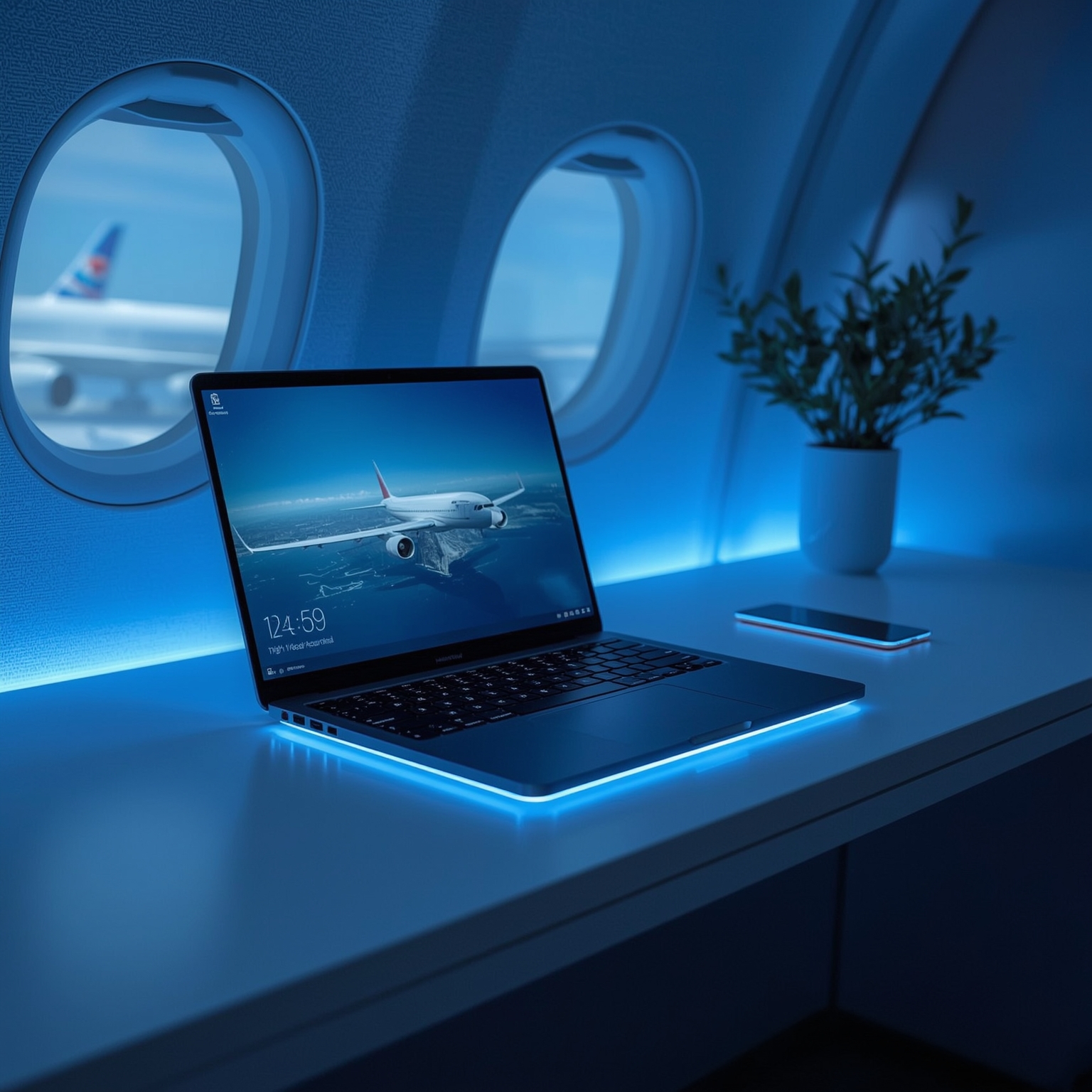
The Lenovo ThinkBook 13x Gen 4 represents a striking evolution in the realm of ultraportable business laptops, blending compact design with unexpectedly powerful performance. Starting at approximately $1,580, the device comes equipped with an Intel Core Ultra 5 processor and 16GB of high-speed RAM, creating a combination that caters to professionals seeking both mobility and competence. Despite its modest 13-inch frame, this laptop manages to deliver an impressive balance between productivity and convenience, offering many of the advantages found in much larger machines while retaining a travel-friendly footprint. Yet, this same mobility-oriented design introduces certain limitations — most notably, its dependence on USB-C ports due to its slim chassis.
First revealed to the public during CES 2024, the ThinkBook 13x Gen 4 immediately caught attention not only for its refined, minimalist aesthetic but also for its reintroduction of Lenovo’s distinctive Magic Bay system. This magnetic modular ecosystem allows a series of specialized accessories to connect seamlessly to the top of the device via magnetic pogo pins, somewhat reminiscent of Apple’s MagSafe but purpose-built for laptop peripherals. While these modular components — including webcams, ring lights, and connectivity tools — may be the most eye-catching innovation, the true strength of the ThinkBook extends far deeper into its internal architecture and thoughtful engineering.
Underneath its aluminum shell, users can select from two powerful processor options: the standard Intel Core Ultra 5 125H running at 2.4 GHz or the even more capable Intel Core Ultra 9 variant, which significantly raises the device’s performance ceiling. This upgrade pushes the ThinkBook into competition with many enterprise-class systems, though it also increases the overall price by more than $400. Even with the more affordable configuration, the ThinkBook’s responsiveness remains impressive, handling multiple productivity applications, numerous browser tabs, and even extended multitasking scenarios across dual monitors without notable slowdown. Its compact dimensions, paired with a weight of just 2.7 pounds, make transportation between home, office, and travel destinations nearly effortless — a fact that underscores its practicality for hybrid professionals.
However, when it comes to display size, users accustomed to larger screens may need to adjust expectations. The 13.5-inch screen, boasting a vivid 500-nit brightness and a dynamic 120Hz variable refresh rate, offers sharp, vibrant imagery suitable for presentations, document editing, or lightweight creative work. Nevertheless, seasoned users of 15- or 16-inch panels may perceive the limited viewing space as somewhat restrictive, especially during prolonged multitasking sessions. This, ultimately, becomes a matter of personal preference — one must choose between the freedom of portability and the expansiveness of screen real estate.
Performance and flexibility firmly tip the scales toward the ThinkBook’s favor. Benchmark tests conducted using PCMark 10 revealed swift read and write speeds from its SSD, while Cinebench evaluations demonstrated performance levels slightly exceeding expectations for a compact machine powered by the Ultra 5 chip. The 8400MHz dual-channel RAM, pre-soldered for structural efficiency, further enhances both speed and longevity. Users opting for the Ultra 9 processor can upgrade memory to 32GB, while Ultra 5 systems remain capped at 16GB — a limitation that may disappoint those seeking more memory on the mid-tier configuration.
Lenovo’s design philosophy for the ThinkBook 13x Gen 4 clearly looks toward the future. Its connectivity ports are exclusively next-generation USB-C — specifically, three Thunderbolt 4 ports providing outstanding versatility for docking stations, displays, and high-speed external storage. The absence of USB-A or HDMI outputs might inconvenience those with legacy peripherals, though this decision reinforces Lenovo’s modern and forward-looking approach. Complementing these ports are a 3.5mm headphone jack and a power button doubling as a fingerprint reader — subtle, space-efficient design elements that enhance both convenience and security.
Equally praiseworthy is the keyboard’s exceptional feel and intelligent design. Despite the laptop’s narrow form, Lenovo manages to extend the keyboard edge-to-edge, nearly eliminating bezels and providing keys that feel as generously sized as those found on larger models. The tactile feedback is crisp and satisfying, making extended typing sessions pleasant and efficient. Moreover, the omission of a numeric keypad allows for better spacing and a cleaner aesthetic.
The exterior design continues this thoughtful execution. The ThinkBook 13x Gen 4 is available in two finishes: the refined “Luna Grey,” which exudes a professional corporate tone, and a limited-edition “Seashell” white that introduces a lighter, more contemporary flair. Even beyond aesthetics, the chassis impresses through sheer rigidity. Built to endure, it meets 12 separate military-grade durability standards under the MIL-STD 810H certification, providing exceptional resistance against drops, vibration, and environmental extremes.
Where the ThinkBook 13x Gen 4 truly distinguishes itself, however, is through its compatibility with the Magic Bay ecosystem. This modular interface transforms the laptop into a customizable workstation tailored for different professional scenarios. Users can equip the Magic Bay Light for enhanced illumination during video calls, the Magic Bay LTE Hotspot for secure connectivity when Wi-Fi proves unreliable, or even a variety of developing add-ons such as external fans, storage units, or secondary displays. Among these, the Magic Bay Studio stands out: a high-quality 4K webcam with integrated speakers that instantly elevates the ThinkBook into content-creator or conferencing territory. While Lenovo has yet to fully demonstrate the breadth of this system’s potential, its concept hints at a modular future for mobile computing.
Battery performance reinforces the ThinkBook’s status as a serious productivity tool. The 74WHr battery — substantial for a 13-inch notebook — easily powers the device through a full workday and beyond. In benchmark trials using PCMark 10, the system surpassed the 10-hour mark, while real-world tests involving media streaming at moderate brightness and volume yielded comparable longevity. This endurance makes it dependable for meetings, flights, and extended remote sessions without the anxiety of constant recharging.
Sound quality, another area often sacrificed in compact designs, pleasantly surprises here. The Harman Kardon speakers deliver unexpected depth, clarity, and volume, adding richness to video calls, streaming, and music playback. It’s a reminder that compact need not mean compromised.
Overall, the Lenovo ThinkBook 13x Gen 4 is an exceptionally well-rounded machine for professionals who value mobility without surrendering capability. Its premium build, long battery life, impressive display, and modular expansion through Magic Bay make it one of the most strikingly versatile options in the 13-inch category. For the asking price of roughly $1,580, it represents a compelling balance of design innovation and functional strength. Those seeking a similar experience at a lower cost might consider the MSI Prestige 13 AI Evo, while users desiring a larger workspace within the same design lineage could explore Lenovo’s ThinkBook 14 2-in-1. In any case, the ThinkBook 13x Gen 4 stands as a refined example of modern laptop engineering — a tool equally at home in the boardroom, airport lounge, or creative studio.
Sourse: https://www.zdnet.com/article/my-favorite-laptop-for-business-travel-is-not-a-lenovo-thinkpad-or-macbook-but-better/