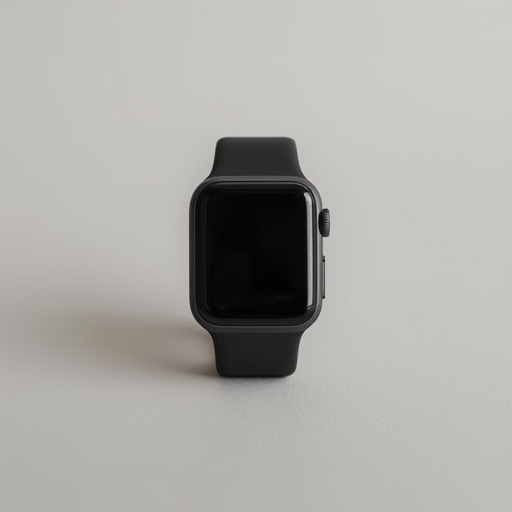
Over the past several years, the once–simple wristwatch has transformed into a multipurpose digital instrument that doubles as a personal health guardian. The evolution of smartwatches has been propelled largely by technology giants such as Apple, Garmin, Google, and Samsung—all eager to dominate the real estate around your wrist. These companies continuously emphasize integration with fitness and wellness ecosystems: real-time exercise analytics, dynamic sleep monitoring, and sophisticated measurements of physical metrics such as heart rate and blood pressure. The higher-end models even extend their reach into environments beyond the boundaries of cellular connectivity, acting as miniature satellite communicators meant to accompany users on remote adventures. The underlying message is clear—if you wear a smartwatch, you are expected to live life in motion, perpetually active and rarely confined within the range of cell towers.
These elaborate capabilities have undeniably contributed to the tremendous success of modern smartwatches, defining their market appeal and cultural prestige. Yet, despite their breadth of functionality, these hyper-connected devices often fail to satisfy a simpler, purer desire: the wish for a wrist companion that just helps one move smoothly through the day. Personally, my ideal smartwatch does not need to measure lactic acid levels or prompt me to hydrate. What I seek is something centered around utility, not athletic performance—an instrument that fulfills its most fundamental role by reliably telling time and discreetly assisting me with everyday digital interactions. I want contextual notifications at a glance, the convenience to manage minor tasks without fishing my phone out of my pocket, and perhaps, at most, a handful of basic wellness features—a step counter, a silent alarm that gently vibrates on my wrist instead of jolting me awake. In short, I desire a smartwatch that is genuinely smart, not merely a miniature fitness studio strapped to my arm.
Enter the Pebble 2 Duo, a device that nearly embodies my minimalist ideal. Priced at $149, this smartwatch revives the spirit of practicality that once defined the early wearables market. It employs an E Ink display—that timeless, power-efficient technology—ensuring the screen remains visible at all times without draining the battery. And battery life, indeed, is one of its triumphs: the Pebble 2 Duo lasts close to an entire month on a single charge. Its subtle vibrations alert me to incoming notifications, and the watch gives me precise control over which alerts are allowed to disturb my focus. Fitness tracking exists, though in the mildest possible form—it counts steps, transmits tiny bursts of data, and leaves the deeper analytics to more ambitious devices. Thin, lightweight, and inconspicuous, it fades into the background until I need it. Admittedly, its aesthetics will not stir the heart of a design purist—its unadorned casing lacks the gloss and refined symmetry of an Apple Watch or Garmin’s latest creation—but then again, those cost at least twice as much. The Pebble 2 Duo is not a masterpiece of craftsmanship; it’s a thoughtful resurrection of an idea ahead of its time.
That idea first took form in 2012, when Pebble introduced the world to one of the earliest genuinely capable smartwatches, propelled into existence by a then-record-breaking Kickstarter campaign that raised ten million dollars. This was three years before the Apple Watch debut, back when the notion of wearable computing was still an experimental frontier. Pebble’s promise was simple: to bridge smartphones and wrists through elegant simplicity and open developer platforms. The company grew quickly but stumbled as the market matured faster than its business. After struggling to sustain momentum, Pebble was sold to Fitbit in 2016—a deal that effectively ended the original Pebble era. Fitbit itself later became part of Google in 2021, leading to Pebble’s virtual disappearance, save for a loyal community of devotees and developers, affectionately known as Rebble, who refused to let its digital pulse stop beating.
The story might have ended there if not for Eric Migicovsky, Pebble’s founder, who never truly severed his connection with the brand. Despite moving on to new ventures, he continued to wear his own Pebble watch, both as a nostalgic keepsake and as a quiet protest against the direction of the smartwatch industry. In a remarkable turn of events earlier this year, Migicovsky convinced Google to open-source the Pebble operating system, enabling anyone—himself included—to build new hardware compatible with that original software. Out of this opportunity emerged Core Devices, his new company created not to reinvent Pebble for a new generation, but to bring back the straightforward charm of the original ethos. His mission is pragmatic, almost sentimental: he doesn’t aim to design the Pebble of the future; he merely wishes to produce more Pebbles for those who never stopped wanting them.
The Pebble 2 Duo closely resembles its older sibling, the Pebble 2 from 2016, down to some literally recycled components reportedly retrieved from a warehouse in China. Its design language remains consistent: a 1.2-inch monochromatic e-paper display housed in a chunky polycarbonate frame. Aesthetically, it is more reminiscent of a playful Fisher-Price gadget than an elegant timepiece from Patek Philippe. Even so, its tactile straightforwardness has a certain retro-tech charm. The white version I own fails to win me over completely—I would have preferred the understated black variant—but the advantage lies in its adaptability. The watch accepts any standard 22mm strap, letting you personalize it as you wish. I replaced the default silicone band with a fabric NATO strap I purchased inexpensively online; the result feels comfortable, durable, and perfectly serviceable.
Hardware improvements on this version are minimal but not nonexistent. A small speaker has been added, though it has not yet been activated in the current software. Its future purpose appears to be enabling voice interactions with AI assistants or allowing auditory notification prompts. Currently, the only usable voice function is responding to text messages through the built-in microphone—restricted, however, to Android devices, since Apple’s iOS forbids such third-party integrations. Beyond that, minor modifications include upgraded side buttons, reportedly more durable though a bit sticky in practice. The Pebble 2 Duo also benefits indirectly from a decade’s worth of technical advances: new-generation Bluetooth chips that use less energy and generally extend the battery’s lifespan to several weeks, even if not quite the full thirty days advertised.
After several weeks of daily use, I found the Pebble 2 Duo fulfills a handful of essential needs. First and foremost, it excels at the one function many sophisticated smartwatches ironically neglect—displaying the time consistently and clearly. The always-on E Ink screen ensures visibility under direct sunlight, and its soft backlight provides discretion in dark environments. The Pebble Store offers thousands of watch faces—many unimpressive, yet some surprisingly creative. It handles alarms and timers with ease, albeit limited to one at a time. Its Timeline interface, which elegantly lists upcoming calendar events in chronological order, stands as one of its cleverest features, embodying Pebble’s philosophy of subtle productivity.
The watch also handles notifications gracefully. You can configure it to mirror all phone alerts, suppress them entirely, or allow only a customized selection. I pared mine down to essentials—text messages and important calls—so my wrist vibrates only when something truly deserving of my attention arrives. I often use the physical buttons to answer calls when I’m wearing headphones, bypassing the need to pull out my phone. Those same buttons conveniently control audio playback, letting me skip songs or switch podcasts through muscle memory alone.
Most Pebble management happens through the companion app on iOS or Android. The ecosystem integrates deeper with Android devices, but iPhone users will not feel particularly deprived. The Pebble Appstore remains vibrant, even if its content skews toward simplicity. After trying out multiple apps, I found myself gravitating toward Misfit, a modest step tracker, as the only one worth regular engagement. The watch, by nature, discourages prolonged interaction—scrolling through menus feels slow, and animations are intentionally minimal. Instead, it functions best as an unobtrusive information relay.
For users who crave comprehensive health insight, Pebble’s offerings may feel underwhelming. However, the platform maintains a few nods to wellness enthusiasts: a basic workout app that occasionally recognizes exercise sessions, as well as sleep-tracking utilities like Morpheuz, which delivers average analytics but compensates with an intelligent alarm that times wake-ups to gentler sleep phases. These modest inclusions won’t satisfy data-driven athletes, yet they meet my minimal expectations effortlessly.
I initially purchased the Pebble 2 Duo simply to secure one of the earliest shipping units, but if you are considering a similar purchase, waiting for the $225 Pebble Time 2 might be wiser. That forthcoming model reportedly integrates a full-color touchscreen, a heart rate sensor, and an elegantly finished steel case—all clear enhancements over the Duo’s utilitarian charm. Yet regardless of iteration or aesthetics, the mere existence of a new Pebble signals something important: a return to an alternative smartwatch philosophy. In a market obsessed with quantification, performance, and luxury branding, the Pebble stands as a quiet rebellion—a reminder that a watch can still be what it always was, just intelligently improved.
Sourse: https://www.theverge.com/gadgets/837388/pebble-2-duo-review