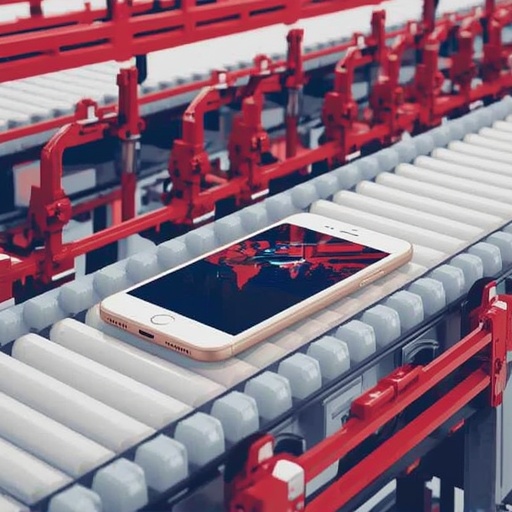
The long-anticipated launch of the so‑called “Trump phone,” once championed as a proudly patriotic symbol of American technological independence, has delivered a twist that is as ironic as it is revealing. Despite the fiery marketing that promised a device emblematic of U.S. resilience and domestic innovation, the final product rolled off production lines located not in American industrial hubs, but in factories situated overseas. This seemingly contradictory decision invites a deeper exploration of how commercial imperatives, political messaging, and global manufacturing realities intertwine in the modern economy.
To understand why an object marketed as “Made for America” ended up being made elsewhere, one must first examine the structural forces that shape technology manufacturing today. The production of smartphones—from microchips to displays—relies on expansive international supply chains that span continents. Even corporations renowned for their American identity depend on specialized foreign suppliers for both raw materials and advanced electronic components. The ‘Trump phone,’ despite its overtly nationalist branding, could not escape the economic gravity of this interconnected system.
Economic logic, not ideology, frequently dictates where a product takes form. Overseas manufacturing often offers lower labor costs, streamlined production scalability, and access to well‑established electronics ecosystems that the United States has gradually outsourced over several decades. For a politically symbolic product, this outsourcing may appear contradictory, yet it reflects a truth that transcends rhetoric: the line dividing patriotism and practicality in business is both fine and negotiable.
Observers see in this device’s origins a case study in modern branding—a reminder that the lofty language of political marketing often collides with the pragmatic necessity of global efficiency. The ‘Trump phone’ exemplifies how political narratives can be packaged for domestic consumption while being physically assembled on the other side of the world. Its story is not merely one of irony, but of industrial evolution: an acknowledgment that economic globalism, once dismissed or condemned in political discourse, remains inescapably interwoven with profit margins and consumer demand.
Ultimately, the saga underscores a larger truth about contemporary capitalism. Even as companies wrap products in the banners of national identity, the processes that bring those products into existence transcend borders. Behind the slogans and patriotic imagery lies an intricate choreography of international collaboration, logistical expertise, and cost calculation. The ‘Trump phone’ therefore serves as both a technological artifact and a cultural commentary—a device that invites us to reconsider what “Made in America” truly means in an age where every device, no matter how earnestly branded, is the outcome of a global conversation between economy, opportunity, and ideology.
Sourse: https://www.theverge.com/tech/943852/trump-phone-made-in-the-usa-ftc-assembled-china