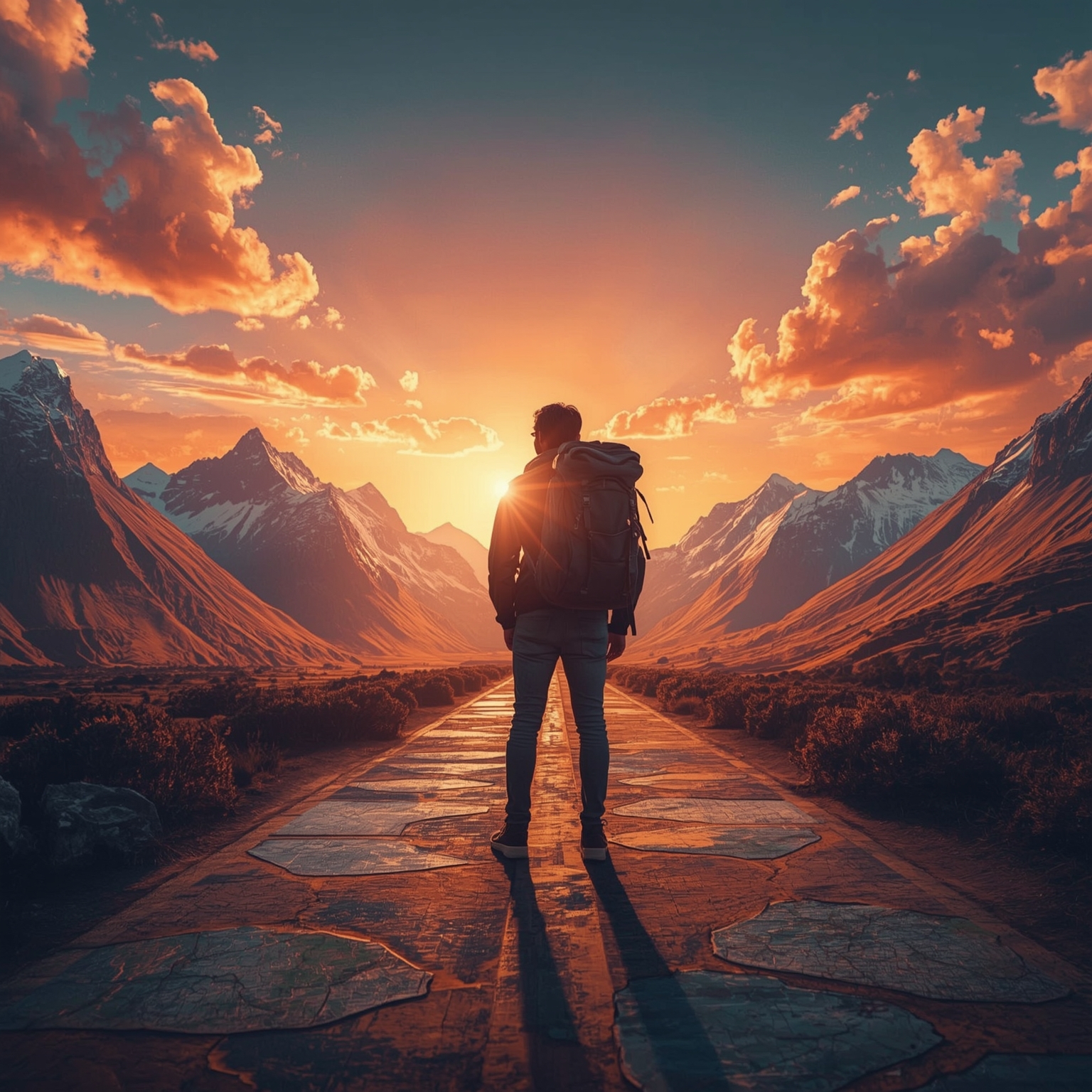
When I was eighteen—young, carefree, and still unaccustomed to the vastness of the world beyond my comfort zone—the mere thought of traveling completely on my own filled me with unease. The anxiety of navigating unfamiliar places without the safety net of companionship seemed overwhelming. Yet, despite that fear, something within urged me to push forward. I took the plunge and embarked on my very first solo journey to Tanzania, a decision that would ultimately reshape my sense of self. That experience awakened in me an insatiable wanderlust, what many affectionately call the ‘travel bug.’ From then on, I found myself venturing alone to destinations such as Thailand, Singapore, and Australia, each trip broadening my confidence and deepening my affection for independent exploration. It took several years, however, before I could say I had truly conquered my fear. A particularly transformative overland expedition through South America at the age of twenty-two—during which I visited five countries by myself after my friend’s departure—taught me the essence of courage and self-reliance.
Traveling alone has since become more than an activity—it is an essential part of who I am. Solo travel instills in me a profound sense of empowerment, a kind of emotional rejuvenation that makes me feel as youthful and alive as I did on that very first backpacking trip. Few sensations compare to the thrill of stepping foot in a brand-new country, hearing an unfamiliar language swirling around me, and realizing that the entire experience belongs solely to me. Nevertheless, as the years have passed, my life responsibilities have naturally multiplied. Commitments tied to work deadlines, family life, owning a home, and the day-to-day joys and burdens of parenthood have undeniably slowed the pace of my adventures. Yet, the decreased frequency of my travels has brought with it a renewed determination—to savor every moment I do spend away and to make those journeys as meaningful as possible. Traveling by myself allows me to do just that, as the solitude simplifies decision-making and heightens my appreciation of each experience.
Many people assume that because they see me traveling alone, I must be single, but this couldn’t be further from the truth. In reality, I have shared my life with my partner for fifteen years—a relationship strengthened, not diminished, by my independent adventures. Together, we have created a mosaic of cherished memories from the many trips we’ve taken as a couple. Our most ambitious shared journey was a yearlong sabbatical through South and Southeast Asia, where we marveled at some of the world’s most breathtaking sites, from the architectural grandeur of the Taj Mahal to the mystical beauty of Angkor Wat. Those experiences were magnificent, and I treasure them deeply.
There is no denying that traveling with a partner carries its own unique rewards. I often felt safer with him by my side, particularly in countries where navigating certain logistics or cultural differences could feel daunting alone. Having someone I trusted entirely meant I could worry less about forming new friendships, and together we could share in the wonder of discovery. In moments of stress, sickness, or fatigue, we supported each other, providing emotional and practical comfort. Yet, even amidst the joy of those shared experiences, I occasionally found myself reminiscing about the spontaneity that tends to accompany solo travel—the unplanned nights out, the chance meetings with locals or other travelers, and the impulsive detours to corners of a city rarely listed in guidebooks.
After years of crisscrossing the globe together, my partner and I have reached a stage where our ambitions as travelers occasionally diverge. His interests currently lie in retracing old connections across South America and spending time visiting friends in Europe, whereas I feel drawn toward the landscapes and cultures of Africa and the Middle East. Our differing travel aspirations make solo journeys not just desirable but practical. Traveling independently frees us from compromise—it means neither of us must forego a dream destination nor revisit places we’ve already explored separately simply to maintain togetherness.
Being in a committed relationship, to me, has never meant relinquishing my independence. On the contrary, it has motivated me to hold tighter to the sense of individuality that solo travel fosters. Throughout our fifteen years together, I have taken numerous solo trips—to Spain, Madeira, Ireland, Finland, Sweden, Denmark, Kuwait, Bahrain, Qatar, Saudi Arabia, and even a handful of brief weekend escapes within the United Kingdom. Every destination has enriched me differently and left me with valuable lessons about adaptability and self-sufficiency. Those moments of solitude and freedom are not acts of separation from my partner but rather affirmations of balance and mutual respect.
When I journey alone, I find that life unfolds with remarkable fluidity. The absence of planned companionship opens space for unfiltered spontaneity. More often than not, I encounter fellow solo travelers who, like me, are eager to connect, share stories, and sometimes even embark on small shared adventures before our paths naturally diverge again. These spontaneous interactions, in my view, form the heartbeat of travel—the reminder that even when physically alone, one is never truly isolated. Interestingly, I have noticed that strangers are more inclined to begin conversations with solo travelers than with couples, possibly because a pair often appears self-contained, unintentionally discouraging external connections.
In addition to the social aspects, the personal benefits of solo travel are innumerable. Time spent alone allows for introspection and rest; I can follow my own rhythm, choose activities that fully engage my passions, or even work remotely when I wish—without feeling guilty for dividing attention. Moreover, the periods of distance between my partner and me serve a vital role in sustaining the health of our long-term relationship. Absence creates room to rediscover appreciation—it allows us to miss one another genuinely, to look forward to reunion, and to share fresh stories that keep our bond dynamic. Over time, as the world grows more accessible and the number of women embracing independent travel continues to rise, I’ve found an empowering sense of community among like-minded adventurers. Their enthusiasm mirrors my own, reaffirming that solo travel is not an escape from companionship but rather a celebration of autonomy, curiosity, and the joy of self-discovery.
Sourse: https://www.businessinsider.com/prefer-traveling-solo-without-partner-benefits-2025-11


