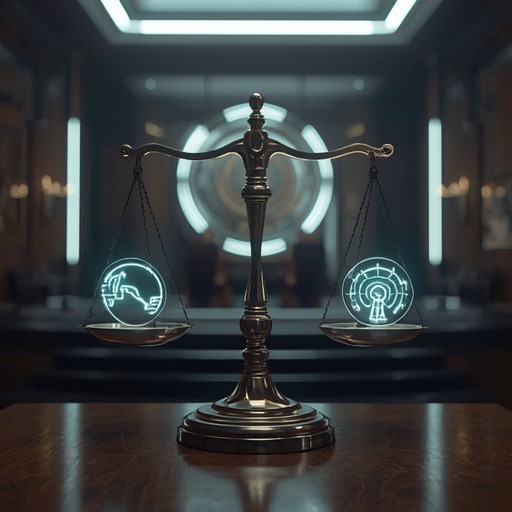
Trust stands as one of the most fundamental pillars upon which both human progress and technological innovation rest. In the unfolding Musk–OpenAI trial, this notion of trust does not merely play a supporting role but emerges as the principal theme that defines every argument and every defense. The case sheds light on a profound ethical question that transcends corporate rivalry or contractual disputes — it compels observers to reflect deeply on who genuinely deserves the authority to guide the rapidly advancing world of artificial intelligence.
Artificial intelligence has become more than just a hallmark of technological achievement; it now embodies the power to shape societies, economies, and even the moral boundaries of our time. Thus, the question of who leads such a transformative force becomes inseparable from the issue of credibility and moral responsibility. The courtroom, in this sense, has become a symbolic arena where innovation and integrity confront one another — a confrontation that represents the larger struggle between ambition and accountability in the digital age.
Elon Musk, a figure often associated with bold vision and disruptive brilliance, represents the spirit of relentless innovation — an unyielding quest to push technology beyond its limits. OpenAI, once founded with noble intentions to ensure that artificial intelligence benefits humanity as a whole, finds itself under intense scrutiny for how its mission has evolved. The tension between these entities illustrates a broader dilemma facing modern technology companies: how to balance rapid advancement with transparency, ethics, and public trust.
Trust, in this context, is not a static or easily defined value. It is a dynamic principle that must be earned through consistency, honesty, and a willingness to remain accountable even when innovation tempts one toward secrecy or monopolization. Just as consumers trust engineers to build machines that are safe, societies must trust AI developers to design systems aligned with human values. When that trust falters — whether due to opaque decision-making or ethical compromises — the consequences extend far beyond corporate reputations; they ripple through the fabric of civilization itself.
In examining the current dispute, one must also consider the symbolic implications of the trial for the future of all emerging technologies. The case embodies a turning point, asking whether future breakthroughs will be directed by those guided primarily by profit and power, or by those dedicated to principles of openness, collaboration, and beneficence. The trial’s every argument effectively contributes to a global conversation about governance in artificial intelligence — about whether machines will serve the collective good or amplify existing disparities of influence and control.
Ultimately, the Musk–OpenAI trial challenges us not to choose sides superficially but to reflect on what kind of leadership we are willing to trust with the destiny of intelligence itself. Technological progress without ethical coherence risks becoming a force of division rather than elevation. Conversely, integrity without the courage to innovate risks stagnation. True leadership in the realm of AI, therefore, must unite both — the curiosity to expand horizons and the conscience to ensure that progress serves humanity rather than undermines it.
As the world watches, this confrontation serves as a mirror reflecting society’s own anxieties, hopes, and aspirations about the role of technology in shaping the human experience. It demands a collective redefinition of what it means to trust — not only in leaders or organizations but in the ideals that govern the next frontier of intelligence. Only through such reflection can the future of AI be both brilliant and just.
Sourse: https://techcrunch.com/2026/05/17/why-trust-is-a-big-question-at-the-elon-musk-openai-trial/