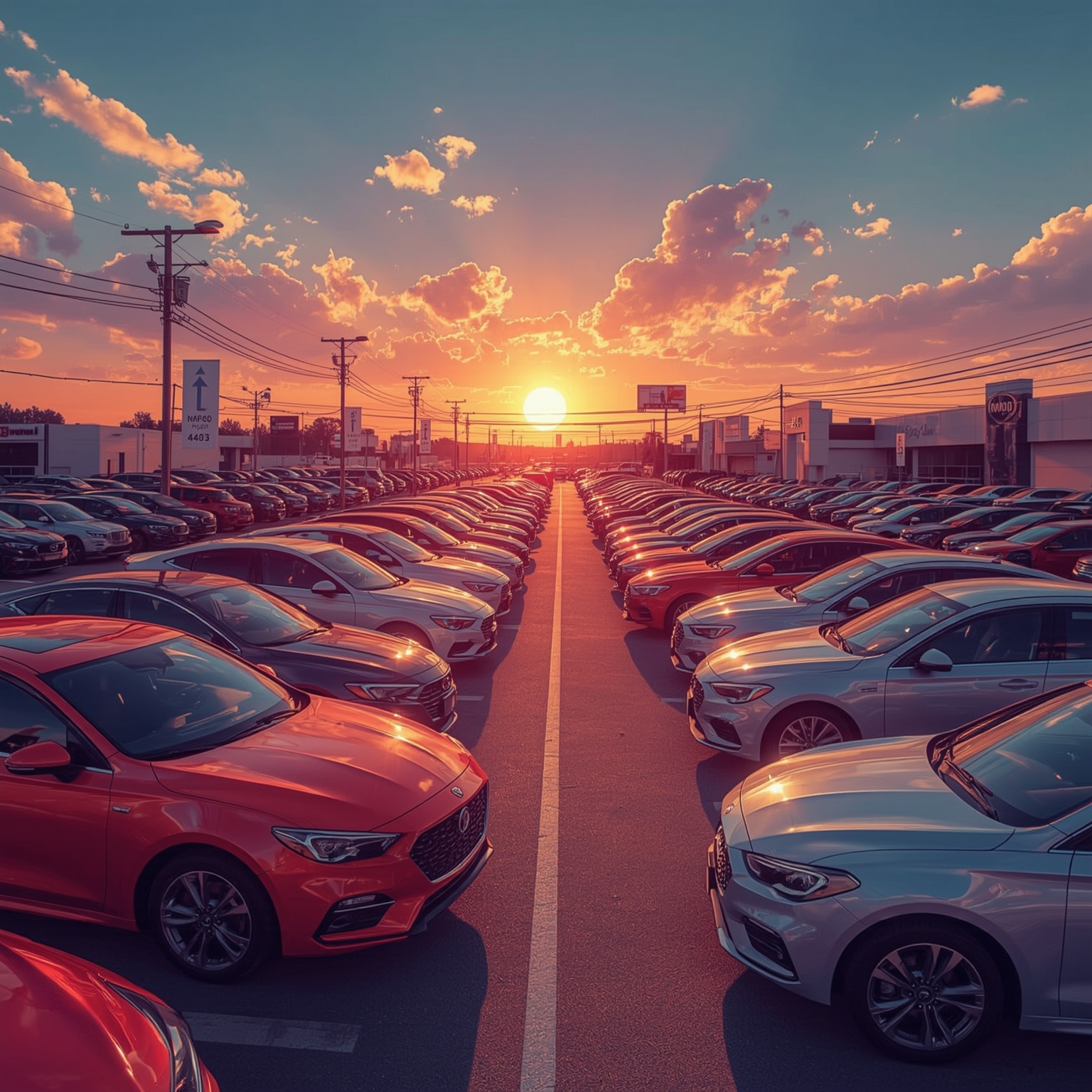
In the realm of modern consumer economics, few sectors illustrate the phenomenon of inflation-fueled astonishment quite like the American used-car market. The phrase “sticker shock” hardly suffices to capture the magnitude of what buyers are now experiencing when they venture into dealerships or browse online listings. What was once a reasonably affordable segment of the automotive landscape has transformed into a market characterized by soaring valuations and scarcity-driven price inflation. A few years ago, the average cost of a three-year-old vehicle barely exceeded $22,000. Yet as the 2025 model year approaches, that same car, now several years older, commands prices climbing beyond $31,000—a striking leap that leaves even seasoned observers astonished. Data from Edmunds, one of the most respected automotive research firms in the United States, indicate that this surge may soon appear modest by comparison to what lies ahead.
Ivan Drury, the director of insights at Edmunds, underscores this transformation by noting that those who purchased a car prior to 2020 can scarcely comprehend the scale of recent price hikes. The COVID-19 pandemic, he explains, did far more than disrupt daily life—it unleashed a cascade of economic disturbances that continue to reverberate through the car industry. When factories and supply lines halted, automakers faced severe shortages of crucial components such as semiconductors, slowing new vehicle production to a crawl. Consumers, eager to avoid public transportation and maintain personal safety during lockdowns, turned to the used-car market in unprecedented numbers. Simultaneously, rental car companies—having sold much of their fleets early in the pandemic—re-entered the market with aggressive purchasing strategies to rebuild inventories just as supply dwindled. The resulting imbalance between demand and availability created what some analysts dubbed a “used-car apocalypse.”
Although the industry has gradually recovered from the height of the pandemic crisis, the market remains far from equilibrium. Average resale prices have declined slightly from their pandemic peaks, yet they persist at several thousand dollars above pre-2020 norms. Data from the Bureau of Labor Statistics reveal that used-car prices have risen another six percent within the past year, reflecting incremental but steady upward momentum. As Drury succinctly observes, the lingering aftershocks from prolonged disruptions are still manifesting today, reshaping expectations for both buyers and sellers.
These challenges are compounded by broader economic forces. Tariffs, rising production costs, and the persistent climb of new car prices suggest that relief may be distant. The perennial question—“When is the best time to buy a used car?”—has arguably lost its meaning. With continuously shifting cost structures, the answer might now be an uncomfortable “there may never again be a perfect time.” Drury warns that prospective buyers must not only recalibrate their expectations but also come to terms with a new economic normal that remains slanted against consumer interests.
Fundamentally, the relationship between new and used vehicles is symbiotic: without a steady flow of new cars entering the market, the supply of future used vehicles inevitably declines. Before the pandemic, the U.S. automotive industry sold approximately sixteen to seventeen million new vehicles annually. That number collapsed to around thirteen to fourteen million between 2020 and 2022. Though current forecasts suggest a rebound above sixteen million new sales this year, the gap created during those lean years continues to distort the ecosystem. Jeremy Robb of Cox Automotive describes this shortage of newly produced vehicles as a “hole” in the system—millions of potential future trade-ins that simply do not exist, leaving dealers and consumers grappling with dwindling inventory.
The scarcity extends beyond sheer numbers. Fewer drivers are arriving at dealerships ready to trade in cars purchased two to four years ago, and those who do often bring in vehicles that were initially more expensive due to pandemic-era production constraints. Stephanie Brinley of S&P Global notes that manufacturers, limited by supply chains, prioritized their most profitable models and premium trims. That strategic focus meant that when these vehicles re-enter the market as used inventory, they inherently anchor prices higher across the board.
Leasing patterns have further tightened supply. Historically, around thirty percent of new cars were leased annually; however, that figure fell to roughly seventeen percent in 2022. Manufacturers, flush with demand and facing limited production capacity, had little incentive to offer attractive lease deals since most buyers were willing to pay near full price. As leases typically expire after three years, this disruption has translated into a sharp reduction in vehicles returning to the used market—a trend Robb predicts will persist well into the future.
Meanwhile, an overarching transformation in consumer preferences has reshaped the composition and cost structure of both new and used cars. The average new vehicle is increasingly laden with advanced technology, safety enhancements, and premium convenience features—delights that also inflate baseline pricing. As larger SUVs and trucks dominate sales, entry-level models have nearly vanished, squeezing affordability out of the marketplace. Once-common compact sedans like the Ford Focus, Chevy Cruze, and Dodge Dart have been discontinued, leaving few options for cost-conscious buyers. As Sam Fiorani of AutoForecast Solutions observes, consumers priced out of the entry-level new-car segment are naturally funneled into the used market, driving demand—and prices—even higher. A generation ago, a buyer could hope to find a practical new vehicle for around $15,000; today, even the humblest entry-level model rapidly approaches $30,000. Each incremental increase in the cost of a new vehicle, Robb adds, creates yet another consumer forced to rely on the secondary market.
When asked whether conditions for used-car buyers might improve in the near term, industry analysts generally respond with cautious pessimism. Although some vehicles are remaining unsold slightly longer as prospective buyers deliberate, underlying demand remains resilient. Nathan Garnett of OfferUp reveals that even as listing prices have continued to rise, the rate at which vehicles sell has remained virtually unchanged—evidence that Americans are willing, if not happy, to absorb higher prices. In a country as car-dependent as the United States, the logic is unassailable: for millions of people, a personal vehicle is not a luxury but a lifeline—to employment, education, and basic daily needs.
Additional complexities are introduced by trade policies and tariffs, which act as persistent specters hovering over the market. Brinley calls their future impact the “thousand-dollar question.” For now, many automakers have attempted to absorb tariff-related costs rather than pass them directly to consumers. Yet such a strategy cannot endure indefinitely. With key trade agreements still unsettled—particularly between the United States, the European Union, Japan, Canada, and Mexico—uncertainty looms large ahead of the 2026 review of the North American free trade deal. Brinley warns that as automakers navigate this uncertain terrain, price increases remain almost inevitable.
Although tariffs have so far played only a marginal role in current pricing, even their anticipation has influenced market behavior. Fearing impending cost hikes, some consumers accelerated their new-car purchases, trading in older vehicles earlier than planned. Dealers, likewise anticipating higher prices, offered generous trade-in allowances, inadvertently feeding another layer of distortion into the market. This irregular pattern, according to Kevin Roberts of CarGurus, saw spikes in sales activity corresponding with major tariff announcements, as consumers rushed to buy before prices rose further.
Ultimately, the broader truth confronting both economists and everyday consumers is sobering: prices across the automotive spectrum are unlikely to return to their pre-pandemic levels. Inflation may have moderated, but deflation—a comprehensive rollback of costs—is neither expected nor economically desirable. For prospective car buyers, this reality demands a mental reset. The cached memories of 2013-era pricing must be released; today, the same $20,000 that once bought a lightly used three-year-old car will scarcely secure an eight-year-old model with significant mileage. The message, while blunt, is clear: the United States has entered a new phase in the valuation of mobility. The used-car market has been irrevocably reshaped, and as analyst Sam Fiorani wryly concludes, “you simply cannot manufacture new used cars.”
Emily Stewart, senior correspondent at Business Insider, encapsulates this evolving narrative as part of the broader economic discourse—one that reflects not merely changing prices, but a paradigm shift in how Americans must think about transportation, affordability, and the true cost of independence.
Sourse: https://www.businessinsider.com/used-car-prices-tariffs-supply-chain-automakers-2025-10