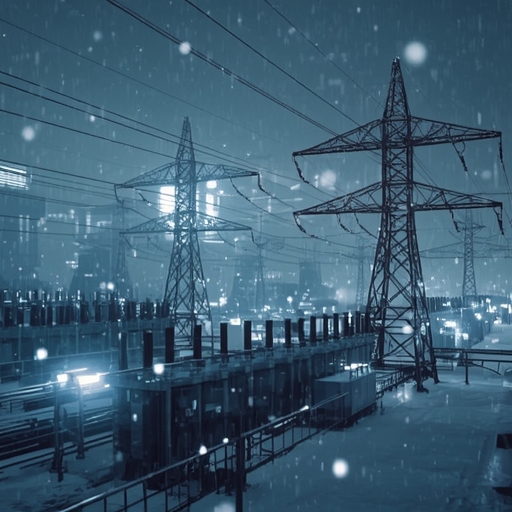
The recent onslaught of Winter Storm Fern served as far more than a typical seasonal ordeal—it functioned as a profound examination of the endurance, adaptability, and overall resilience of our national power grid. Across massive regions, temperatures plummeted, ice accumulated, and energy networks were forced to operate well beyond their intended limits. In the process, the storm revealed with sobering clarity the vulnerability of an infrastructure that now shoulders the twin pressures of natural volatility and unprecedented technological demand. Increasingly, the energy consumed by artificial intelligence data centers—vast complexes filled with servers processing trillions of computations—has begun to rival that of entire towns, if not small cities.
This convergence between extreme weather and digital growth is no coincidence but a sign of our times. On one hand, a rapidly evolving technological ecosystem has ushered in extraordinary capabilities and economic transformation. On the other, it has rendered our energy systems more fragile, more complex, and often less sustainable. Each new data center adds another immense draw on electrical capacity. When these demands meet an event like Fern—with power lines burdened by ice, substations freezing, and natural gas supplies stretched thin—the result is a system pushed to its breaking point. The blackout maps splashed across the news were not merely a consequence of bad weather, but a warning shot toward an energy future ill-equipped for the scale of our digital ambitions.
For leaders in technology, energy, and policy, this storm raises vital questions. How can modernization efforts accelerate quickly enough to maintain equilibrium between reliability and innovation? Can decentralization, grid interconnectivity, and renewable energy adoption create buffers against cascading failures? And perhaps most importantly, will industry growth in artificial intelligence proceed in step with—rather than in advance of—the sustainable power infrastructure required to sustain it?
To move forward, organizations must treat energy resilience not as a peripheral sustainability target but as the foundation of every digital strategy. The stability of tomorrow’s intelligent systems—those same systems designed to predict weather events, manage resources, and optimize logistics—depends directly on the strength of the networks that power them. Winter Storm Fern has reminded us, in stark and glittering ice, that innovation divorced from energy foresight is innovation at risk. Reinforcing the grid, diversifying energy inputs, and harmonizing technological progress with ecological responsibility is not optional; it is imperative. Only through this balance can we ensure that progress, no matter how algorithmically advanced, remains grounded in reliability, equity, and long-term survival.
Sourse: https://www.theverge.com/report/868859/electricity-rates-power-grid-ai-data-center-winter-storm