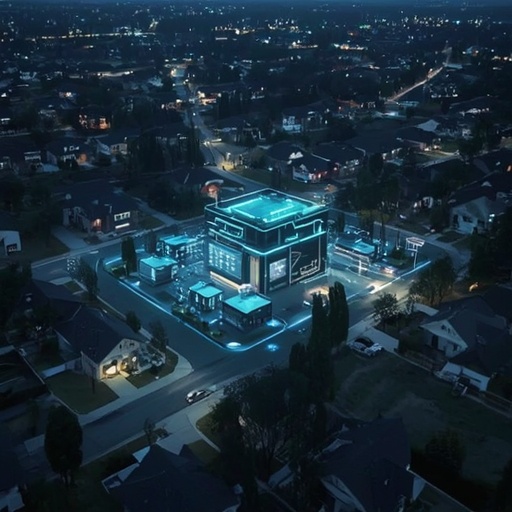
In Ashburn, Virginia, an extraordinary and rather unconventional idea has begun to take shape — one that encapsulates the growing tension between residential tranquility and the inexorable march of technological expansion. A single resident has sparked a bold proposal suggesting the sale of an entire community, all 143 homes, to a data center developer. This notion transcends the typical conversation about property values or suburban growth; it embodies a profound shift in how society perceives the balance between traditional living spaces and the digital infrastructure that increasingly fuels modern life.
This unprecedented possibility highlights how the rapid ascent of data centers is redefining the suburban landscape. Once considered exclusively the backbone of remote servers and digital storage, these massive facilities have now emerged as dominant physical presences, dramatically altering both the visual and economic topography of communities. For Ashburn—a hub already internationally recognized as a critical nexus for internet traffic—this development feels almost inevitable. Yet, it also raises deeply personal and civic questions. What does it mean for a neighborhood, built on quiet streets and generational investment, to transform into an epicenter of technological utility?
The potential sale illustrates a fascinating intersection between private decisions and collective consequence. On one hand, the opportunity promises significant financial rewards for homeowners, offering a lucrative escape from escalating living costs or uncertain property appreciation. On the other, it poses ethical considerations regarding the preservation of heritage, environmental sustainability, and communal identity. A once-cohesive neighborhood could cease to exist—not through deterioration or neglect, but through deliberate transformation into an industrial-scale nerve center of the digital age.
Beyond immediate economic calculus, the idea resonates on a symbolic level. Data centers stand as cathedrals of the modern era, housing the world’s information, bridging continents, and enabling the seamless connectivity on which global societies depend. Yet, their presence often clashes with the emotive human desire for serenity, greenery, and familiar community rhythms. The Ashburn proposal thus functions as a mirror held up to a changing world—forcing residents everywhere to consider what they might exchange for progress, and whether the promise of innovation can truly compensate for the loss of collective belonging.
Whether this ambitious concept materializes or fades as a provocative thought experiment, it undeniably captures the essence of 21st-century urban evolution. Communities once imagined as static, bounded entities are now fluid participants in global trends of infrastructure development. The question implicit in Ashburn’s story extends far beyond Virginia: in an age where data reigns supreme and the boundaries between technological and personal spaces blur, how much of our lived environment are we willing to trade for the sake of digital advancement?
Would you, given the chance, sell not just your home but the spirit of your neighborhood in exchange for the future’s promise?
Sourse: https://www.businessinsider.com/ashburn-virginia-the-regency-data-center-sale-deal-2026-6