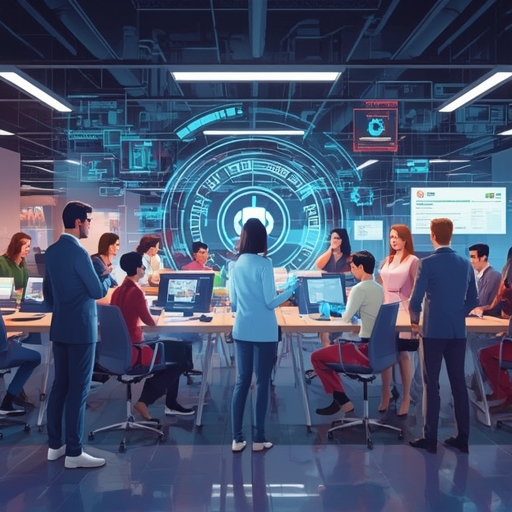
Across the interconnected realms of technology and finance, a remarkable transformation is taking shape—a sweeping corporate endeavor to embed artificial intelligence into the very fabric of everyday work. Major players, from Silicon Valley innovators to Wall Street financial institutions, are making substantial investments in AI-driven productivity systems that promise to redefine efficiency and accelerate innovation. These organizations are no longer viewing artificial intelligence as a specialized tool for engineers or data scientists; instead, they expect every employee—regardless of role or department—to master AI applications as an integral part of professional competency.
This accelerating movement signals a profound cultural and operational shift. The corporate world, once dependent on human intuition and traditional analytics, is now evolving toward symbiotic collaboration between humans and intelligent systems. Businesses are establishing initiatives, workshops, and upskilling programs designed to train workers in generative AI, automation platforms, and predictive modeling tools. The expectation is clear: fluency in artificial intelligence will soon be as fundamental as proficiency in email or spreadsheets once was.
However, the push toward universal AI literacy is not without its tension. While many employees are enthusiastic about adopting new technologies that streamline workflows, others feel overwhelmed by the rapid pace of change and the fear of being displaced by the very tools they are encouraged to use. This tension defines a new frontier in workplace adaptation, where curiosity and apprehension coexist. Corporate leaders must therefore balance their ambitions for efficiency with genuine investment in employee education, ensuring that innovation becomes empowering rather than alienating.
The implications of this AI-driven transformation extend well beyond increased productivity. Teams are beginning to reimagine how decisions are made, projects executed, and creative ideas tested. In marketing departments, generative AI tools assist with content creation and strategy ideation. In finance, intelligent algorithms analyze complex datasets within seconds, guiding decisions that once required days of human work. Meanwhile, HR professionals are using AI systems to enhance talent acquisition and performance evaluation with unprecedented precision.
Ultimately, this new reality represents more than a technological upgrade—it marks a redefinition of what it means to work, learn, and lead in the twenty-first century. Companies embracing AI as an organizational partner are not simply automating tasks; they are reshaping corporate intelligence itself. The challenge for professionals is no longer whether they will use AI, but how imaginatively and responsibly they will harness it to expand human potential. The question for every worker, in every industry, is the same: are you ready to master artificial intelligence at your desk and participate in shaping the future of productivity?
Sourse: https://www.businessinsider.com/meta-google-jpmorgan-make-ai-performance-reviews-goals-raises-promotions-2026-3