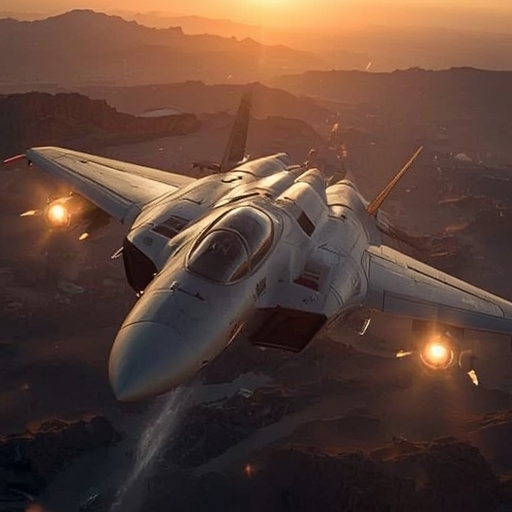
Long Live the Warthog: The A-10’s Fight Against Retirement
For decades, the Fairchild Republic A-10 Thunderbolt II—affectionately known by soldiers and pilots alike as the “Warthog”—has stood as an enduring icon of American airpower. Built during the Cold War to provide close air support for ground forces, this formidable aircraft is as famous for its resilience under fire as it is for its unmistakable roar and its fearsome GAU-8 Avenger 30mm cannon, capable of shredding armored targets with unnerving precision. Despite the United States Air Force’s repeated intentions to retire the aircraft in favor of modern replacements, the A-10 continues to defy obsolescence, firmly gripping its position in the modern battlefield.
The persistence of the Warthog tells a story far greater than that of an aircraft alone—it reflects an ongoing debate between technological innovation and the irreplaceable value of field-tested reliability. Advocates of the A-10 argue that no other aircraft can match its ability to loiter over combat zones, withstand extensive damage, and deliver accurate, low-altitude support to soldiers on the ground. These characteristics, combined with decades of combat experience—from the deserts of Iraq to the mountains of Afghanistan—have cemented its reputation as a soldier’s guardian angel in the skies.
Over recent years, congressional leaders, experienced commanders, and pilots themselves have voiced strong opposition to the Warthog’s retirement. Their reasoning lies not only in nostalgia, but in necessity: the A-10 continues to meet tactical requirements that many advanced multirole fighters simply cannot fulfill. Its straightforward maintenance, robust airframe, and deliberate engineering for survivability—such as a titanium “bathtub” that shields its pilot—make it an ideal choice for missions requiring proximity, endurance, and precision under pressure. The aircraft’s ability to absorb damage, stay airborne, and return to base safely represents both engineering prowess and strategic foresight from its creators.
Yet, the debate persists. Supporters of the next-generation fleet point to the rapid evolution of aerial warfare. They argue that stealth, speed, and networked targeting systems are now indispensable assets in an age of digital warfare and advanced air defense systems. However, while newer aircraft such as the F-35 promise cutting-edge capability, they have yet to prove they can truly replace the A-10’s specialized role close to the frontlines—a mission demanding patience, accuracy, and exceptional visibility over hostile terrain.
In an era where defense spending often gravitates toward futuristic technologies, the decision to keep the A-10 flying speaks volumes about the value of practicality and proven design. This commitment underscores that modernization in military strategy need not equate to abandonment of the effective. Instead, it reflects a balanced approach, one that recognizes the need to blend innovation with experience—a fusion of the new with the time-tested.
For ground troops, the silhouette of the Warthog overhead represents safety and confidence, a visible reminder that help is close and immediate. For the Air Force, the continued service of the A-10 is a nod to operational realism—a recognition that some tools achieve near perfection at their intended purpose, with no ready substitute. As defense leaders weigh new generations of unmanned systems and high-tech fighters, the Warthog’s endurance reminds us that not all legends fade into retirement; some continue to earn their place through sheer necessity and a legacy of success.
The A-10 does more than survive—it thrives, proving year after year that excellence in design and dedication to mission can transcend shifting doctrines and evolving technologies. Whether in the sands of the Middle East or the plains of Eastern Europe, one message remains constant: the Warthog’s fight isn’t over, and its roar still echoes as both a symbol of power and a tribute to enduring military craftsmanship.
Sourse: https://www.businessinsider.com/us-air-force-a-10s-new-life-heavy-use-iran-2026-4


