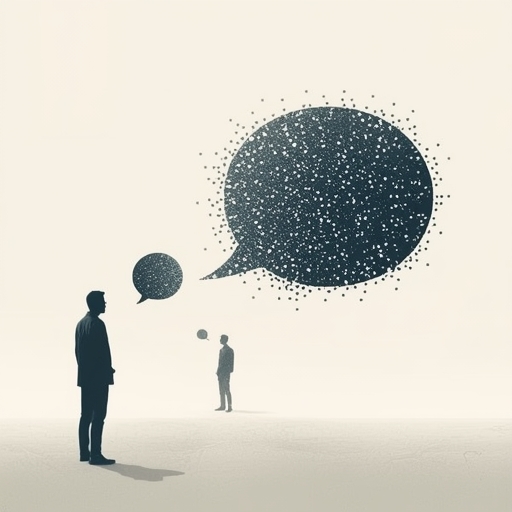
Over the past two decades, human interaction has undergone an astonishing transformation. Recent in-depth research conducted by scholars at the University of Missouri–Kansas City and the University of Arizona reveals that, between 2005 and 2019, the number of words spoken directly from one person to another has fallen dramatically — by nearly twenty-eight percent. Although this statistic already paints a sobering picture, it likely underestimates the reality we face today, considering the added isolation and lifestyle adjustments that followed the global pandemic.
This decline in verbal communication raises profound questions about the nature of human connection in our increasingly digital age. While technology offers convenience, immediacy, and access to information, it cannot replicate the irreplaceable nuances of genuine, face-to-face conversation — the tone of voice, the shared laughter, or the empathetic silence that accompanies understanding. These subtle cues form the essence of meaningful dialogue and serve as a foundation for trust, collaboration, and emotional well-being.
Within professional environments, this gradual silencing of spoken exchange carries serious implications. Collaboration thrives on open dialogue, creativity is stimulated by spontaneous conversation, and empathy grows when colleagues listen and respond with genuine presence. When communication becomes confined to screens — composed of fragmented text messages, brief emails, or hurried video calls — the relational texture that binds teams together begins to erode. As leaders and professionals, recognizing the value of these human moments is essential to cultivating workplaces that remain both innovative and compassionate.
On a more personal level, the phenomenon is equally alarming. As digital interactions multiply, our capacity for sustained attention, active listening, and emotional resonance may weaken. A simple conversation shared over dinner or during a walk — moments once considered ordinary — now hold extraordinary significance. They remind us that communication is not merely the transfer of information but the exchange of presence and emotion.
Reclaiming the art of conversation requires deliberate effort in an age that prioritizes speed over depth. Choosing to meet a friend for coffee instead of sending a message, setting aside devices during family meals, or calling a colleague rather than replying with a short email are small acts that collectively restore the human voice to its rightful place at the heart of connection.
It is not technology itself that diminishes our humanity, but our reliance on it at the expense of direct contact. We must therefore relearn to balance the digital with the personal — allowing innovation to enhance rather than replace authentic communication.
This research ultimately challenges us to reflect: When was the last time we truly spoke with someone — not to exchange data, but to exchange understanding? The answer may determine not just how we connect, but who we become in a silently digitizing world.
Sourse: https://www.theverge.com/science/918753/researchers-talking-less


