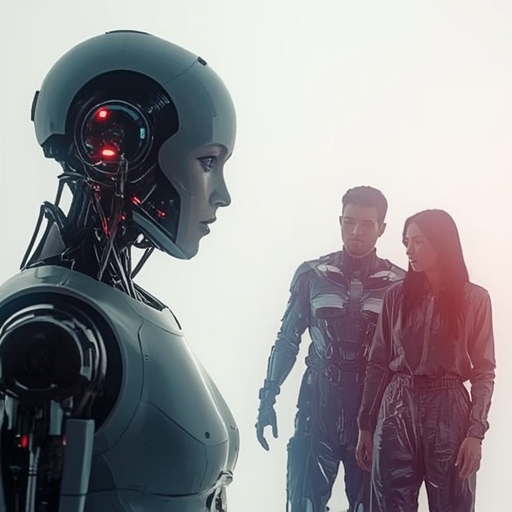
Although advanced robotics and artificial intelligence can effectively imitate certain aspects of human expression—mimicking gestures of empathy, patterns of speech, or even facial cues that simulate sadness, joy, or tension—these mechanical entities remain utterly incapable of authentically participating in the depths of human conflict. Human discord, unlike algorithmic calculations, emerges from an intricate web of emotion, memory, morality, and personal experience. It is driven by fear, passion, misunderstanding, and, ultimately, the yearning for reconciliation and meaning.
A robot may execute logical conflict-resolution models, process data about human disagreement, or even generate language that appears consoling or confrontational; yet beneath that programmed response lies an empty mechanism, devoid of consciousness, guilt, or compassion. True human conflict is not simply an exchange of differing perspectives or competing goals—it is a mirror reflecting the raw complexity of what it means to live, to communicate imperfectly, to wound and to heal. Emotional friction arises from an evolving sense of identity, morality, and values that cannot be reduced to code.
This realization highlights an essential truth: while technology constantly expands its ability to simulate human behavior, it will never capture the spiritual turbulence of our inner worlds. The anger that burns in a moment of betrayal, the tears that cleanse after forgiveness, or the quiet hope that follows reconciliation—all of these belong unmistakably to the human condition. Machines observe these phenomena, but they cannot inhabit them.
Therefore, the progression of artificial intelligence should not provoke fear of emotional replacement; rather, it should inspire a renewed commitment to becoming more authentically human ourselves. Instead of striving to make machines that emulate empathy, we should cultivate empathy within our own hearts. Instead of programming algorithms to resolve disputes, we should educate ourselves to listen, to understand, and to forgive. In this way, every conflict—no matter how painful—becomes not a barrier but an opportunity to practice humanity at its highest level.
Let us remember that the deepest forms of connection, communication, and compassion cannot be automated. They arise only when flawed, feeling beings choose understanding over division. Robots can observe our chaos and mimic its form, but the hope, healing, and moral growth that follow adversity remain forever beyond their reach. That eternal difference defines the beauty—and the challenge—of being human.
Sourse: https://gizmodo.com/hopeful-thought-of-the-day-robots-cant-do-human-conflict-2000750599


