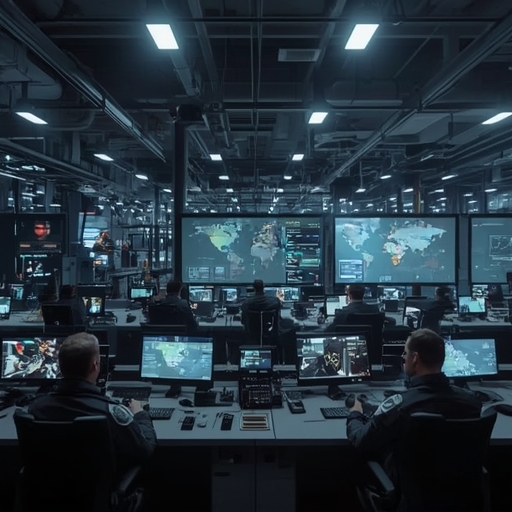
The United States Marine Corps is embarking on an ambitious transformation that could redefine the way future conflicts are fought and coordinated. In an era increasingly shaped by automation and data‑driven warfare, the Corps is preparing to integrate tens of thousands of newly developed unmanned aerial systems into every layer of its operational structure. This expansion represents far more than a mere technological upgrade — it is a strategic pivot toward an era in which rapid information gathering, autonomous mobility, and real‑time coordination will determine battlefield advantage.
Yet such a vast proliferation of drones introduces a host of complex challenges. Each autonomous or remotely piloted vehicle must be maintained, deployed, and controlled within a network that spans land, sea, and air operations. The logistical strain of supporting tens of thousands of units — from supply chain management and software synchronization to cybersecurity and signal redundancy — requires a level of organization and foresight unprecedented in the Corps’ history. Training programs, communication systems, and tactical doctrine must all evolve in tandem to ensure that the technology enhances rather than overwhelms human decision‑making.
Military analysts note that this forthcoming technological surge carries both enormous promise and substantial risk. On one hand, autonomous and semi‑autonomous drones have the potential to deliver critical intelligence, extend reconnaissance reach, and operate in environments too dangerous for personnel. On the other, the very scale of drone integration poses the question of sustainability: how can efficiency, accountability, and coordination be maintained when the sky itself becomes crowded with machines?
Marine leadership recognizes the challenge as both logistical and philosophical. Incorporating advanced drones is not simply a matter of procurement but of cultural and strategic adaptation. It demands a recalibration of command priorities, new frameworks for data interpretation, and a willingness to embrace inter‑service collaboration across a rapidly digitizing defense ecosystem. Success in this ambitious endeavor will hinge on the Corps’ ability to balance innovation with discipline, pushing the boundaries of military technology without compromising control or clarity of mission.
As this transformation unfolds, the Marine Corps stands at a pivotal crossroads — one in which ingenuity meets practicality, and where the art of leadership must evolve alongside the science of automation.
Sourse: https://www.businessinsider.com/us-marines-are-bracing-for-flood-of-drones-and-headaches-2026-5


