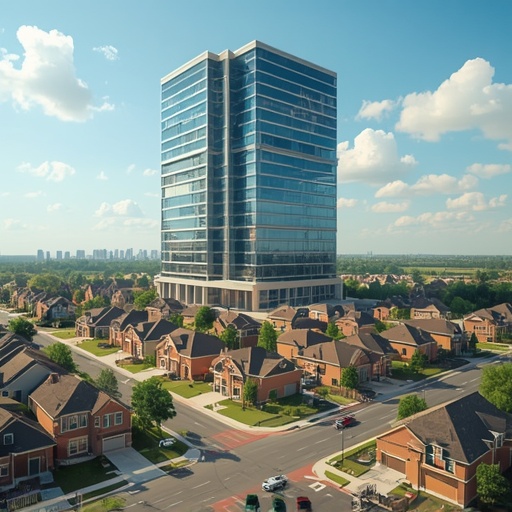
Berkshire Hathaway has taken a decisive and highly symbolic step that may reshape the contours of its long-term investment vision. The legendary conglomerate has revealed a monumental $6.8 billion agreement to acquire Taylor Morrison, one of the United States’ most established and reputable homebuilding companies. This transaction is not merely another addition to Berkshire’s diverse portfolio—it represents one of the earliest and most consequential business undertakings under the leadership of CEO Greg Abel, who officially assumed the position in January. Abel’s move signals both confidence and clarity of direction, positioning the company to reengage with foundational sectors of the American economy that have historically fueled its growth.
The timing and nature of the acquisition speak volumes about Berkshire Hathaway’s evolving strategy. For decades, the firm, guided by Warren Buffett’s investment philosophy, has gravitated toward enduring value rooted in essential industries. Housing and construction—cornerstones of domestic economic stability—appear central to this next chapter. By choosing to invest so heavily in a company renowned for its ability to design, build, and deliver quality homes across the nation, Berkshire shows a renewed commitment to tangible assets that provide sustainable long-term utility. The deal, therefore, goes beyond financial calculus; it affirms an investment ideology grounded in real-world substance and persistent demand.
Greg Abel’s leadership debut through this acquisition reflects both continuity and change. While preserving the cautious yet assertive ethos that has long defined Berkshire’s culture, Abel seems intent on steering the company toward areas of pragmatic expansion. This decision underscores an awareness of the housing sector’s critical role in driving economic recovery, demographic growth, and wealth creation. It also signals Berkshire’s enduring trust in America’s capacity to build, innovate, and sustain prosperity through residential development.
As news of the acquisition circulates through business and financial communities, discussions have emerged about what this move implies for broader market dynamics. Real estate professionals interpret it as a powerful endorsement of the housing market’s potential for long-term resilience. Investors, meanwhile, view it as an indicator that Berkshire will continue to balance modern diversification with traditional investments that generate steady, reliable returns. In essence, this $6.8 billion commitment embodies both strategic foresight and managerial conviction—a hallmark of Berkshire Hathaway’s legacy and a clear expression of Greg Abel’s emerging leadership philosophy.
The acquisition of Taylor Morrison may thus be remembered as more than a corporate purchase; it stands as a declaration of intent. With this bold transaction, Berkshire Hathaway is signaling faith not only in the intrinsic value of America’s housing infrastructure but also in the enduring vitality of its own foundational principles. It opens a fresh chapter in the company’s story—one defined by strategic renewal, adaptive leadership, and a reinvigorated belief in the timeless strength of building the future, quite literally, from the ground up.
Sourse: https://www.wsj.com/business/deals/berkshire-hathaway-to-buy-homebuilder-taylor-morrison-for-6-8-billion-33a59be6?mod=pls_whats_news_us_business_f