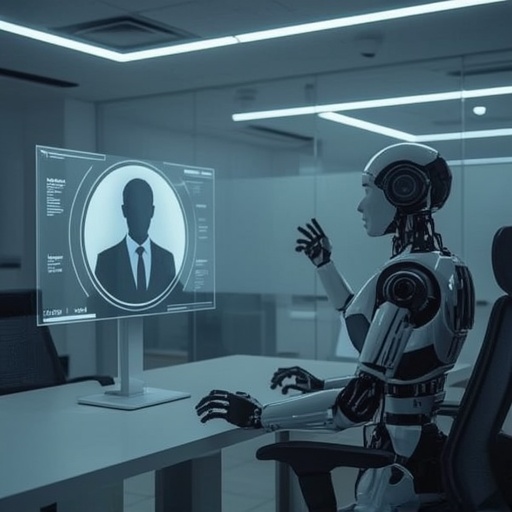
Artificial intelligence has begun assuming an increasingly active role in the hiring process, moving beyond merely scanning résumés to actually conducting preliminary interviews with white-collar job candidates. By delegating the initial screening phase to AI chatbots, companies are seeking to accelerate recruitment cycles, reduce costs, and process a larger pool of applicants with greater efficiency than human recruiters typically can. These digital interviewers are capable of posing structured questions, analyzing verbal responses, and evaluating tone or language consistency in order to produce data-driven assessments of each candidate’s suitability.
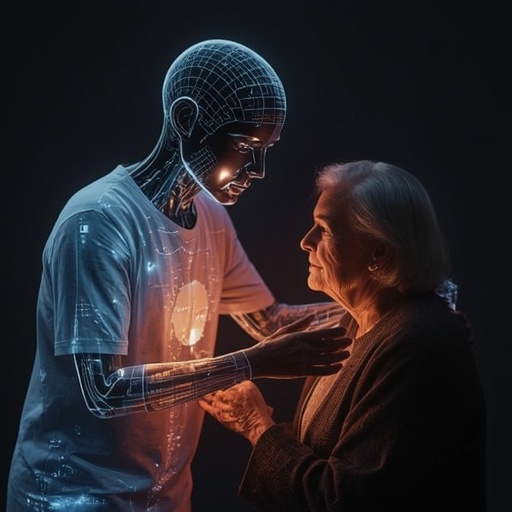
Employers that have integrated these systems argue that the technology helps eliminate inconsistencies and fatigue that often appear in human-led evaluations, enabling standardized assessments across thousands of applicants. This approach purportedly enhances fairness by applying the same criteria uniformly to all participants. However, critics and experts in organizational psychology caution that such uniformity may come at the cost of nuance and empathy — qualities inherent to human judgment but difficult for algorithms to replicate. They worry that, despite efficiency gains, automated interviews may inadvertently reproduce hidden biases encoded within their training data or fail to recognize intangible traits such as emotional intelligence, adaptability, and creativity.
The use of AI chatbots in white-collar hiring therefore raises profound ethical and procedural questions. Job seekers often feel uncertain about interacting with non-human interviewers, wondering whether they are being understood or fairly represented by a system that translates human communication into numerical probabilities. Meanwhile, corporate leaders face the challenge of balancing technological innovation with transparency, accountability, and candidate experience. It is one thing for algorithms to sort résumés; it is quite another for machines to simulate conversation and judgment — traditionally the domain of human intuition.
As artificial intelligence continues to transform workplaces across industries, the question emerges: how far should companies go in replacing people with machines in areas that rely on human connection? The advent of chatbot-led interviews signals a pivotal moment in talent acquisition — a test of how organizations will navigate the intersection between efficiency and empathy in an increasingly automated world.
Sourse: https://www.businessinsider.com/ai-bot-job-interview-white-collar-work-2026-7