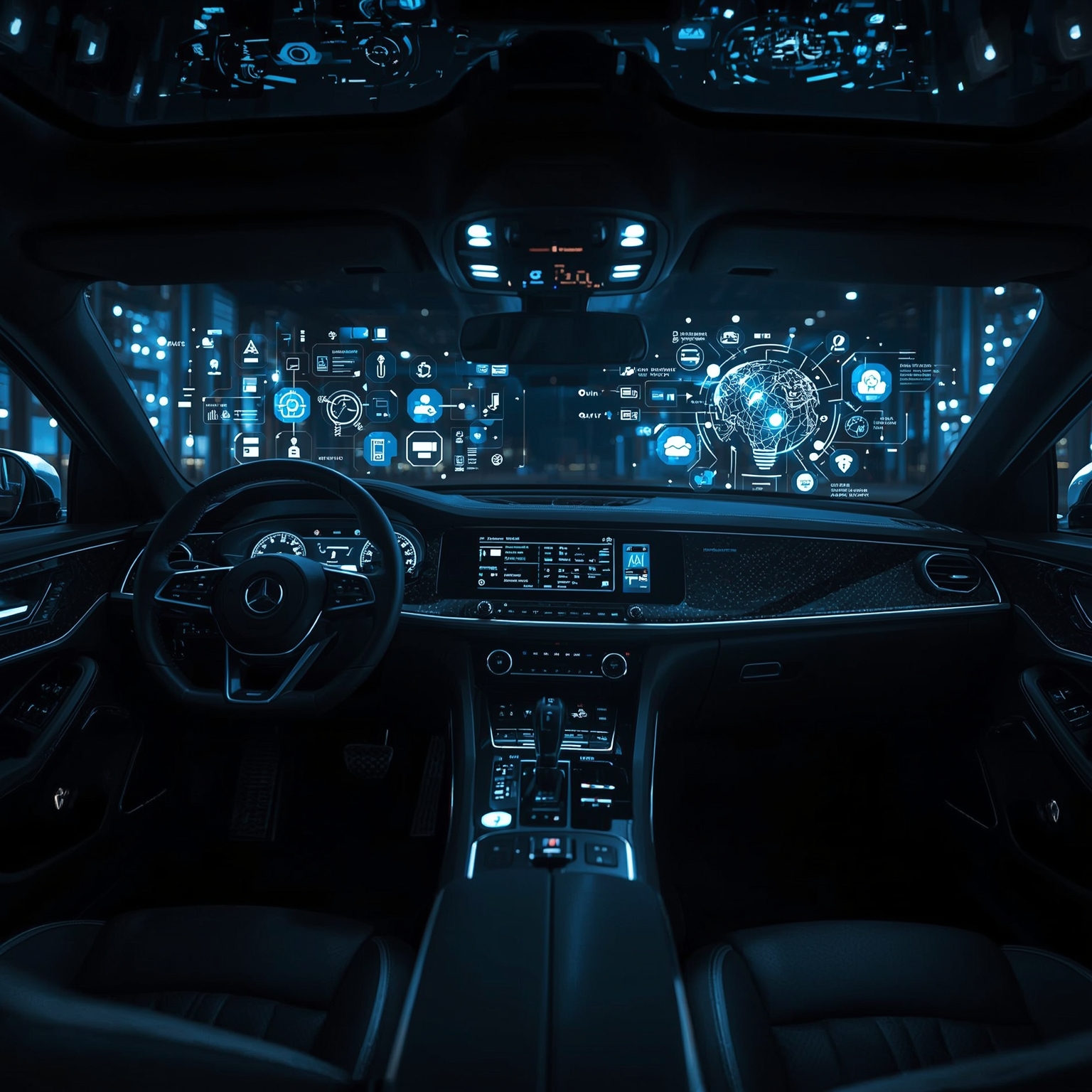
Andrew Ng, one of the most prominent figures in artificial intelligence and the founder of Google Brain, recently shared intriguing insights into how he generates new ideas for his work. During his appearance at the Masters of Scale Summit 2025, held in October, Ng revealed that he often uses artificial intelligence conversationally—as a kind of intellectual partner—while he is driving. He explained that he treats AI not merely as a tool but as a collaborative brainstorming companion, one with which he can exchange ideas freely and creatively, often more than even his close colleagues or friends realize.
In his remarks, Ng elaborated that much of this creative interaction happens spontaneously during his commutes. As he drives, he speaks aloud to AI systems using voice mode, engaging them in discussions that help him refine thoughts, explore alternative perspectives, and test new problem-solving approaches. This informal yet highly productive process, he noted, allows him to convert what might otherwise be idle travel time into a rich period of reflection and innovation. The conversation in which these insights were discussed was made public in a recording published the following Wednesday, offering a rare glimpse into how one of the world’s leading AI educators integrates technology into daily habits.
Ng emphasized that he does not rely on any single AI model to conduct this process. Instead, to ensure that his brainstorming sessions remain broad, multifaceted, and creatively stimulating, he alternates among multiple AI models, deliberately exploiting the distinctive strengths and capabilities of each. When it comes to tasks that involve programming or technical ideation, for instance, he tends to turn toward specialized models such as Claude Code or OpenAI’s Codex. Each model, he explained, brings a particular nuance or analytical angle that can help illuminate different ways of approaching a coding problem or conceptual challenge.
A key element of Ng’s practice lies in the duration and depth of the interaction. He has discovered that the quality of an AI’s response often improves the longer one sustains the dialogue. In his words, artificial intelligence systems are undeniably intelligent, but they face inherent difficulty in fully capturing context, particularly when the user communicates too briefly or without iterative engagement. Ng clarified that effective brainstorming with AI is not as simple as tossing out a random idea and expecting a ready‑made list of creative suggestions. Rather, he views the process as a progressive and evolving exchange—an extended conversation in which human and machine engage dynamically, refining ideas through continuous feedback and elaboration.
According to Ng, this practice of interactive ideation is so efficient that he often manages to accomplish meaningful work even while on the road. He described how he verbalizes thoughts to the AI, works collaboratively through different challenges, and then, upon reaching his destination, instructs the system to summarize the entire conversation. The AI then compiles the distilled insights and conveniently transmits them to his team, ensuring that the generated outcomes are immediately actionable.
Earlier in the year, Ng also discussed a seemingly paradoxical yet valuable principle he refers to as “lazy prompting.” This term describes the technique of providing an AI model with minimal instructions or incomplete context and then allowing the system’s underlying intelligence to infer the user’s intent. He remarked that, in certain cases, taking this minimalistic approach actually leads to faster and equally effective results. In a post shared on X (formerly Twitter) in April, he explained that it can sometimes be more efficient to dash off a quick, imprecise prompt and observe how the AI interprets it, since modern large language models are generally adept at detecting what a user seeks—whether understanding, solution proposals, or suggested improvements—without needing a long preamble or overly detailed directions. Ng concluded that additional clarifying details should only be added when truly necessary, noting that excessive prompting can sometimes dampen creativity or slow down progress.
Beyond Ng’s individual experience, his methods reflect a broader movement among corporate and technology leaders who are integrating AI into the most routine and creative aspects of their professional lives. Increasingly, executives are candidly discussing how they weave AI into daily workflows, thereby demonstrating that artificial intelligence is not merely a specialized tool but a ubiquitous productivity enhancer. For example, in June, Google CEO Sundar Pichai shared that he has been informally using AI to experiment with code generation and to build simple web applications. He expressed excitement about how natural and accessible this creative coding process has become, emphasizing the dramatic improvement compared to the early days of programming.
Similarly, Box CEO Aaron Levie told Business Insider in September that he employs a variety of AI tools, each suited to a distinct type of task. He tends to rely on ChatGPT or Perplexity for research and information gathering, while switching to Cursor when he needs rapid prototypes of new features. For tasks more intimately connected to data handling, analysis, and organization, he turns to Box AI to streamline his internal operations. Meanwhile, Glenn Fogel, CEO of Booking Holdings, shared that he uses AI not only for technical tasks but for personal development; by uploading recordings of his keynote speeches, he obtains specific feedback from large language models that can highlight distracting gestures or speech patterns, thereby helping him enhance his public speaking performance.
Taken together, these examples illustrate a compelling shift in professional culture—one in which artificial intelligence acts as both collaborator and enhancer of human creativity. Andrew Ng’s habit of conversing with AI while driving is thus more than a curiosity; it epitomizes how seamlessly technology can be integrated into moments of everyday life, transforming ordinary routines into opportunities for reflection, learning, and original thinking. For today’s leaders and innovators, these interactions signify a future in which human ingenuity and machine intelligence continue to evolve in harmony, pushing the boundaries of what it means to think, create, and work efficiently in the age of AI.
Sourse: https://www.businessinsider.com/andrew-ng-brainstorm-ai-car-workflow-prompt-clause-openai-coding-2025-11